
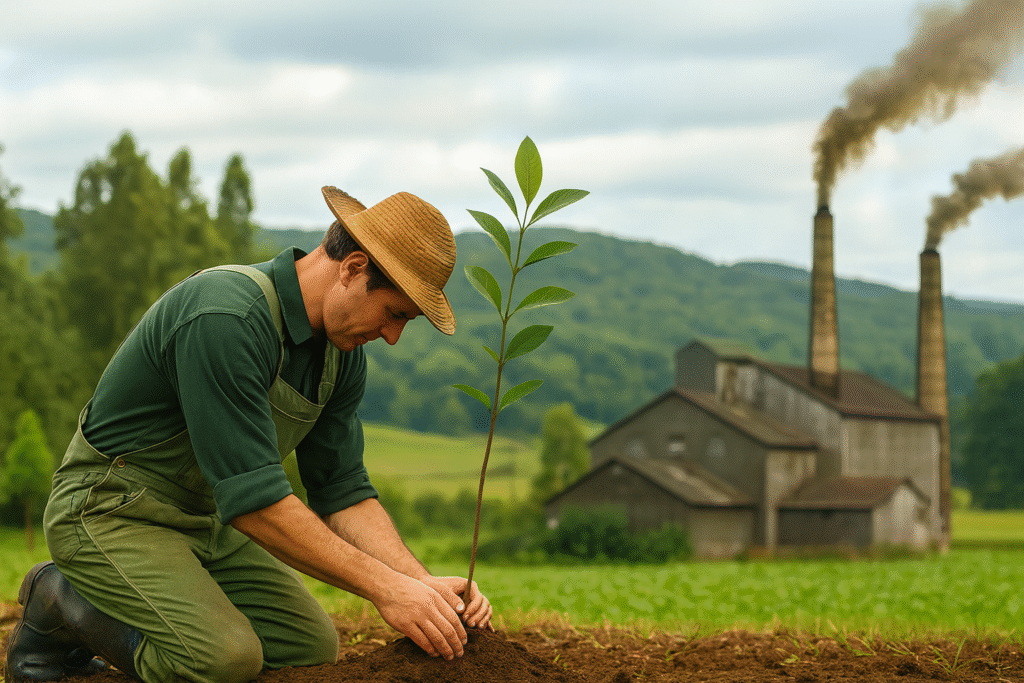
🌍 Carbon Credits Explained: What They Are, How They Work, and the Role of Farmers
🌱 Introduction
Carbon credits are becoming one of the most talked-about tools in the global effort to cut carbon emissions. From large corporations to small family farms, people are exploring how to participate in carbon markets—and whether it can provide new opportunities for income and sustainability.
But what exactly are carbon credits? How do they work in practice? And what role do farmers—who manage huge areas of land and soil—play in this new economy?
This guide breaks it all down in simple terms. Whether you’re an urban reader curious about sustainability or a farmer considering carbon farming, you’ll learn how carbon credits function, their benefits, their challenges, and their future.
🌍 What Are Carbon Credits?
A carbon credit is a tradable certificate that represents the reduction, removal, or avoidance of one metric ton of carbon dioxide (CO₂) or its equivalent in other greenhouse gases (GHGs).
Think of it like this: if one company or project prevents a ton of carbon from entering the atmosphere (by planting trees, capturing methane, or improving soil carbon storage), they can earn a credit. Another company that emits CO₂ can then buy that credit to offset its pollution.
Key Points:
- 1 carbon credit = 1 metric ton of CO₂e avoided or removed
- Credits are issued when projects are verified by trusted registries (like Verra, Gold Standard, or Climate Action Reserve)
- Credits can be sold in voluntary carbon markets (companies buying credits to meet sustainability goals) or compliance markets (governments requiring offsets under regulations)
Carbon credits are part of a bigger effort to move toward net zero emissions, where global greenhouse gas emissions are balanced by removals.
🏙️ Why Carbon Credits Matter (For Everyone)
Carbon credits aren’t just an abstract financial instrument. They have very real benefits for the environment, businesses, and communities.
1. Fighting Carbon Emissions
Carbon credits encourage investment in projects that lower emissions—everything from renewable energy to reforestation to regenerative farming.
2. Driving Corporate Responsibility
Many large companies have net-zero pledges. If they can’t cut all emissions directly, they buy carbon credits to offset the rest.
3. Funding Sustainable Practices
Carbon markets channel money to projects that otherwise wouldn’t happen, including soil health programs, tree planting, and methane capture.
4. Incentivizing Farmers and Landowners
Farmers and ranchers often manage vast land areas that can isolate carbon in soil or vegetation. Carbon credits turn good farming practices into new income opportunities.
🧑🌾 The Farmer’s Role in Carbon Credits
Farmers are uniquely positioned to make a difference. Agriculture is both a source of greenhouse gas emissions (methane from livestock, nitrous oxide from fertilizers) and a solution (through soil carbon storage, cover crops, and agroforestry).
Ways Farmers Can Earn Carbon Credits
- Soil Carbon storage
- Practices like no-till farming, cover cropping, and rotational grazing increase organic matter in soils.
- More carbon is pulled from the atmosphere and stored underground.
- Practices like no-till farming, cover cropping, and rotational grazing increase organic matter in soils.
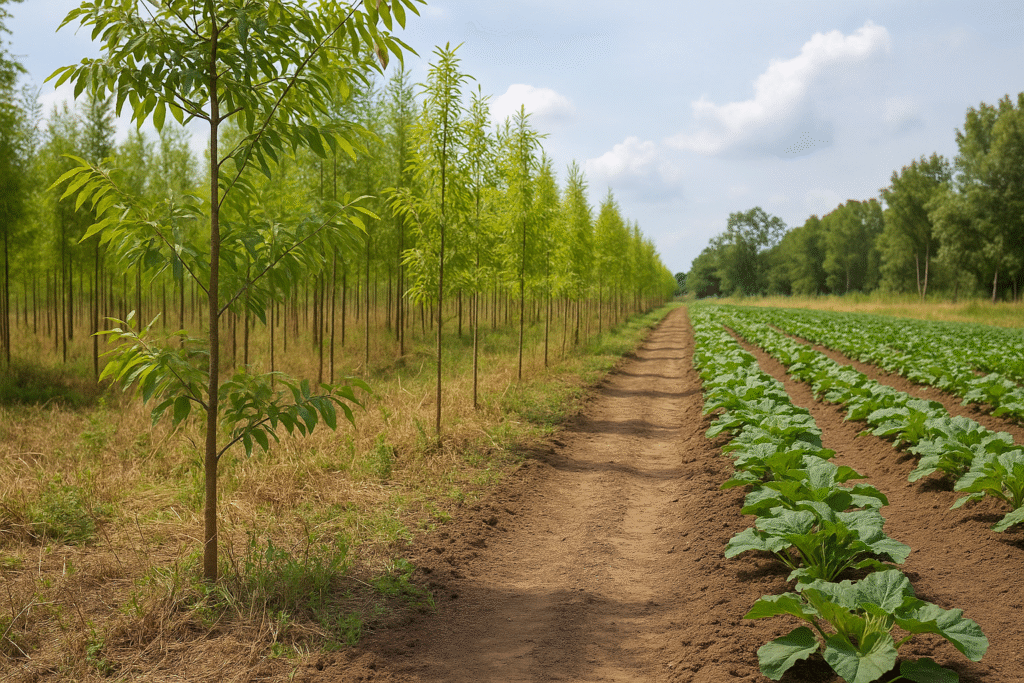
- Agroforestry & Reforestation
- Planting trees and hedgerows sequesters carbon while providing biodiversity benefits.
- Planting trees and hedgerows sequesters carbon while providing biodiversity benefits.
- Methane Reduction in Livestock
- Changes in feed, manure management, and biogas capture reduce methane emissions, which are 28x more powerful than CO₂.
- Changes in feed, manure management, and biogas capture reduce methane emissions, which are 28x more powerful than CO₂.
- Efficient Fertilizer Use
- Reducing synthetic nitrogen fertilizers or using precision application limits nitrous oxide emissions.
- Reducing synthetic nitrogen fertilizers or using precision application limits nitrous oxide emissions.
Benefits for Farmers
- New Income Stream: Sell carbon credits on voluntary markets.
- Soil Health Improvements: Practices that earn credits also boost yields and resilience.
- Public Image: Participation shows leadership in sustainability.
Challenges for Farmers
- Verification Costs: Projects must be measured and verified, which can be expensive.
- Uncertain Markets: Prices for credits vary widely (from $5 to over $50 per ton).
- Long-Term Commitments: Carbon storage often requires practices maintained for decades.
🏢 Voluntary vs Compliance Carbon Markets
There are two main types of carbon credit markets:
1. Voluntary Carbon Markets (VCM)
- Companies and individuals buy credits voluntarily to meet sustainability pledges.
- Examples: Microsoft, Shopify, and airlines offsetting flight emissions.
- Farmers can participate through programs like Indigo Ag, Nori, or Soil Capital.
2. Compliance Carbon Markets
- Governments set legal caps on emissions. Companies must reduce emissions or buy credits.
- Examples: EU Emissions Trading System (EU ETS), California’s cap-and-trade.
- Farmers may indirectly benefit if agricultural projects are included as offsets.
🧮 How Carbon Credits Are Measured
Accurate measurement is critical to avoid “greenwashing.” Farmers and landowners must work with certified programs to track and verify credits.
Key Steps:
- Baseline Measurement – What are emissions or soil carbon levels today?
- Practice Change – Adopting new methods like no-till, reduced fertilizer, or reforestation.
- Monitoring & Verification – Ongoing soil tests, satellite data, and farm records.
- Credit Issuance – Verified credits are recorded in a registry and can be sold.
🌾 Case Examples
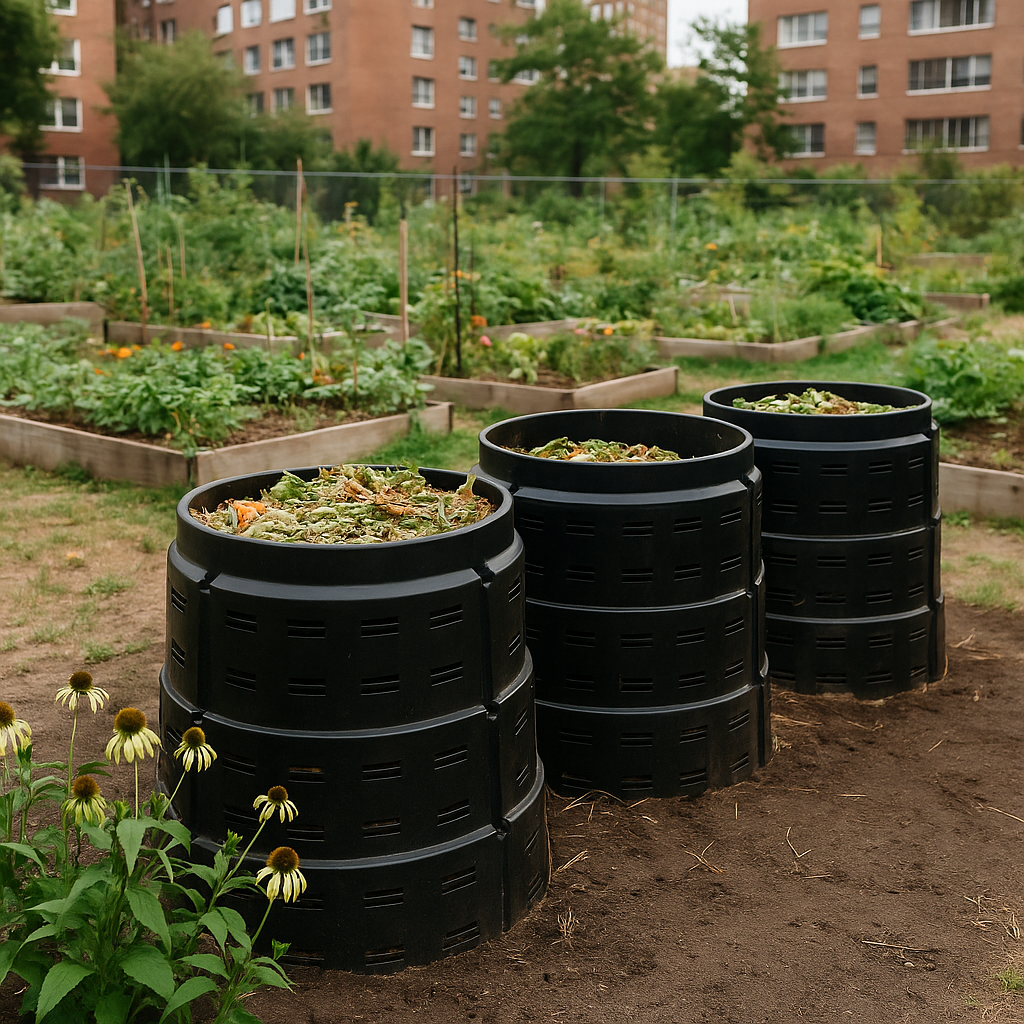
Urban Setting
- A city community garden installs compost bins, reducing methane emissions from food waste. While small-scale, this creates measurable reductions and inspires local participation.
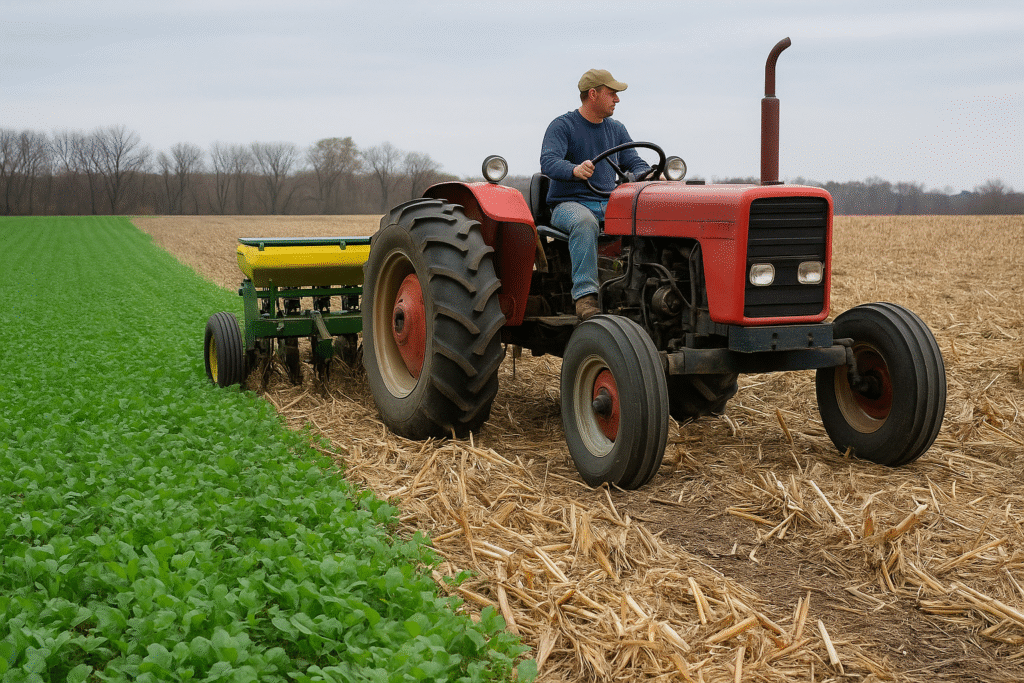
Rural Farm
- A corn and soybean farmer in the U.S. Midwest adopts cover crops and no-till practices. After 5 years, soil tests show increased carbon storage. The farmer earns credits, sells them on Nori’s marketplace, and gains extra income while improving soil health.
⚖️ The Debate Around Carbon Credits
Not everyone agrees carbon credits are a perfect solution. Critics point out:
- Greenwashing Risks: Some companies buy credits instead of cutting emissions.
- Verification Issues: Difficult to prove long-term storage in soils or forests.
- Equity Concerns: Small farmers may struggle with costs and paperwork.
Still, carbon credits are seen as one of many tools needed for reducing carbon emissions—when combined with real emission reductions.
📈 The Future of Carbon Credits
- Rising Demand: As more corporations commit to net zero, demand for verified credits will grow.
- Better Technology: Satellites, AI, and blockchain may make verification cheaper and more transparent.
- Farmer-Friendly Programs: Simplified enrollment and fairer payments will attract more landowners.
- Integration with Sustainable Food Labels: Consumers may soon see “carbon-neutral” tags on farm products.
❓ FAQs About Carbon Credits
Q: How much are carbon credits worth?
A: Prices vary—from as little as $5 to over $50 per ton depending on market, project type, and demand.
Q: Can small farms participate?
A: Yes, but often through co-ops or aggregators that group many small farms together.
Q: Do carbon credits replace emission cuts?
A: No—credits are meant to complement direct reductions, not substitute for them.
Q: Is soil carbon permanent?
A: It depends. Practices must be maintained to ensure carbon stays in the ground.
Q: Are carbon credits only for farmers?
A: No. Forests, wetlands, renewable energy, and even urban projects can all generate credits.
🌟 Conclusion
Carbon credits are reshaping how the world thinks about sustainability. For urban communities, they support green initiatives that reduce waste and emissions. For farmers, they represent both a challenge and an opportunity: adopting practices that store carbon not only benefits the planet but also opens up new income streams.
The road isn’t without obstacles—verification costs, market uncertainty, and criticism of offset systems remain. But as technology improves and demand grows, farmers and landowners may find themselves at the center of a global carbon economy.
In the end, carbon credits are about more than money. They’re about shifting how we value the land, the soil, and the choices we make for future generations.
🌱 Carbon credits turn caring for the environment into something practical and valuable, creating a system where protecting nature can also provide financial rewards.