
🌞 Paddocks to Panels: Rural Communities Question the Rush Toward Farmland Solar Farms
introduction
When the first survey pegs appeared at the edge of her family’s paddock, Wairarapa sheep farmer Anne assumed it was a fencing contractor. It wasn’t.
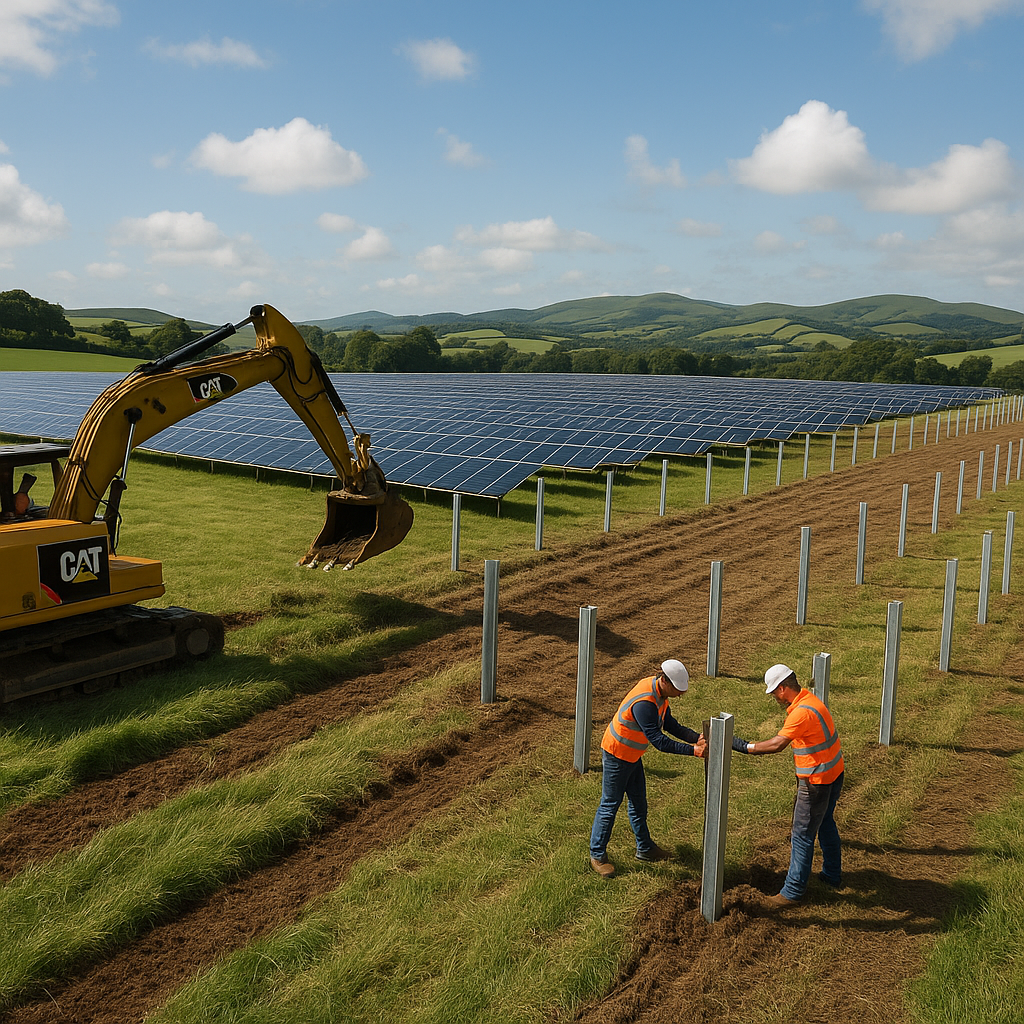
Within weeks, trucks rolled in, drilling rigs followed, and long strips of soil were carved open. Her neighbour had leased 40 hectares to an international energy company for a solar farm — part of the country’s race to meet renewable energy goals.
“I looked out one morning and thought, Well, that’s it. The paddock’s gone,” she says. “It’s like watching a farm disappear, one panel at a time.”
Across rural New Zealand — and around the world — similar scenes are unfolding as farmland becomes the new frontier for large-scale solar energy.Governments call it progress.
Communities aren’t so sure.
A Quiet Shift in the Countryside
Solar farms often arrive quietly. One landowner signs a lease; another follows. The machinery comes next.
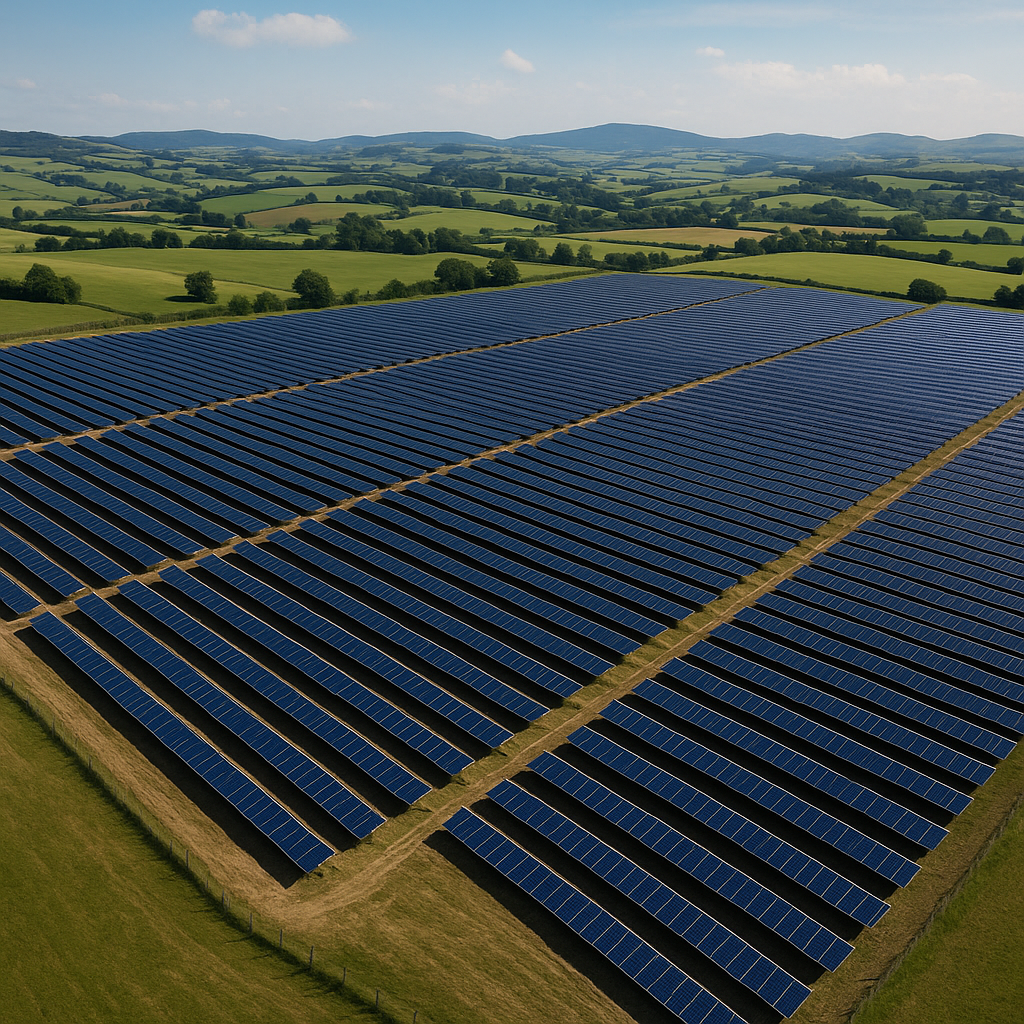
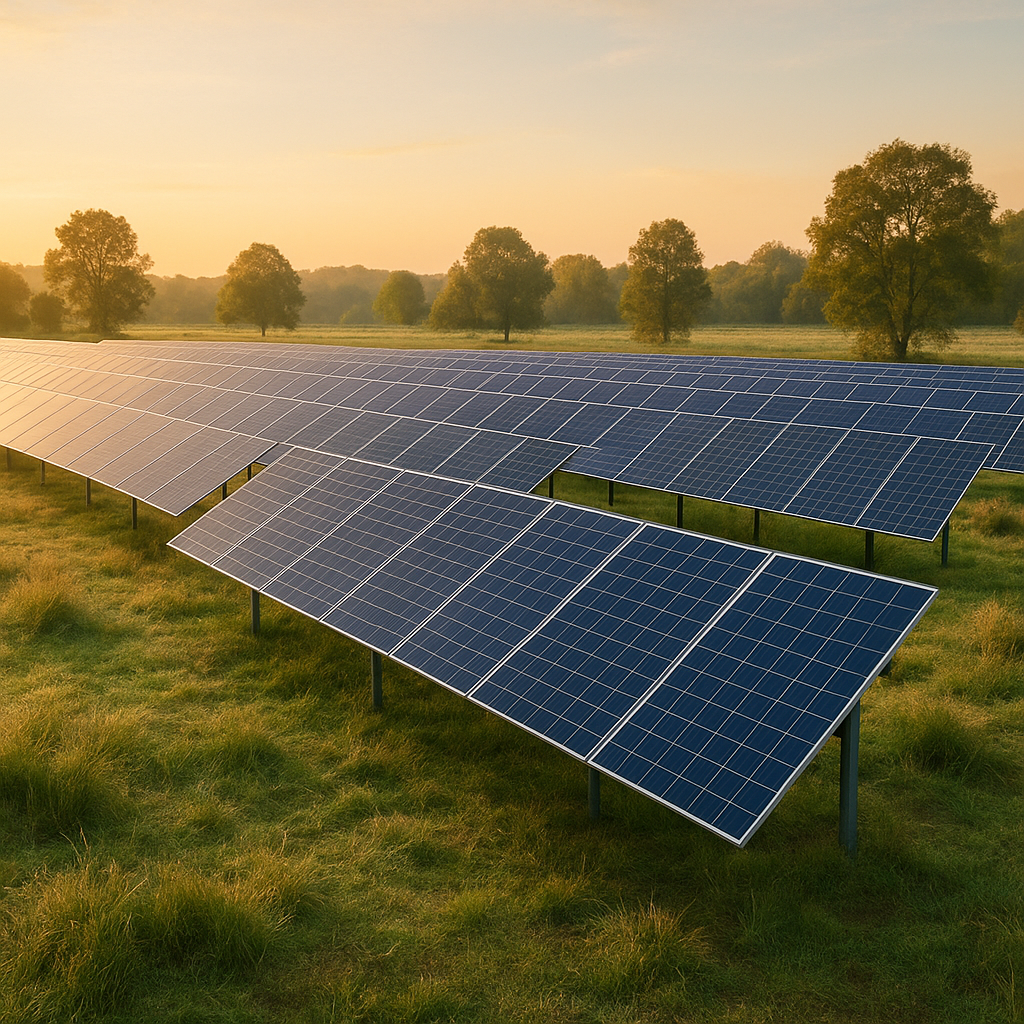
From the highway, the shift looks clean and efficient — rows of panels reflecting sunlight across uniform grass. But up close, locals say the environmental story is more complicated than the headlines suggest.
“We’re all for renewable energy,” says dairy farmer Pete, whose boundary now sits metres from a solar installation. “But it’s farmland. We grow food here. We don’t usually get to grow solar panels.”
His voice carries the mix of frustration and disbelief shared by many in rural communities who say they feel “sidelined” in the country’s renewable transition.
The Promise of Solar: Clean Energy and Steady Income
For developers and some landowners, the appeal is obvious.
Solar produces electricity without direct emissions. It’s fast to install. And for farmers facing financial pressure, a solar lease can mean decades of predictable income.
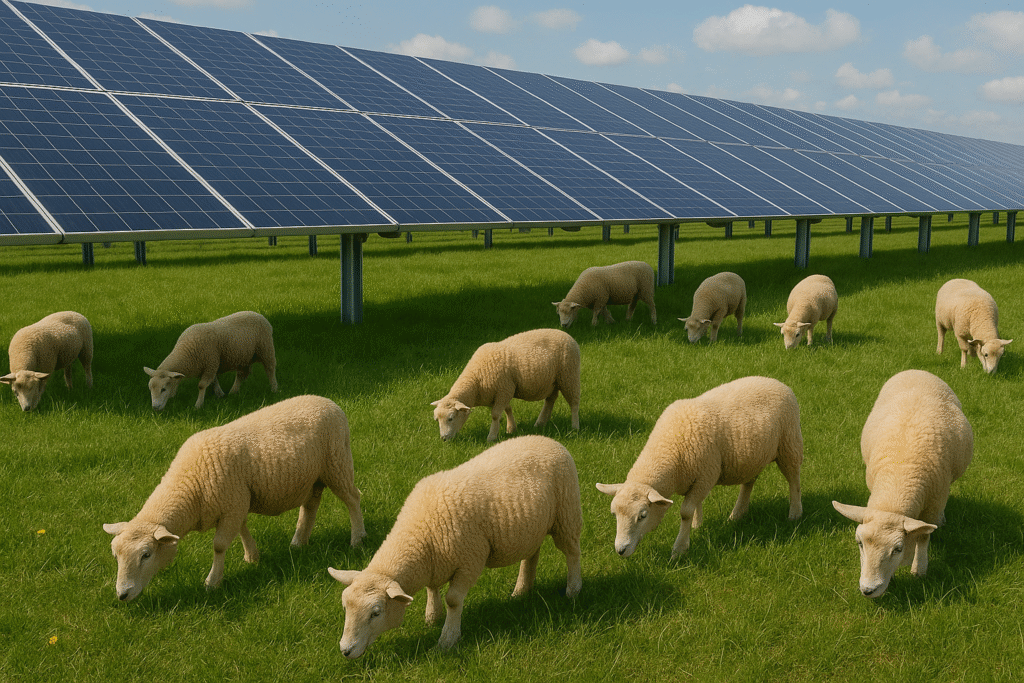
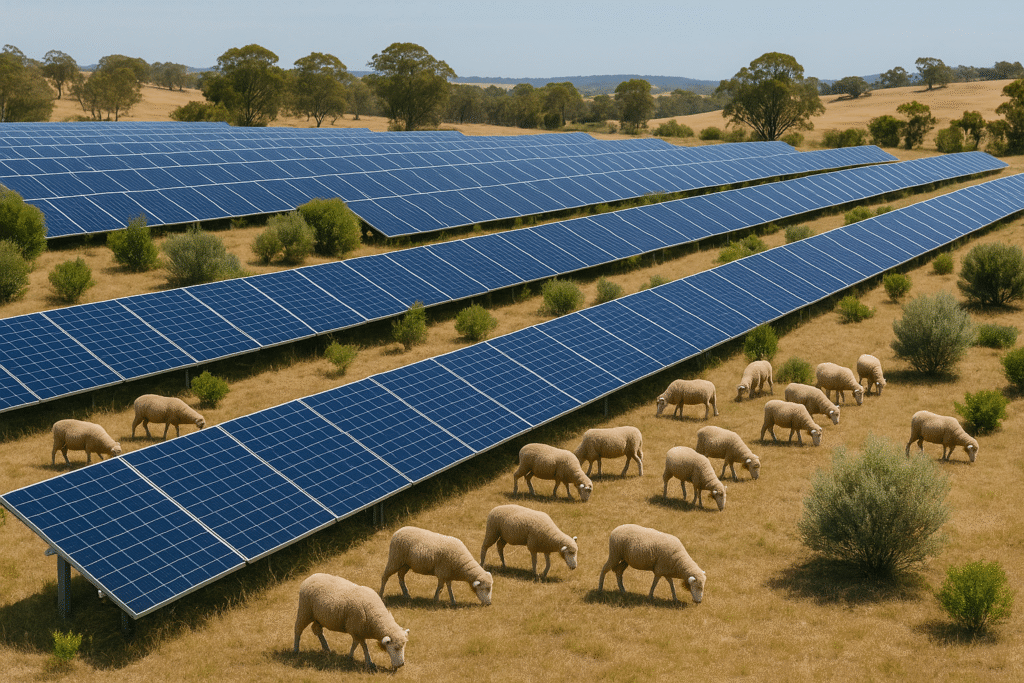
Energy companies also promote “agrivoltaics” — the idea that sheep can graze beneath the panels, keeping some agricultural use alive.It’s a tidy picture.
But critics say it’s only half the story.
Beneath the Surface: A Landscape Under Pressure
Environmental scientists who spoke with this publication warn that the long-term impacts are often underestimated.
A soil researcher, says the conversion process can leave lasting scars.
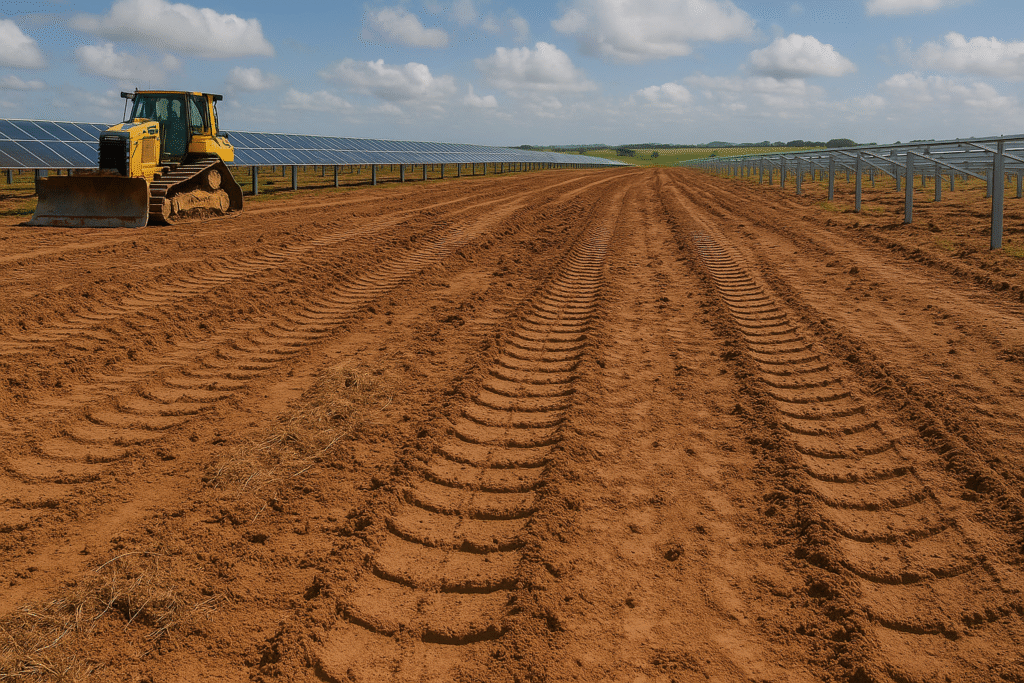
“You’ve got heavy machinery, trenching, compacted access roads — that changes the soil structure for decades,” she explains. “The land doesn’t just bounce back.”
She also notes changes in hydrology — water pooling in new areas, drying in others — and the quiet decline of biodiversity as habitat gives way to metal infrastructure.
“To the eye it looks tidy,” she says. “To the ecosystem, it’s a big shock.”
The Carbon Cost Behind the “Green” Image
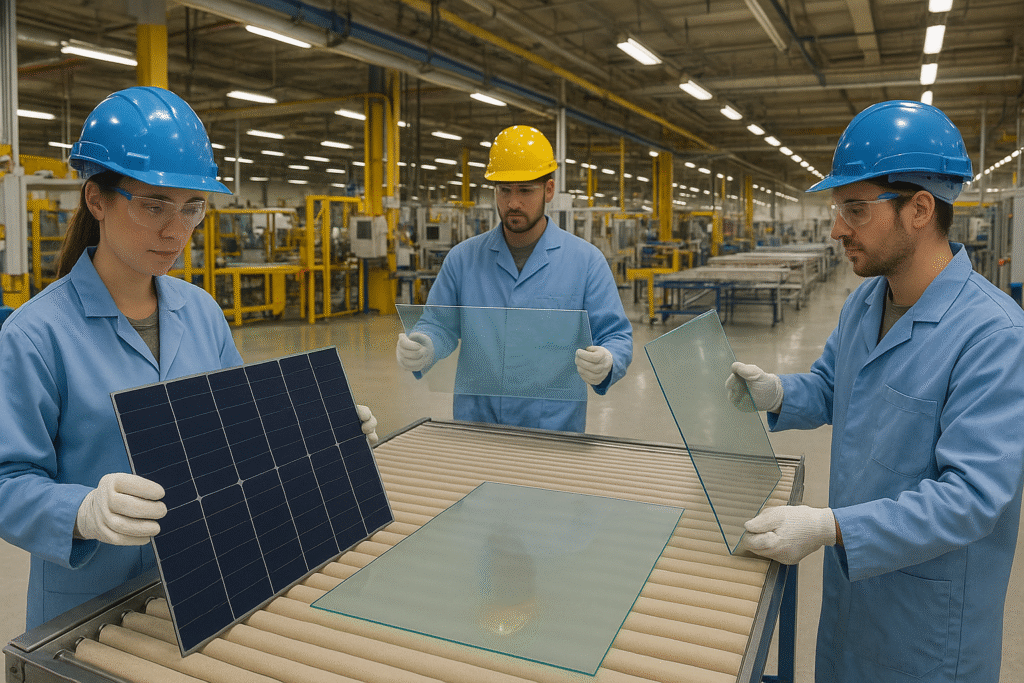
Solar panels don’t emit carbon while generating electricity, but manufacturing them does.
Most panels installed in New Zealand and Australia are built in coal-powered factories overseas.
Producing high-grade silicon requires extremely high temperatures. Mining the metals — silver, copper, aluminium — adds another layer of emissions.
“It’s not that solar is bad,” says energy analyst Jordan Marsh. “It’s that we’re not being honest about the full lifecycle cost.”
Shipping panels halfway around the world adds even more carbon. So does constructing the farms themselves — steel posts, transformers, kilometres of cabling, and months of machinery.
A Problem Waiting 30 Years Down the Road
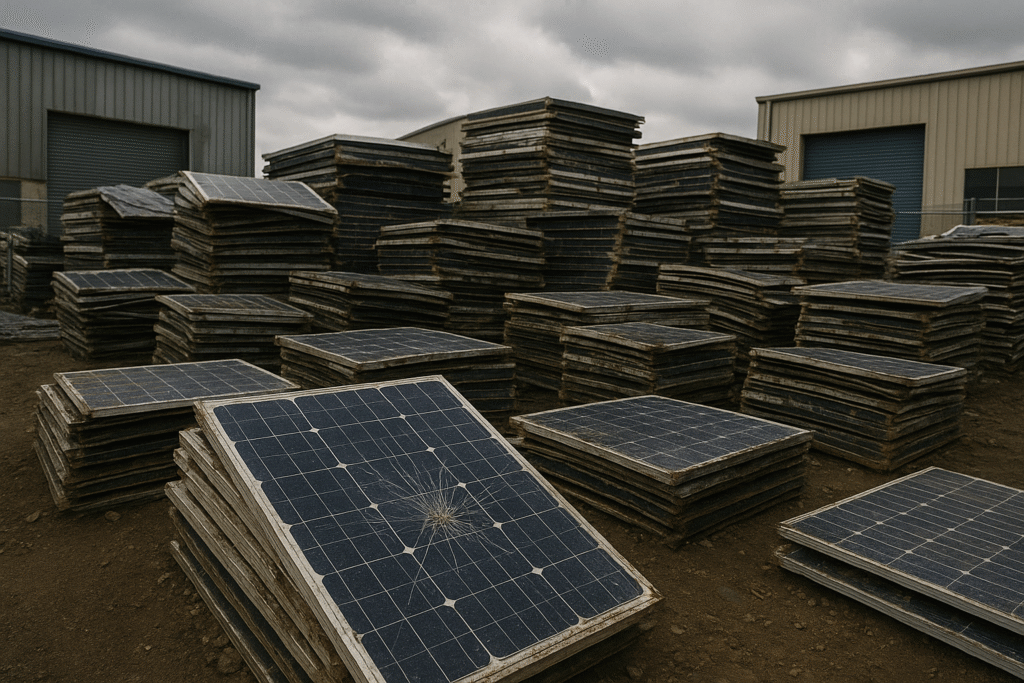
Solar panels last roughly 25–35 years. The first large installations are already approaching end-of-life, and experts warn that recycling technology has not kept up.
Dr. Tarrant says,
“Solar waste is the next plastic. No one knows what to do with it, and the volumes coming are enormous.”
Globally, millions of tonnes of panels could need disposal within the next few decades — many of them containing toxic elements.
Neighbourhoods Caught in the Middle
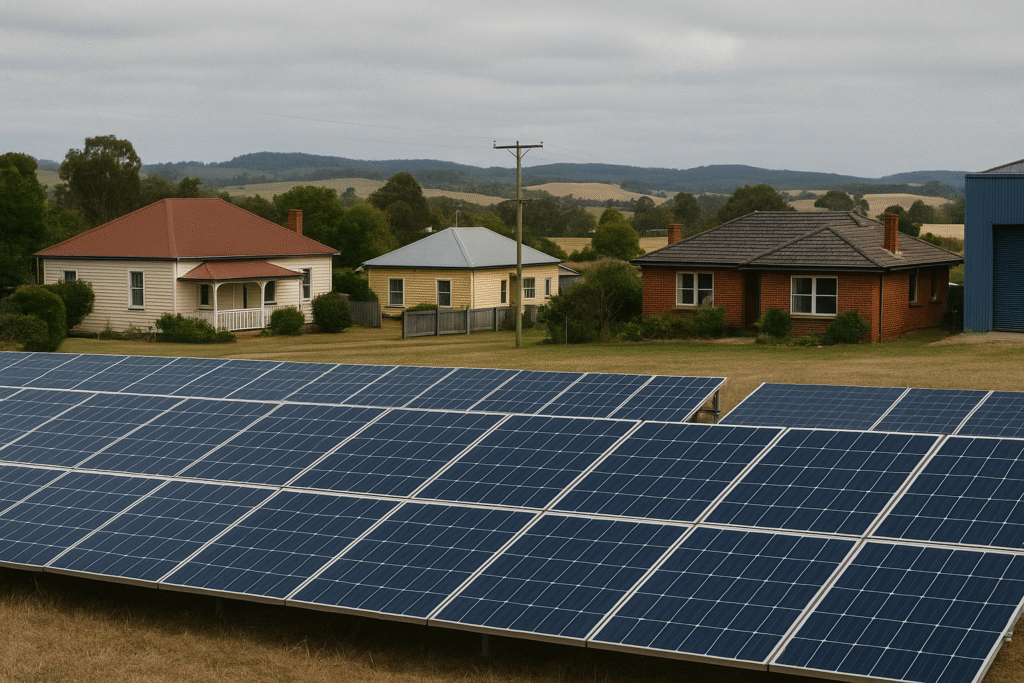
In small rural towns, solar farms are changing more than the view.
Residents report:
- Months of heavy truck traffic
- Dust drifting over clotheslines
- New humming noises from inverters
- Heat radiating from panels
- A sense of rural “industrialisation”
For some, the hardest part is watching farmland disappear.
“It just doesn’t look like the country anymore,” says Anne. “It feels like we’re living next to a factory.”
Experts Ask: Why Not Solar in Better Places?
Environmental planners say the issue isn’t solar power — it’s where it’s being built.
Better options include:
- industrial rooftops
- commercial buildings
- old quarries
- retired landfills
- carpark canopies
- highway or railway corridors
“We have thousands of hectares of roof space,” says Marsh. “Why cover the land that feeds us?”
When Solar and Farming Can Coexist
Not all solar farms are created equal. Some developers integrate:
- sheep grazing
- native planting
- wildlife corridors
- community consultation
- soil restoration commitments
- end-of-life recycling plans
These projects can coexist with rural life — but they are not yet the norm.
A Rural Future in Transition
Drive through the countryside today and the landscape is changing. For some, solar farms symbolise progress. For others, they represent a slow erosion of rural identity.
Farmers like Anne don’t oppose solar — they oppose losing the land that feeds the country.
“We need renewable energy,” she says. “But we also need food. We need soil. birds and we do need the countryside to still look like the countryside.”
As the solar boom gathers pace, communities across the region are asking for something simple:
A renewable future that doesn’t come at the cost of the land beneath our feet.