
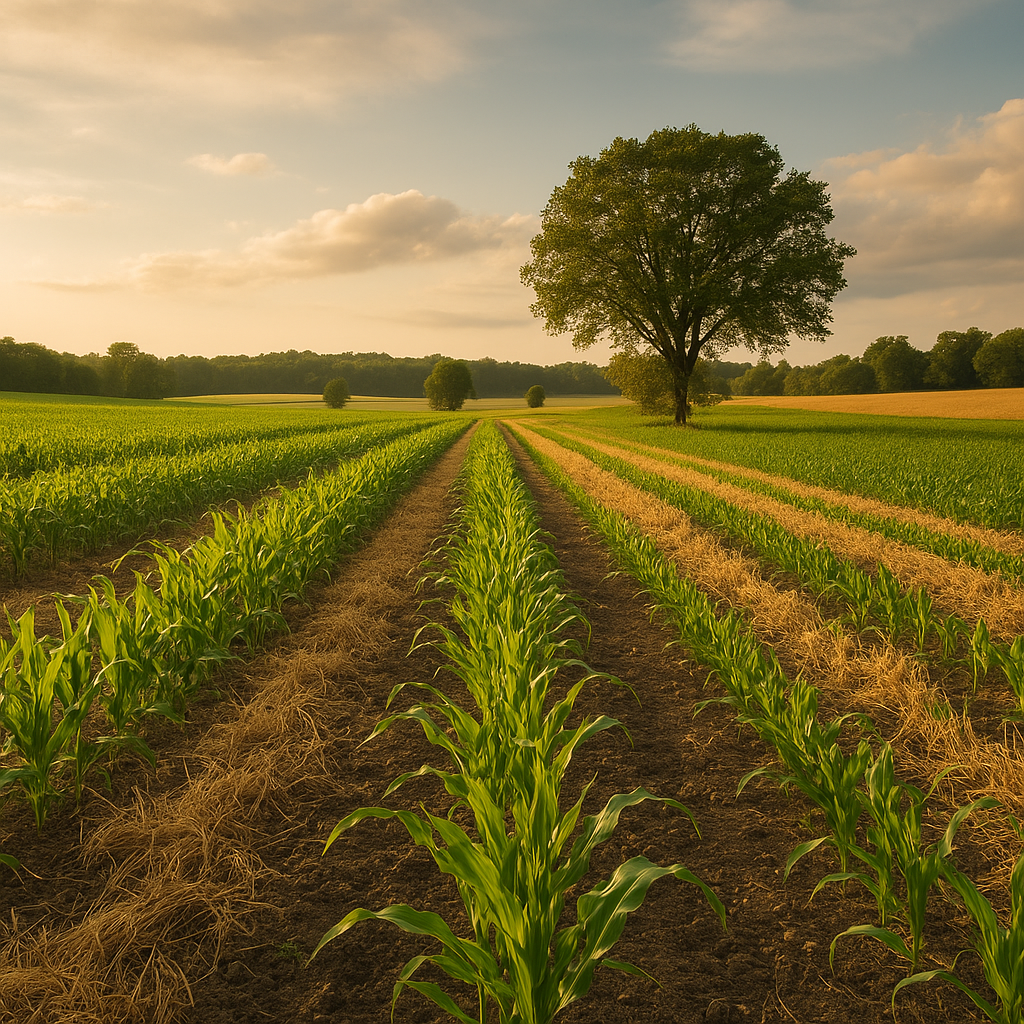
Regenerative Agriculture: Can Soil Really Capture Enough Carbon?
Introduction
When people talk about changing climate and how the weather is changing, the focus often falls on smokestacks, tailpipes, and industrial energy use. But there’s another major player in the global carbon cycle: the soil beneath our feet. Soil is the world’s second-largest carbon sink after the oceans.
This has led scientists, farmers, and environmental advocates to ask: Can regenerative agriculture actually help us capture enough carbon to make a difference?
In this article, we’ll explore:
- What regenerative agriculture really means.
- How soil health connects to carbon storage.
- Practical techniques like cover cropping, no-till, and rotational grazing.
- Success stories from both urban gardens and rural farms.
- Whether soil carbon sequestration can realistically fight climate change.
Whether you keep a few raised beds in the city or run livestock on open pasture, this guide is for you.
What Is Regenerative Agriculture?
Regenerative agriculture is a set of farming and land management practices designed to restore and improve the health of soil, ecosystems, and the climate. Unlike conventional agriculture, which often depletes soil organic matter, regenerative methods focus on:
- Building soil organic carbon.
- Enhancing biodiversity.
- Restoring natural water ways
- Improving resilience to pests, disease and the never ending changing of the weather.
Instead of just sustaining the land, regenerative farming aims to repair it.
Why Soil Matters
Healthy soil is like a sponge and a pantry rolled into one. It:
- Absorbs rainfall, reducing floods and drought.
- Stores carbon in organic matter.
- Provides nutrients for plants without heavy reliance on chemical fertilizers.
When soils are degraded—through over-tilling, monocropping, or chemical overuse—they release carbon into the atmosphere instead of storing it.
The Science: How Soil Captures Carbon
Soil captures carbon through a process called carbon sequestration. Plants pull CO₂ from the atmosphere through photosynthesis. Some of that carbon is used to build leaves, stems, and roots. But a portion is exuded through the roots as sugars and other compounds that feed soil microbes.
When managed well, this creates a cycle:
- Plants capture carbon.
- Roots feed microbes.
- Microbes build stable organic matter in the soil.
- Carbon is locked underground for decades—or even centuries.
Key Factors in Soil Carbon Storage
- Organic matter: The more plant material returned to the soil, the more carbon can be stored.
- Soil texture: Clay soils hold carbon better than sandy soils.
- Management practices: Cover crops, reduced tillage, and rotational grazing boost storage.
The big question is not if soils can capture carbon—it’s how much, and for how long.
Key Practices in Regenerative Agriculture
Here are the main strategies used to build soil health and capture carbon:
1. Cover Cropping
Cover crops like clover, rye, and oats are planted between cash crops. Instead of leaving soil bare (which leads to erosion and carbon loss), cover crops:
- Protect soil from erosion.
- Add organic matter as they decompose.
- Fix nitrogen naturally (reducing the need for synthetic fertilizers).
Urban example: In a backyard garden, planting winter rye in empty raised beds keeps soil covered and boosts spring fertility.
Rural example: Farmers in the U.S. Midwest plant cereal rye after corn to reduce erosion and add carbon.
2. Reduced or No-Till Farming
Traditional plowing exposes soil organic matter to oxygen, which accelerates carbon release. No-till farming leaves the soil structure intact, reducing carbon loss.
- Increases microbial activity.
- Reduces fuel use from tractors.
- Improves water retention.
Urban example: Gardeners use broadforks instead of rototillers to loosen soil without turning it over.
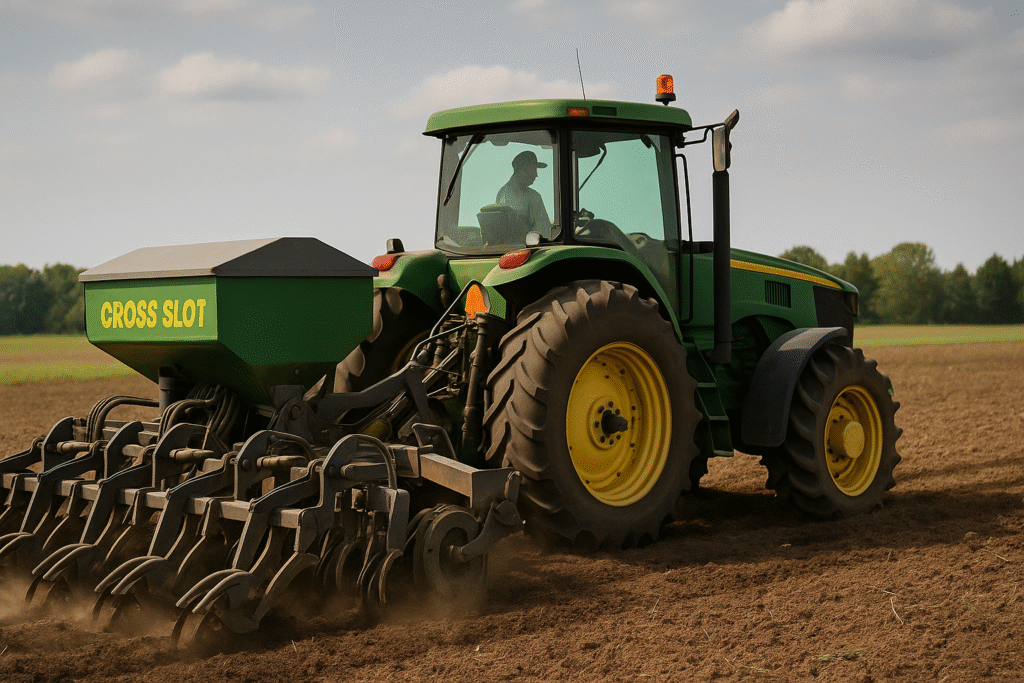
Rural example: No-till drills plant seeds directly into crop residue, leaving carbon-rich material on the surface.
3. Rotational Grazing
Livestock can help or harm soil carbon depending on how they’re managed. Overgrazing strips soil bare, but rotational grazing mimics natural herd movements:
- Animals graze one section, fertilizing as they go.
- They’re then moved to a new area, giving the pasture time to recover.
- Healthy grasses regrow with deeper root systems, pulling down more carbon.
Urban example: Small goat or chicken tractors rotated in backyards improve soil without damaging it.
Rural example: Ranchers in Africa and North America are restoring desertified land with intensive rotational grazing.
4. Agroforestry & Perennial Systems
Trees and perennial plants store massive amounts of carbon both above and below ground. Integrating them into farms provides:
- Shade for livestock.
- Habitat for pollinators.
- Long-term carbon storage in roots and woody biomass.
Urban example: Planting fruit trees alongside vegetable gardens.
Rural example: Alley cropping (trees planted between rows of crops) or silvopasture (trees + grazing animals together).
5. Composting & Organic Amendments
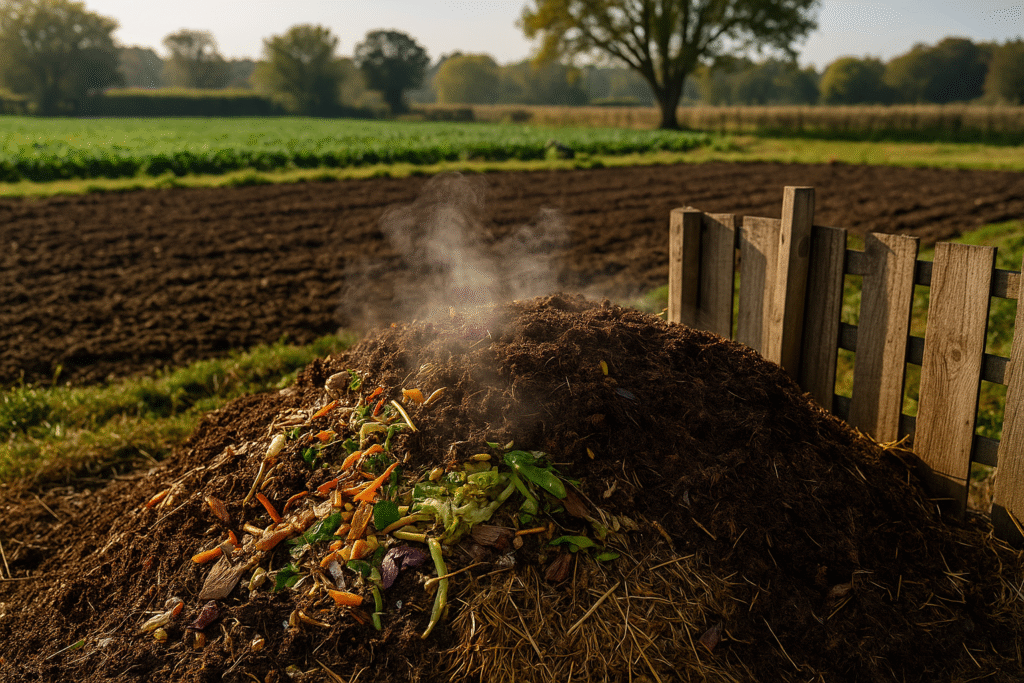
Adding compost, biochar, or manure improves soil carbon by increasing organic matter. These amendments also improve water-holding capacity and soil fertility.
Urban example: Kitchen scraps turned into compost for raised beds.
Rural example: Large-scale composting operations recycle manure and crop residues into carbon-rich soil amendments.
How Much Carbon Can Soils Really Store?
Estimates vary, but studies suggest regenerative practices could sequester 1–2 gigatons of carbon per year globally. That’s significant—but not a complete solution to climate change.
- Optimists argue soils could offset up to 10% of annual global emissions.
- Skeptics note that storage isn’t permanent: mismanagement or extreme weather can release carbon back into the air.
Key Challenges
- Measurement: Soil carbon is hard to track consistently.
- Permanence: Carbon may be re-released if practices stop.
- Adoption: Not all farmers can afford or transition quickly to regenerative methods.
Urban vs. Rural Applications
Urban Animal Keepers & Gardeners
- Can use raised-bed no-till, composting, and cover crops to store small but meaningful amounts of carbon.
- Educational gardens in cities play a huge role in awareness.
Rural Farmers
- Have the scale to make a measurable impact on regional and even national carbon budgets.
- Policy support (carbon credits, regenerative certification) may encourage wider adoption.
Beyond Carbon: Extra Benefits of Regenerative Agriculture
Even if soils can’t capture all the carbon we need, regenerative agriculture offers co-benefits that make it worthwhile:
- Improved biodiversity (more pollinators, wildlife).
- Reduced dependence on synthetic fertilizers and pesticides.
- Cleaner water through reduced runoff.
- Greater resilience to droughts and floods.
- Healthier, more nutrient-dense food.
For many farmers and gardeners, these benefits are as valuable as carbon storage.
Can Regenerative Agriculture Really Solve Climate Change?
The honest answer: not on its own. Soil sequestration is powerful, but it’s not unlimited. Global decarbonization still requires cutting fossil fuel use and transitioning to renewable energy.
However, regenerative agriculture is one of the most practical, immediate, and scalable tools we have to:
- Draw down atmospheric carbon.
- Restore degraded farmland.
- Build resilience in both urban and rural food systems.
Think of it as one piece of the climate puzzle—not the whole solution.
Key Takeaways
- Yes, soils can capture carbon—through photosynthesis, root exudates, and microbial activity.
- Regenerative practices like cover cropping, no-till, rotational grazing, and composting improve soil carbon storage.
- Urban and rural farmers alike can participate, though scale varies.
- Soil sequestration alone can’t achieve net-zero carbon, but it’s a critical climate tool with many co-benefits.