
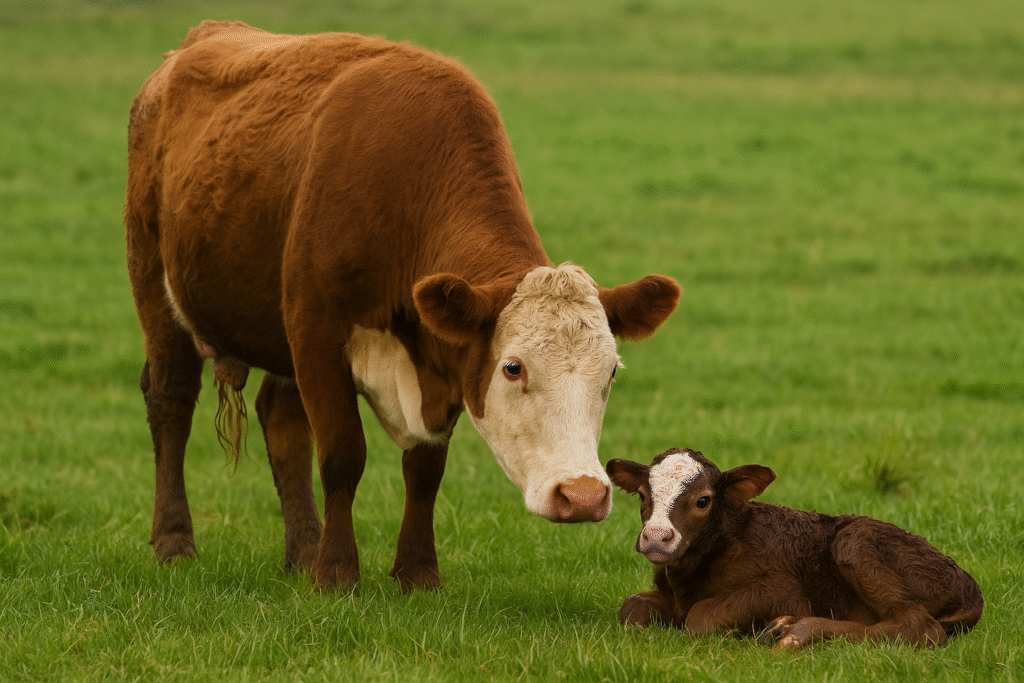
🌱 Introduction: Life’s Fragile Beginning
Newborn calf care is important, because the birth of a calf is one of farming’s most universal experiences. Whether it’s a dairy cow in Europe, a beef cow in Brazil, or a family cow in rural India, the rhythm is the same: a mother delivers new life into the world, and within minutes the calf must stand, breathe, and drink.
For farmers, the first 48 hours are a mixture of joy, relief, and pressure. For urban audiences, these hours are often unseen — yet they hold the key to animal welfare, farm success, and even the milk and beef on our tables. This chapter-like post takes you on that journey, weaving global practices with the timeless story of life’s beginning.
👩🌾 The First Moments: Breath and Bond
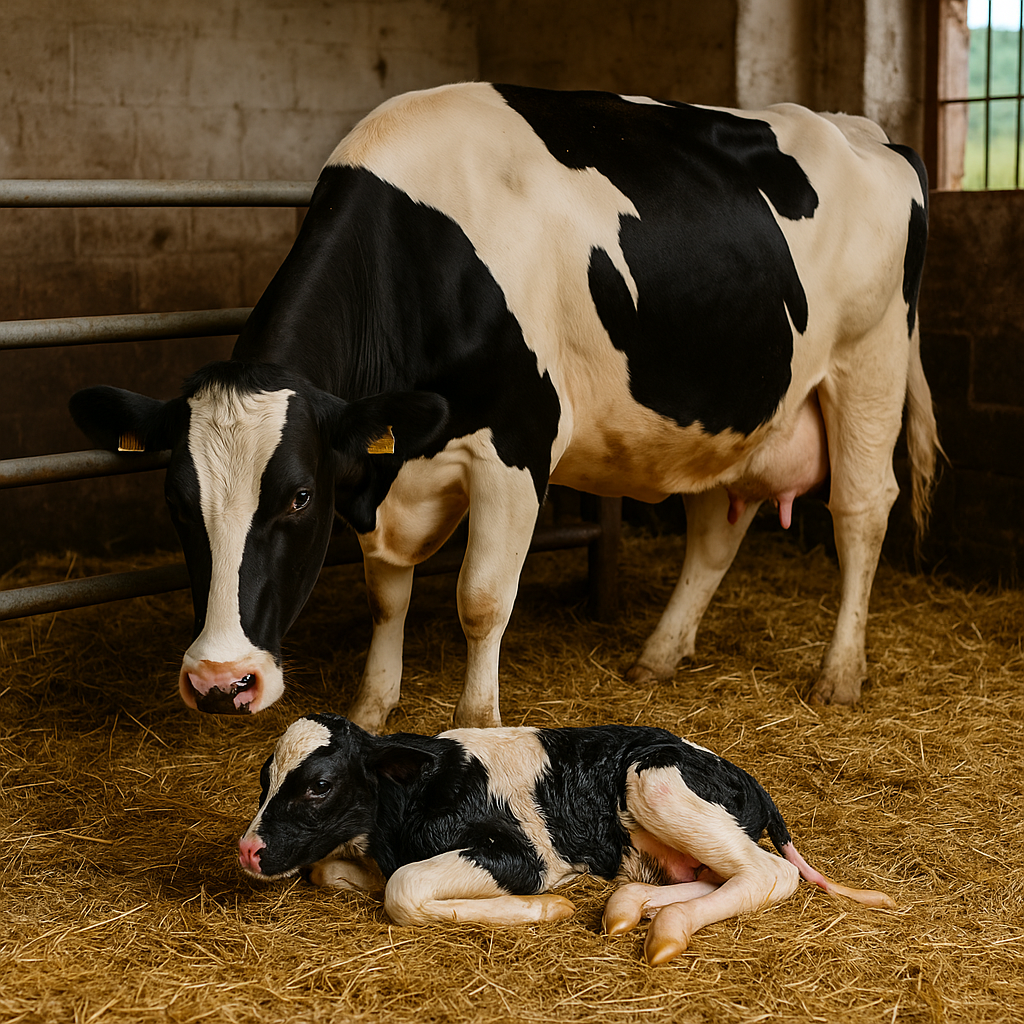
Imagine a quiet barn at dawn. A cow lies in the straw, exhausted after calving. A slick, wobbly calf lies beside her, still wet, chest rising and falling uncertainly.
The farmer crouches close, checking:
- Are the airways clear? 🌬️
- Is the calf breathing strongly? 💨
- Does it respond when rubbed with straw or towels? 🧽
Sometimes, nature takes over: the cow licks the calf vigorously, nudging it with her nose, coaxing life into her newborn. Other times, human hands step in — using a calf resuscitator, clearing mucus, or lifting the calf onto its chest.
Within minutes, the barn shifts from stillness to energy: the calf sneezes, takes a deep breath, and blinks at the world for the first time.
🍼 Colostrum: Liquid Gold of Survival
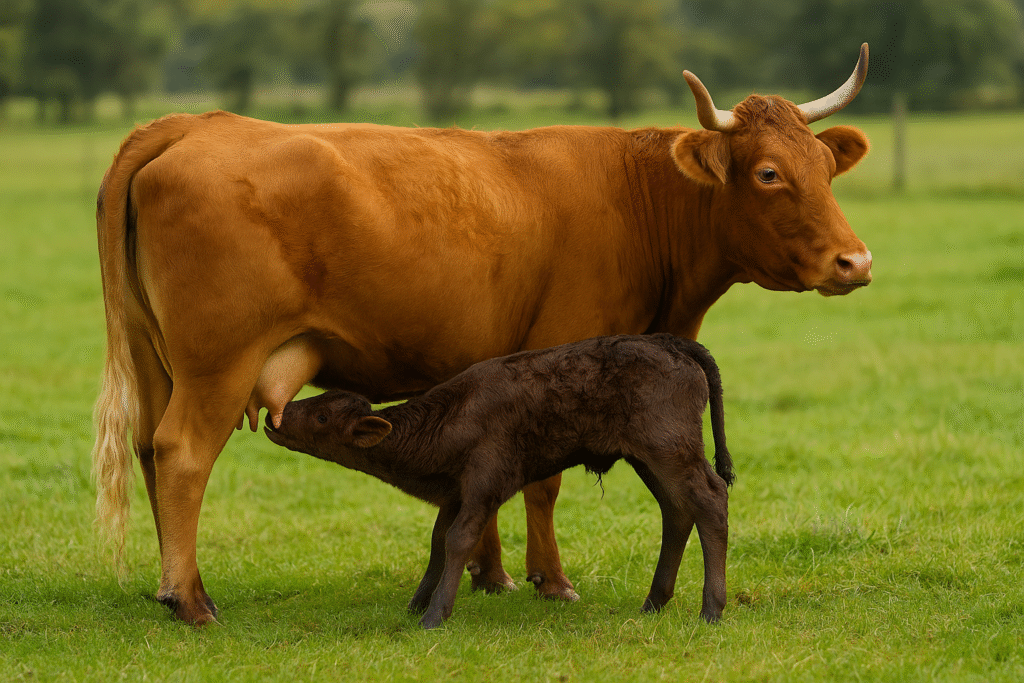
If breathing is the first challenge, colostrum is the second.
Colostrum, the cow’s first milk, is thick, golden, and unlike any milk that follows. It is rich in:
- Antibodies 🛡️ (protection against disease).
- Energy ⚡ (to fuel shivering muscles and standing legs).
- Proteins & vitamins 🌟.
Calves are born without immunity. They depend entirely on this first feed.
⏰ Timing is critical:
- Within 6 hours: the calf should drink 10% of its body weight.
- Within 12–24 hours: absorption of antibodies drops sharply.
🌍 Around the world:
- Europe: Farmers test colostrum with refractometers, ensuring quality.
- New Zealand: On pasture, calves often suckle naturally.
- USA dairies: Workers bottle-feed calves immediately to control intake.
- India/Africa: Smallholders hand-feed calves, ensuring they get their share even when milk is also needed for the family.
For farmers, colostrum is more than food — it is the calf’s first shield against disease.
🌡️ Warmth and Dryness: Fighting the Cold
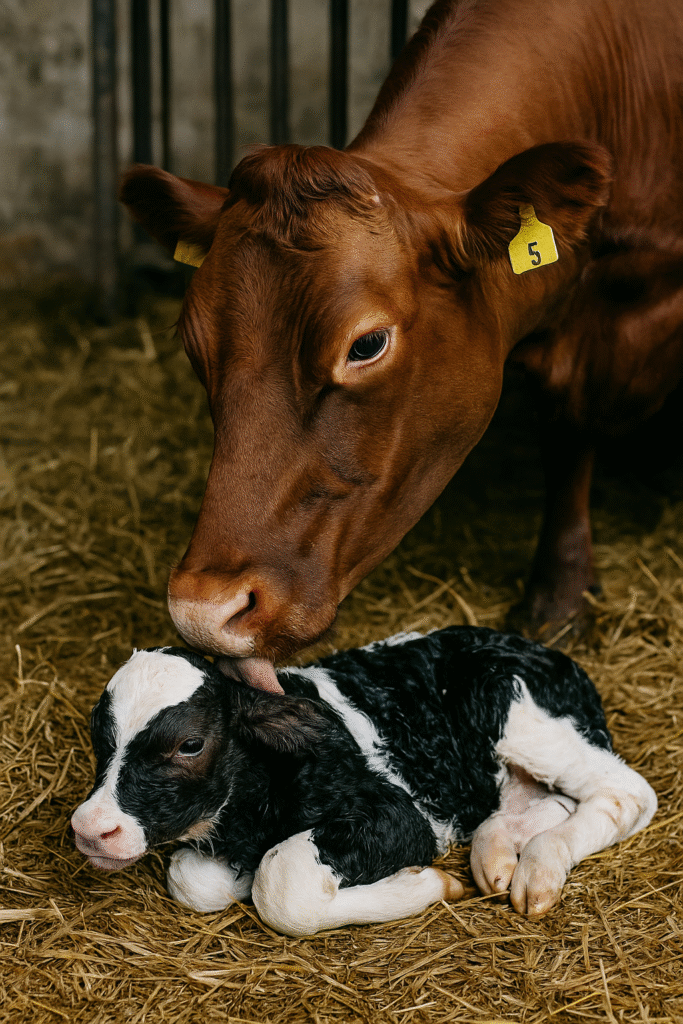
A newborn calf is wet, vulnerable, and easily chilled. In warm climates, drying is simple; in snowy winters, it is life-or-death.
Methods farmers use include:
- Mother’s tongue 👅: Natural drying and stimulation.
- Towels or straw rubs 🧽: Mimicking nature.
- Heat lamps 🔥: Glowing guardians in drafty barns.
- Calf jackets 🧥: Like a baby’s blanket in cold countries.
Picture a winter night in Canada: the barn door creaks open, and the farmer slips inside to check calves under heat lamps. Steam rises from their coats as they nuzzle into clean straw. Across the world in Kenya, a calf is born under the hot sun, where shade, not heat, is the priority.
Different climates, same principle: keep the calf warm, dry, and safe.
🧴 Protecting Against Infection: Navel Care
The umbilical cord, still moist after birth, is an open doorway for bacteria. Without care, infections travel to joints, causing lifelong problems.
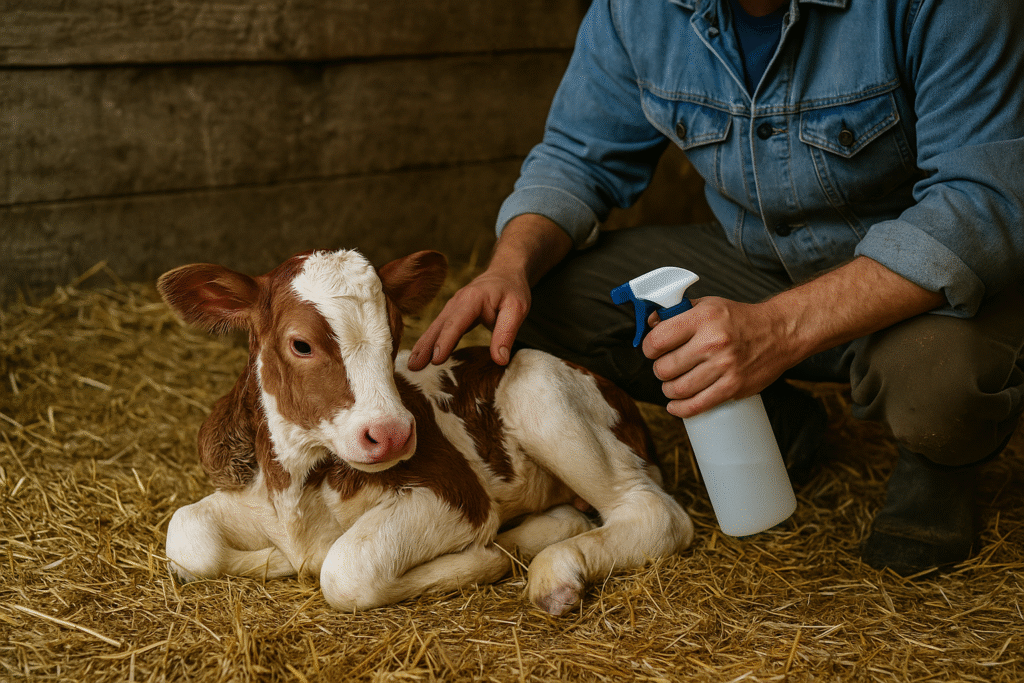
Farmers dip or spray the cord with:
- Iodine 🌟.
- Chlorhexidine 🧪.
A simple act, often unnoticed by outsiders, but vital for calf health.
🛖 Housing: A Place to Rest
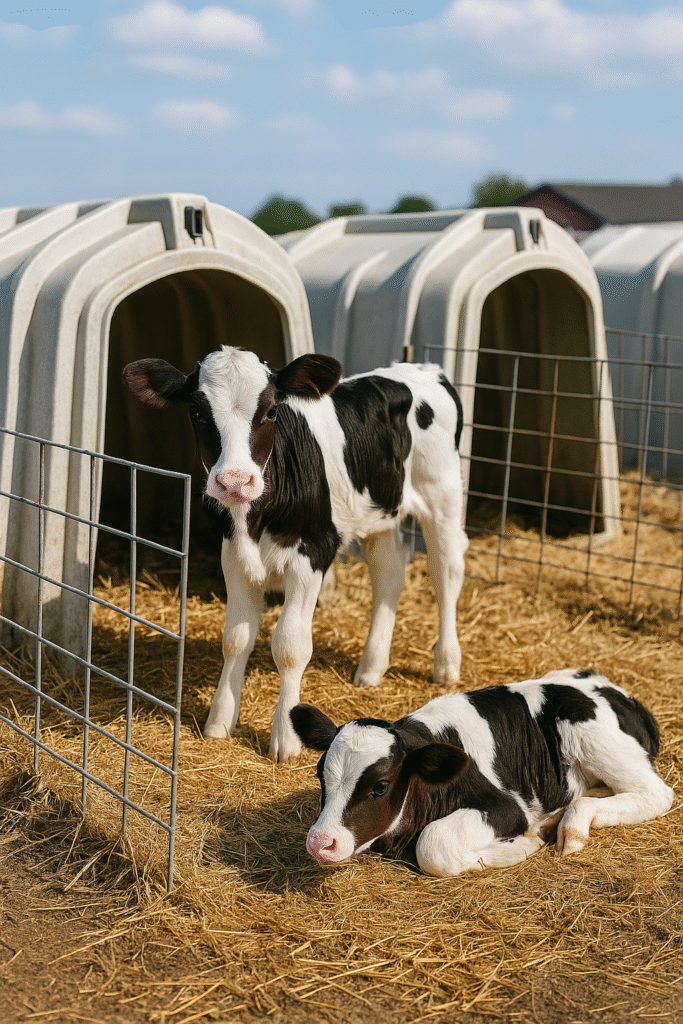
Where calves spend their first hours varies around the globe:
- Dairy calves in the USA & Europe: Housed in pens or hutches, bedded with straw, easy to monitor individually.
- Pasture-based calves in New Zealand & Australia: Stay with mothers on grass, sometimes with mobile shelters.
- Smallholder systems in Africa & Asia: Calves live close to homes, often sharing space with goats or chickens.
In every case, bedding matters: clean, dry, and deep enough for warmth.
🩺 Health Checks: Watching Closely
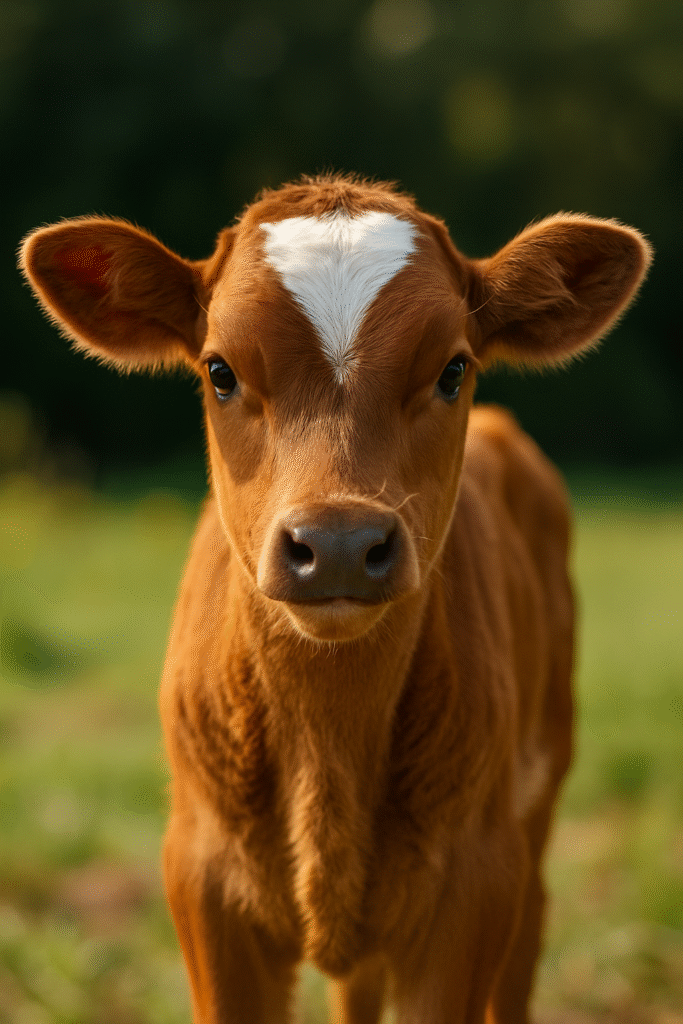
Farmers and vets look for:
- Standing within an hour 🦵.
- Suckling reflex 🍼.
- Bright, alert eyes 👀.
- No signs of breathing distress 🌬️.
If calves struggle, interventions may include oxygen, fluids, or vitamin injections. In many regions, calves also receive selenium or Vitamin E if the soil and forage are deficient.
🏷️ Identity: Ear Tags and Records
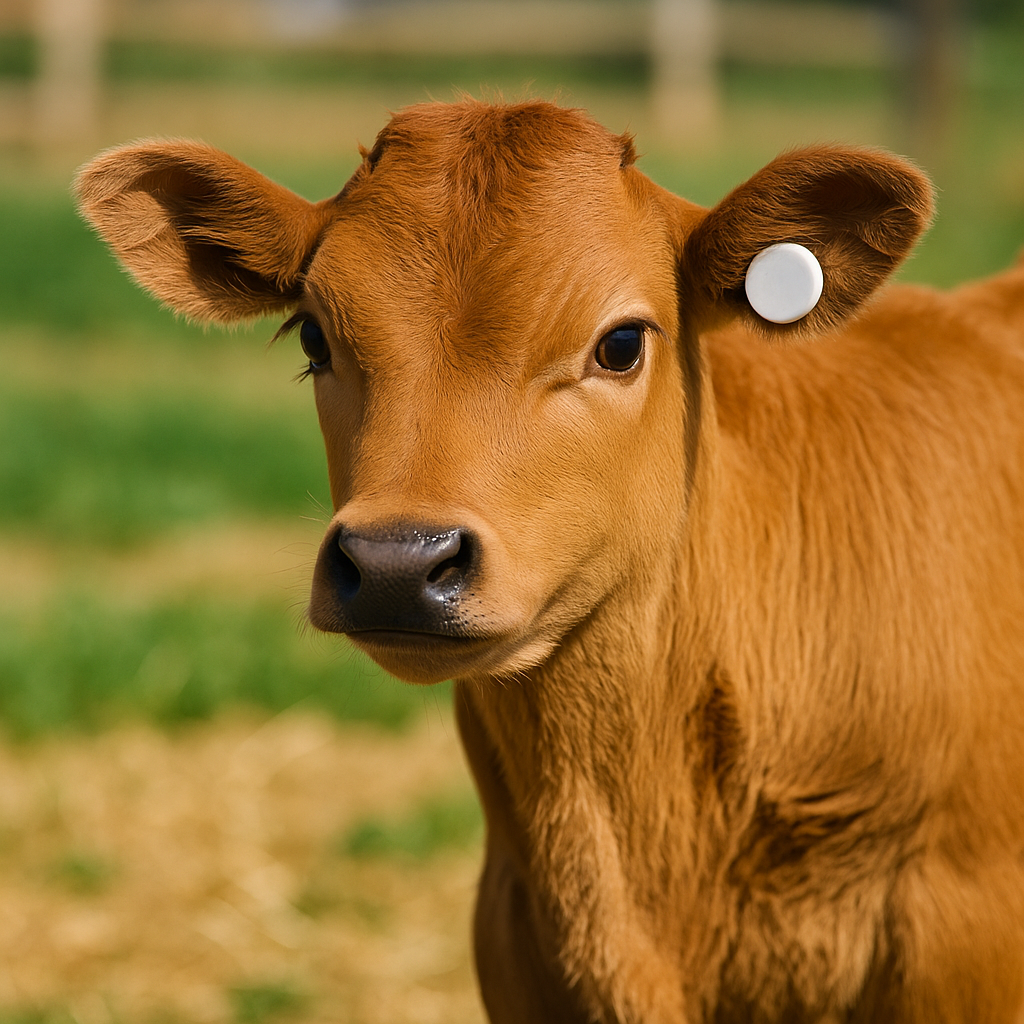
Within the first two days, calves are officially identified:
- Ear tags 🔖 (required in the EU, US, NZ).
- Electronic tags 📱 for traceability.
- Tattoos or branding 🔥 in beef herds.
For the urban reader, this might seem bureaucratic. For farmers, it is part of traceability, disease control, and herd records — ensuring that milk and beef can always be tracked back to origin.
💉 Early Veterinary Interventions
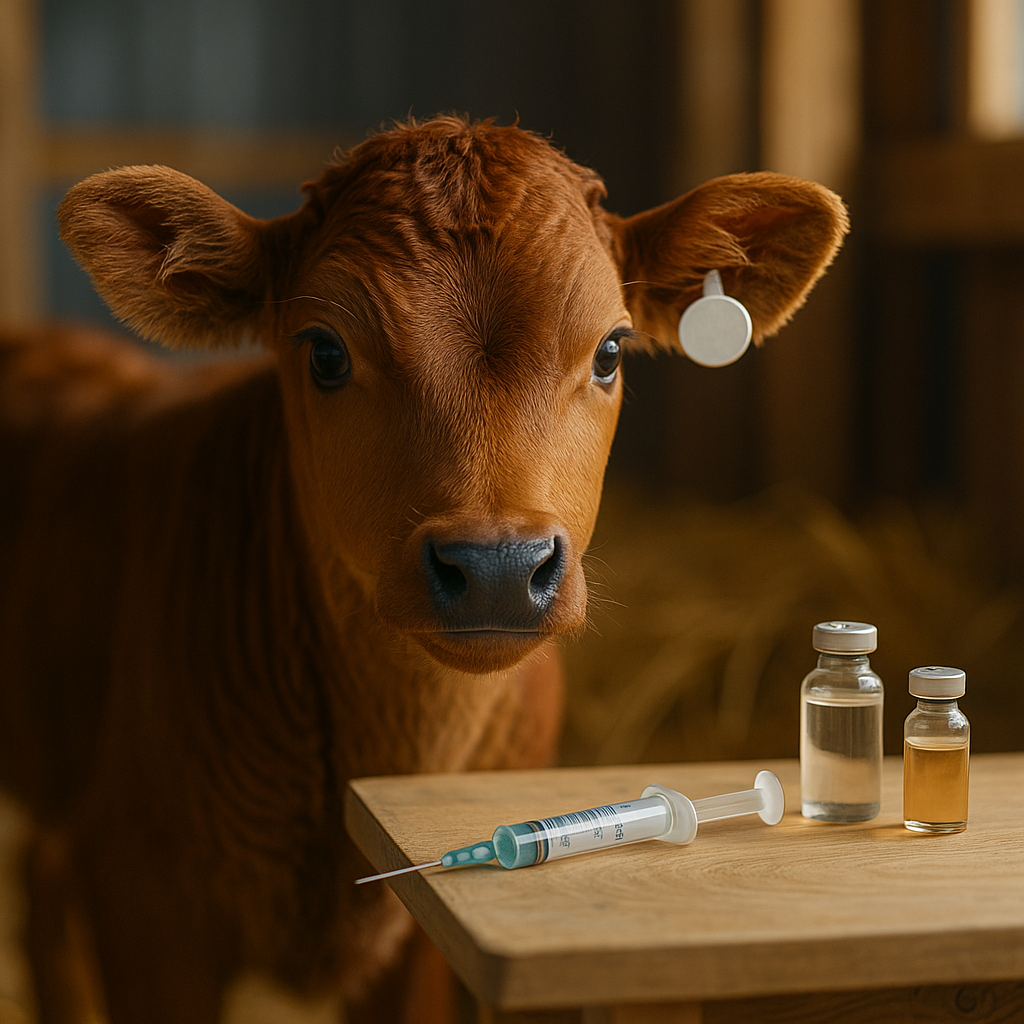
Some calves receive:
- Vitamin shots 💊.
- Vaccines 💉 (depending on farm and region).
- Pain relief ❤️🩹 if birth was difficult.
These aren’t universal, but in many systems they’re crucial steps toward a healthy life.
🍶 Beyond Colostrum: Early Feeding
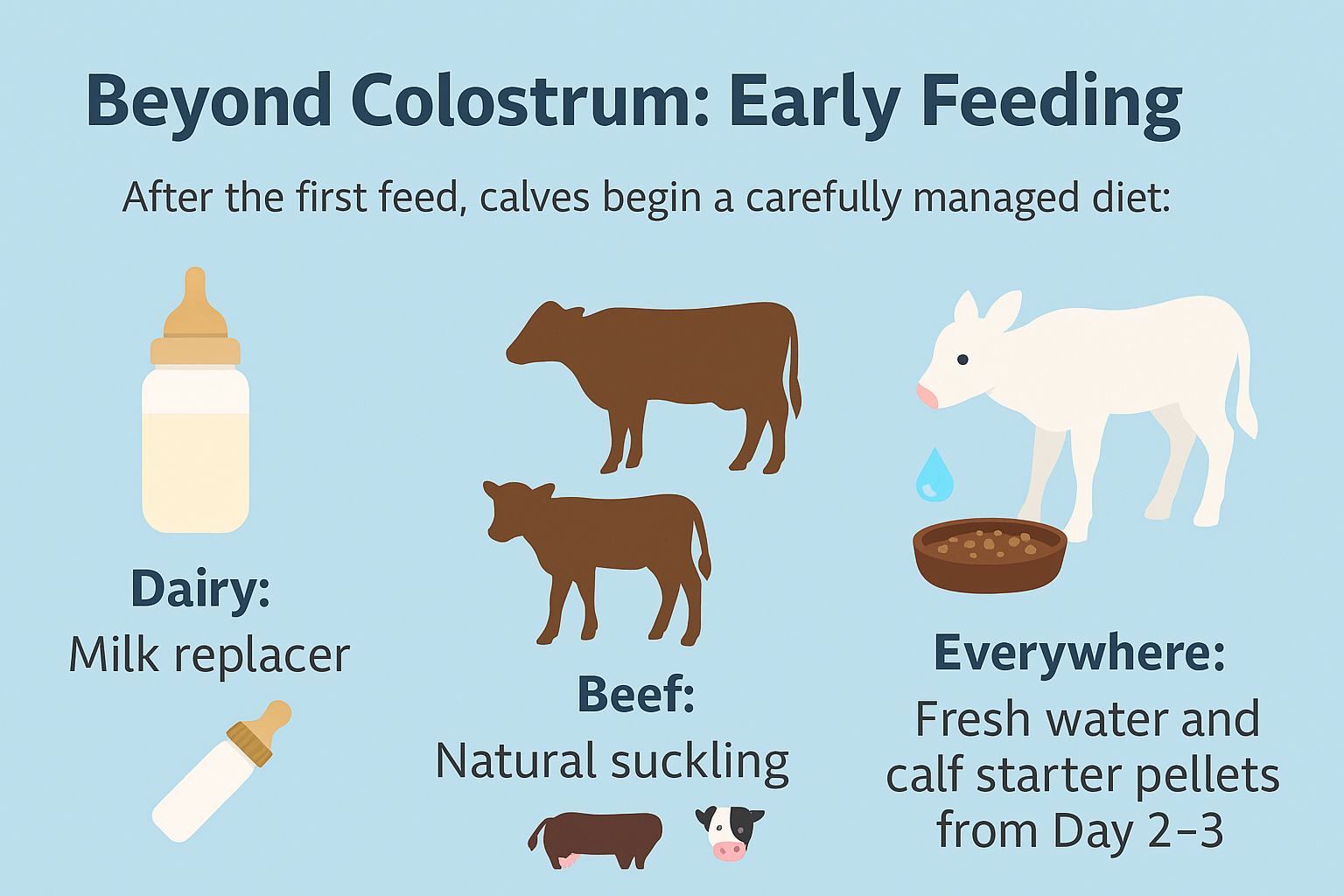
After the first feed, calves begin a carefully managed diet:
- Dairy: Milk replacer 🍼 or whole milk twice a day.
- Beef: Natural suckling 🐄.
- Everywhere: Fresh water 💧 and calf starter pellets 🌾 from Day 2–3.
Urban readers might imagine calves drinking only milk until adulthood. The truth: calves are trained early to eat solid feed, which develops the rumen and prepares them for grass or grain diets.
❤️ The Farmer’s Vigil
Behind all this science lies humanity.
- 🌙 Night checks, flashlights cutting across fields.
- 👢 Boots crunching on frozen straw.
- 😴 Lost sleep, but smiles when a calf jumps to its feet.
For many farmers, calving season is exhausting but rewarding. Each calf is a small victory, each loss a heavy weight.
🌍 Global Perspectives
🇪🇺 Europe
- Strict regulations on colostrum, tagging, welfare.
- Emphasis on biosecurity.
🇺🇸 North America
- High-tech calf barns.
- Automated feeders 🤖.
- Calf jackets common in northern states.
🇳🇿 New Zealand & 🇦🇺 Australia
- Seasonal calving matches spring grass.
- Calves reared largely outdoors.
🌍 Africa & Asia
- Smallholder farms rely on family labor.
- Calves are often integrated into daily household life.
- Strong cultural importance (especially in India 🕉️).
🌱 Conclusion: 48 Hours That Shape a Lifetime
From the first breath 🌬️ to the first sip of colostrum 🍼, from warmth 🔥 to protection 🧴, every action in the first 48 hours of a calf’s life is a step toward survival and success.
For farmers, it is a routine built on centuries of experience. For urban readers, it is a glimpse into the unseen dedication behind every glass of milk and every beef steak.
These first hours are fragile, messy, sometimes heartbreaking — but also filled with resilience, compassion, and the quiet triumph of new life.