Chainsaw Safety Guide: Pre-Start Checks, Safe Starts, and Handling Basics for Every User
Chainsaws are powerful tools — indispensable for pruning trees, cutting firewood, or clearing fallen branches after a storm. But their power also demands respect. Whether you’re a rural landowner, farmer, or backyard DIYer, following a solid chainsaw safety routine can prevent accidents and extend the life of your saw.
In this chainsaw safety guide, we’ll cover five key areas:
- 🧰 Pre-start safety checks
- ⚙️ Safe starting techniques
- ⚠️ Kickback prevention
- 💪 Chainsaw handling basics
🗣️ Working safely around others
🧰 Pre-Start Safety Checks: What to Inspect Before Every Use
Before pulling the starter cord, take five minutes to check that your saw is in safe working order. These small steps prevent injuries and costly breakdowns.
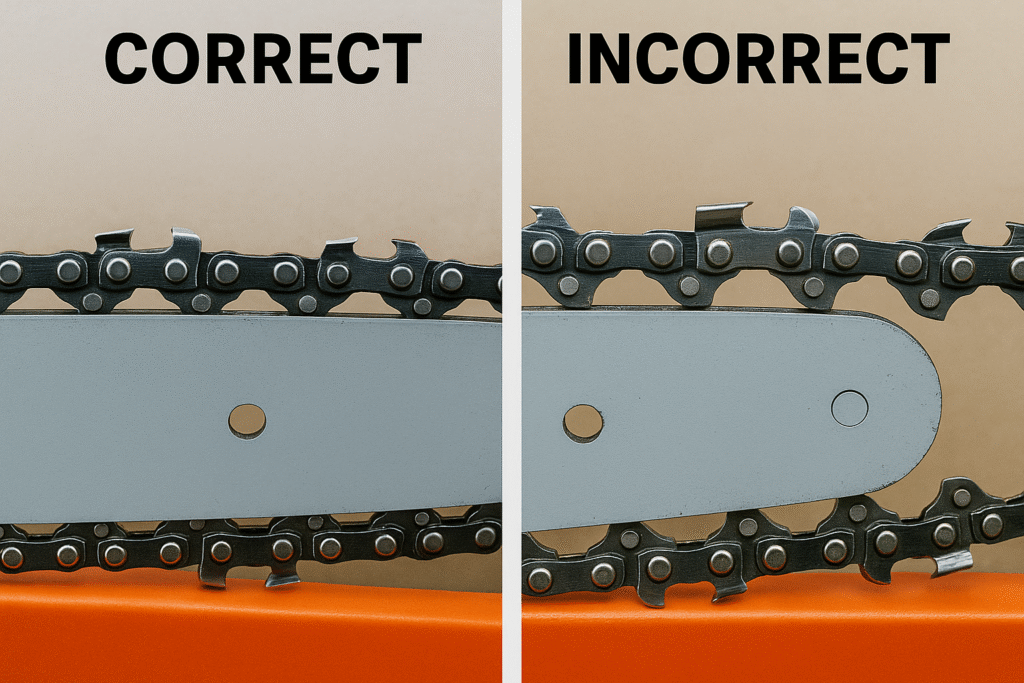
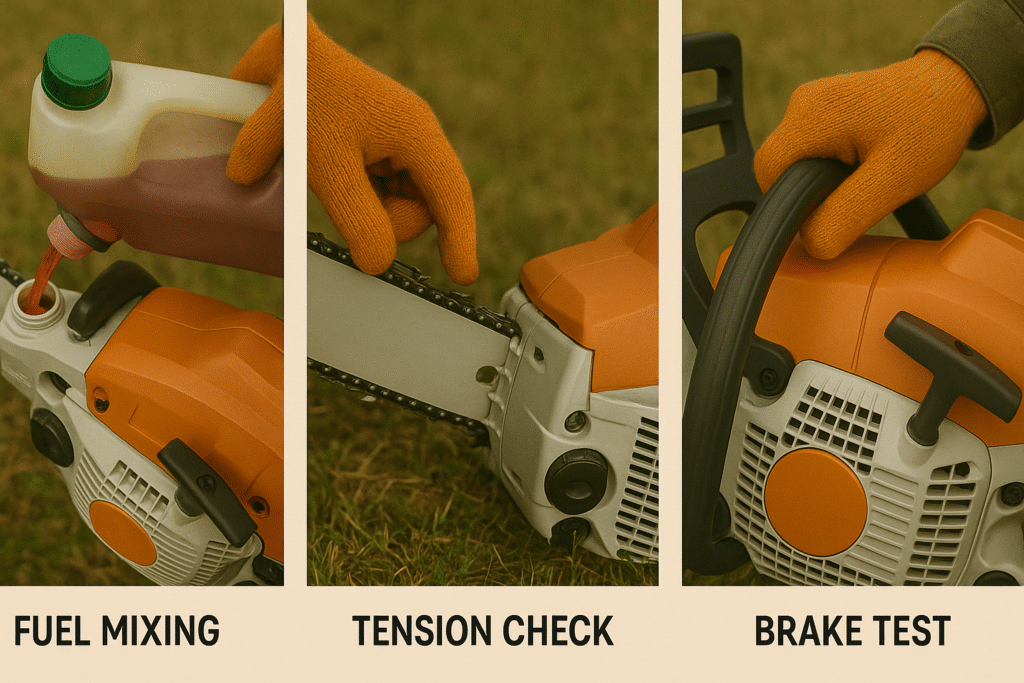
🔩 1. Check Chain Tension
A loose chain can jump off the bar. A chain that’s too tight wears out quickly.
How to check:
- Pull the chain slightly away from the bar.
- It should snap back into place but still move smoothly by hand.
If it sags or feels stuck, adjust the tension screw near the bar.
🪫 2. Fuel and Oil Levels
Always start with fresh, properly mixed fuel (for petrol saws). Old or incorrect fuel mixtures can gum up the carburetor and reduce performance.
Checklist:
- ✅ Use a 50:1 fuel-to-oil ratio for most 2-stroke engines.
- ✅ Fill the chain oil reservoir — it’s vital for bar lubrication.
- ✅ Avoid running the saw dry, as it can damage the bar and chain.
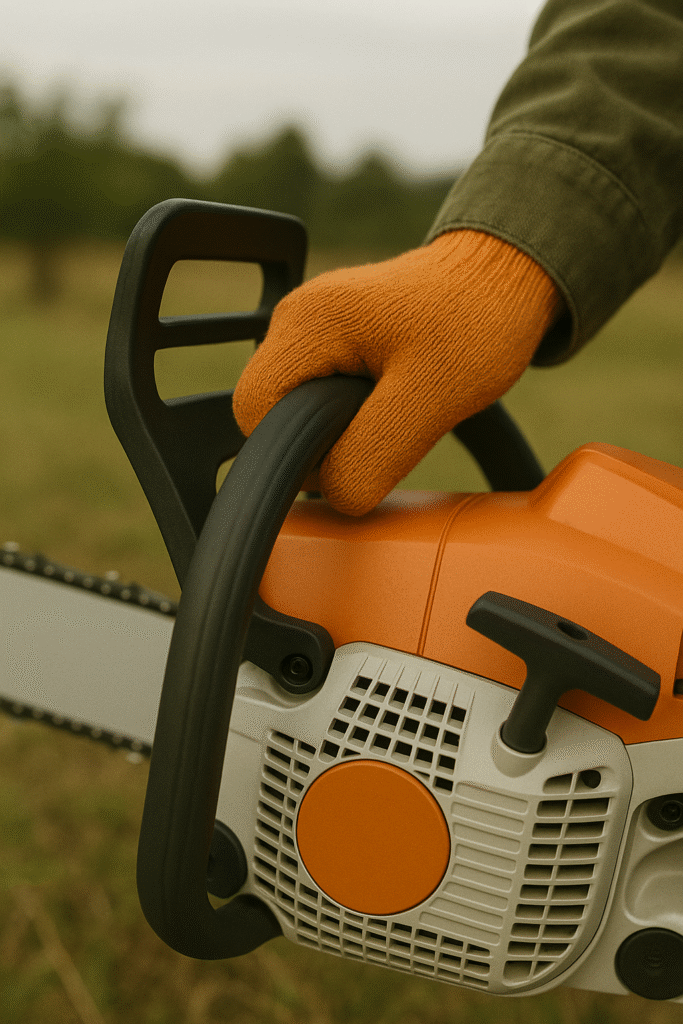
🧯 3. Chain Brake and Safety Features
The chain brake should engage and stop the chain instantly when pushed forward.
Test before starting:
- Push the brake handle forward, then try to rotate the chain manually — it shouldn’t move.
- Release it and ensure the chain moves freely again.
🪵 4. Guide Bar and Chain Condition
Inspect the guide bar for wear or burrs and the chain for sharpness.
Signs your chain needs sharpening:
- Fine sawdust instead of chips.
- The saw “pulls” to one side.
- You’re pressing harder than usual to cut.
⚡ 5. Nuts, Bolts, and Air Filter
Vibration can loosen screws over time.
Quick once-over:
- Tighten visible screws.
- Clean or replace the air filter if clogged — this ensures clean airflow for combustion.
⚙️ Safe Starting Techniques: Ground Start vs. Drop Start
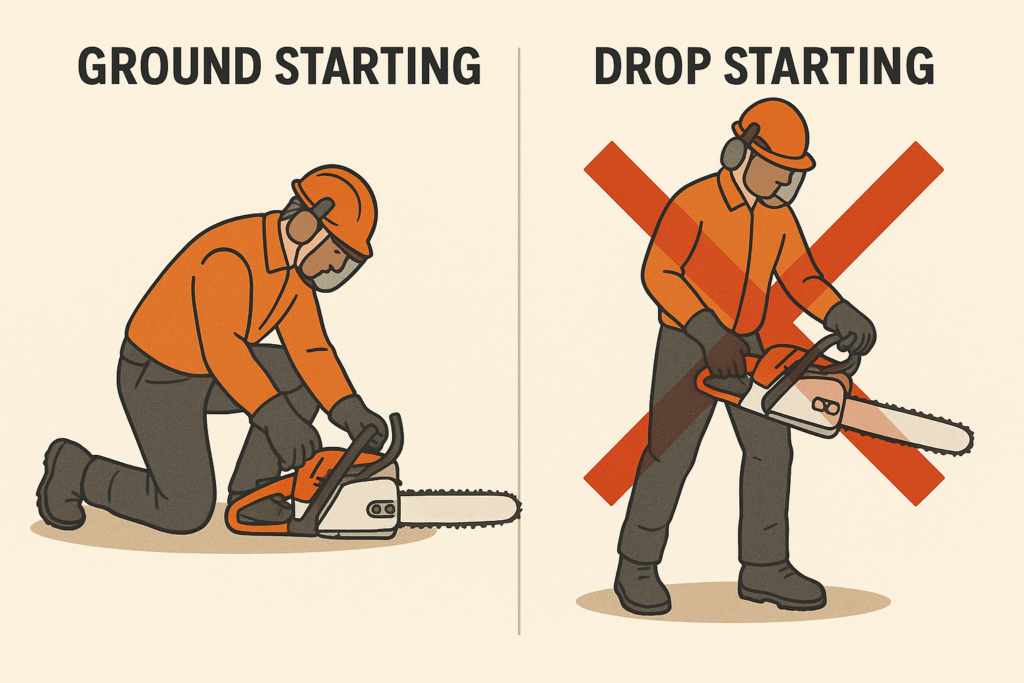
A safe start sets the tone for safe cutting. While some operators still use “drop starting,” it’s a habit best left behind.
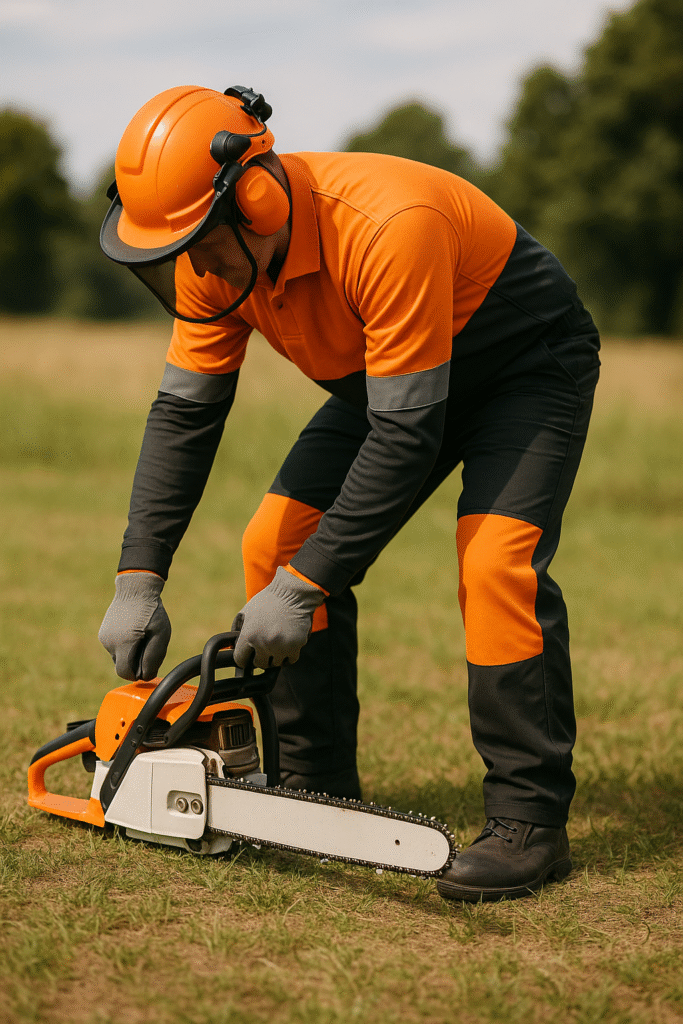
🏁 Ground Starting: The Safe Way
Ground starting gives you maximum control and stability.
Steps:
- Place the saw on flat ground.
- Activate the chain brake.
- Hold the front handle with your left hand, right foot in the rear handle.
- Pull the starter cord firmly with your right hand.
You’ll stay balanced, and the saw won’t move unexpectedly.
⚠️ Drop Starting: Why It’s Unsafe
Drop starting means holding the saw in one hand and pulling the cord with the other. It’s fast, but dangerous.
Risks include:
- Loss of grip, causing the saw to swing or kick.
- Chain engagement before proper control.
- Strain injuries to the shoulder.
Professional forestry training now discourages drop starting entirely. Even small saws should be started on the ground or between the knees for stability.
⚠️ Kickback Prevention: Understanding and Avoiding the Most Common Chainsaw Hazard
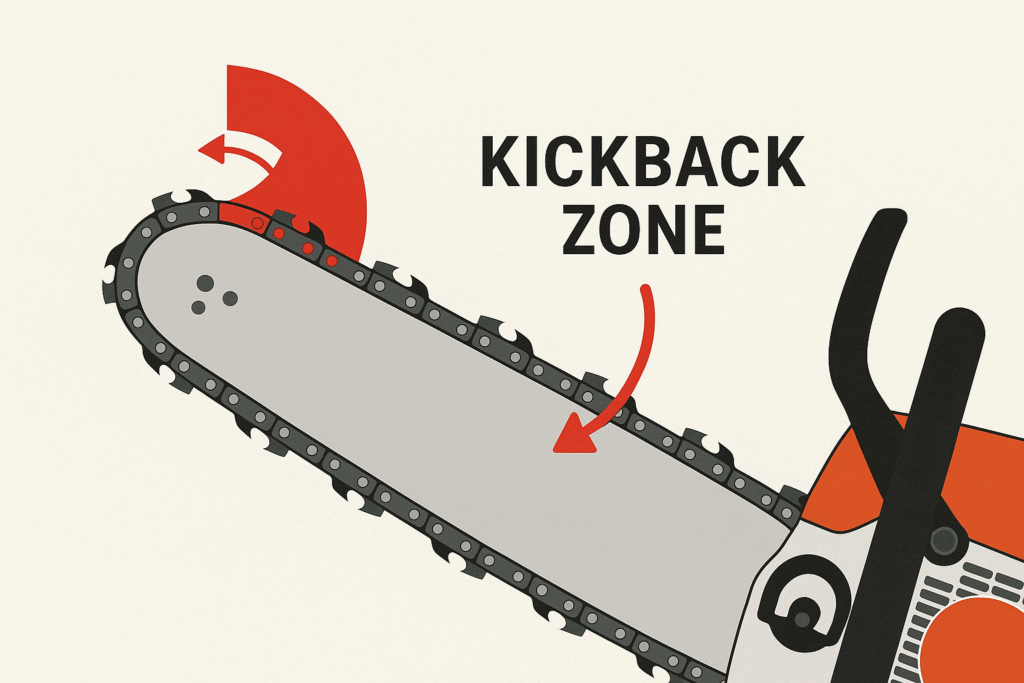
Kickback happens when the tip of your chain bar touches an object and suddenly jerks back toward you. It’s one of the leading causes of chainsaw injuries — but also one of the most preventable.
🌀 What Causes Kickback?
- The upper quadrant of the bar nose (known as the kickback zone) hits wood or metal.
- A dull chain grabs instead of cutting.
- The chain brake isn’t engaged during a start.
- Cutting above shoulder height or with one hand.
🛠️ How to Prevent Kickback
- Keep the chain sharp and well-tensioned.
- Maintain a firm two-handed grip.
- Cut at waist height or below whenever possible.
- Use a low-kickback chain if you’re new to chainsaw work.
- Always engage the chain brake before moving or starting the saw.
🧠 Smart Habits for Safer Cuts
- Plan your cut path before you begin.
- Be aware of hidden nails or knots in timber.
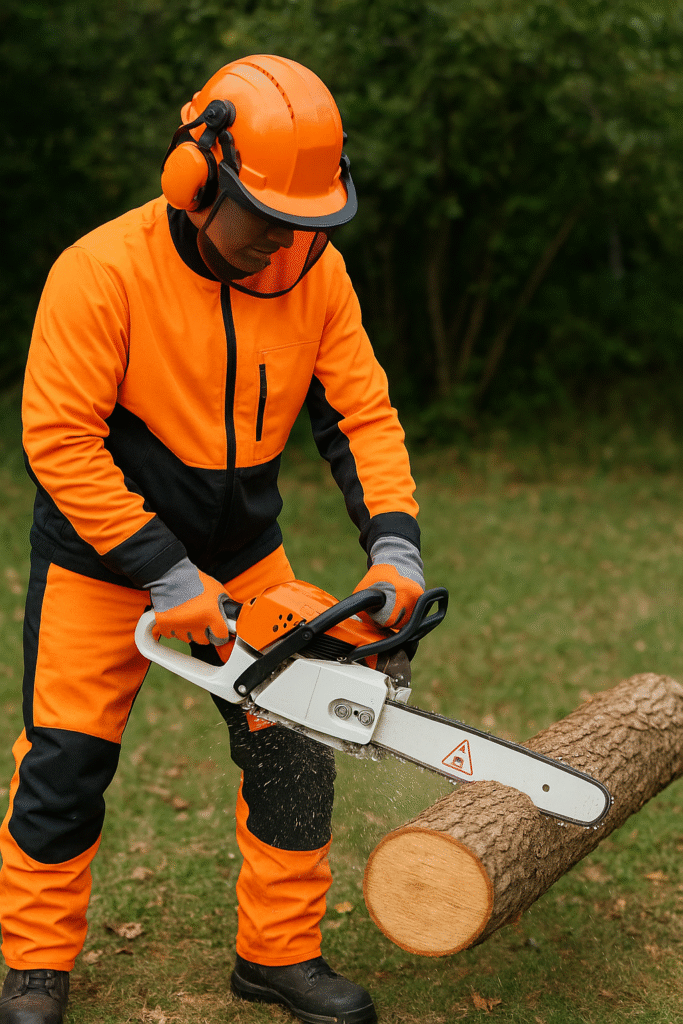
Proper handling isn’t just about comfort — it’s your foundation for safety and efficiency.
🦶 Foot Position and Balance
Stand with your feet shoulder-width apart, one slightly ahead of the other. Keep knees bent for stability.
Good balance helps you:
- React quickly if the saw kicks.
- Avoid fatigue during long cutting sessions.
- Keep control when cutting uneven logs or sloped terrain.
✋ Grip and Control
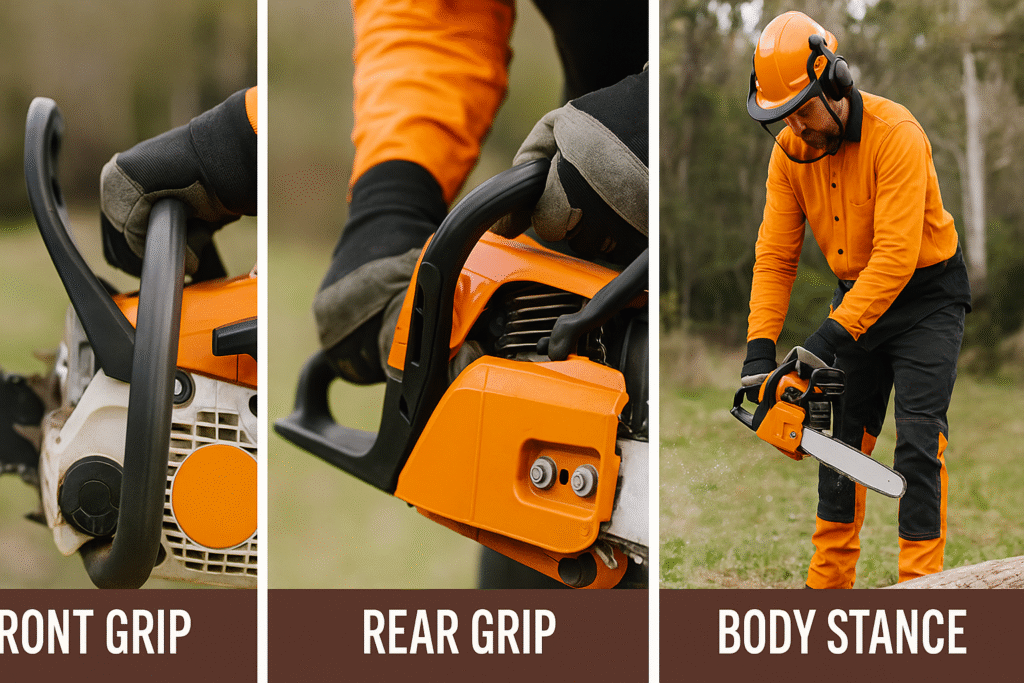
Hold the front handle with your left hand and the rear with your right (even if you’re left-handed). Wrap your thumbs fully around the handles for a secure grip.
Tips for better control:
- Don’t over-grip — stay relaxed but firm.
- Keep wrists straight, not bent inward.
- Maintain both hands on the saw at all times while cutting.
🧍 Body Position
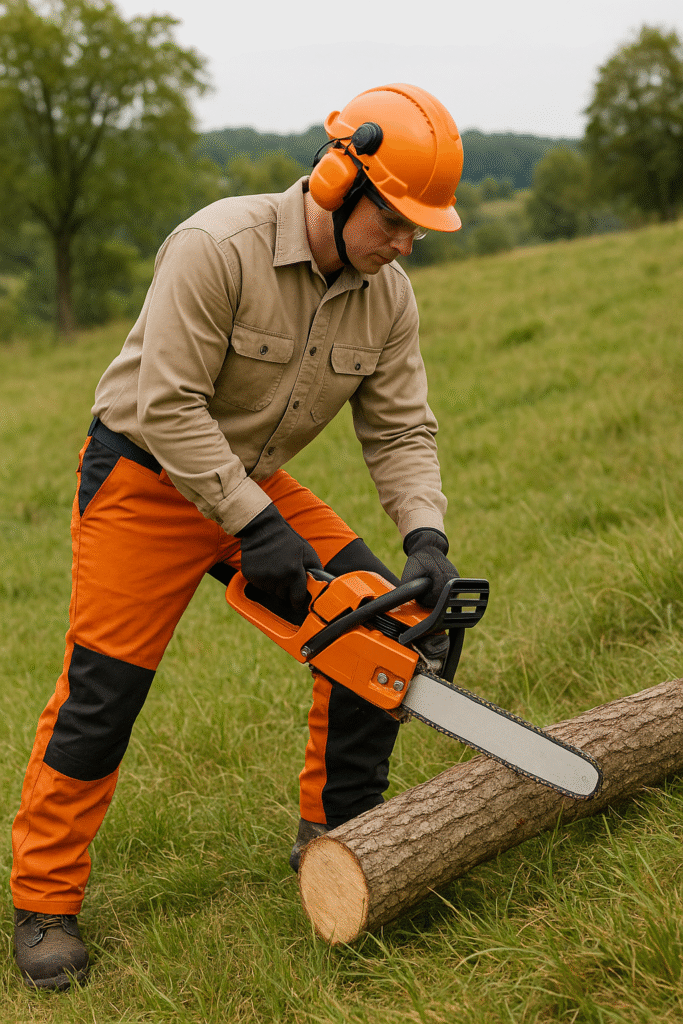
Keep the saw close to your body, not outstretched. This gives better control and reduces arm strain.
When cutting on slopes, always stay uphill from the saw. Never stand downhill from what you’re cutting — logs can roll toward you.
Quick rule:
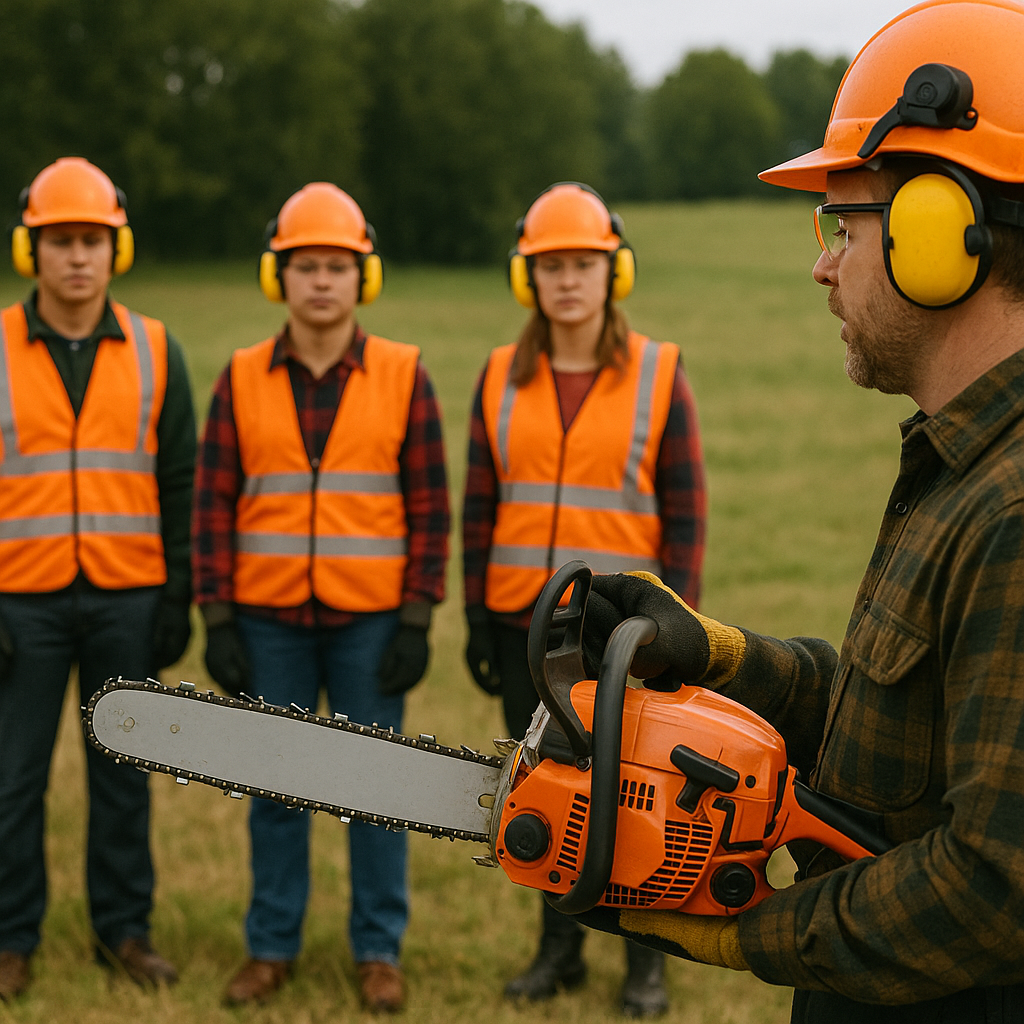
Chainsaw safety isn’t just about the operator — it’s about everyone nearby.
📏 Maintain Safe Distances
Keep at least 3 metres (10 feet) between you and anyone else when cutting. If felling trees, extend that to at least twice the height of the tree.
Never assume others see or hear you over the engine noise.
📣 Clear Communication
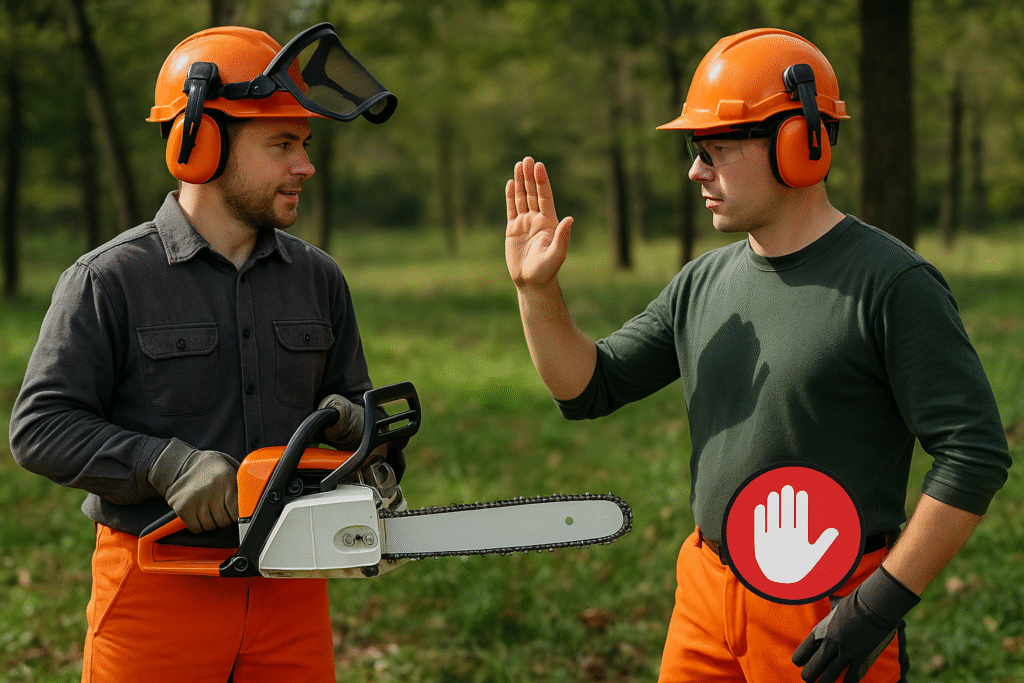
Agree on hand signals or short radio calls before starting. Common examples:
- ✋ Raised hand: “Stop.”
- 👉 Point: “Move this way.”
- ✅ Thumbs up: “All clear.”
These simple signals reduce confusion and prevent accidents — especially on noisy worksites.
🧍♂️ Watch for Fatigue and Distraction
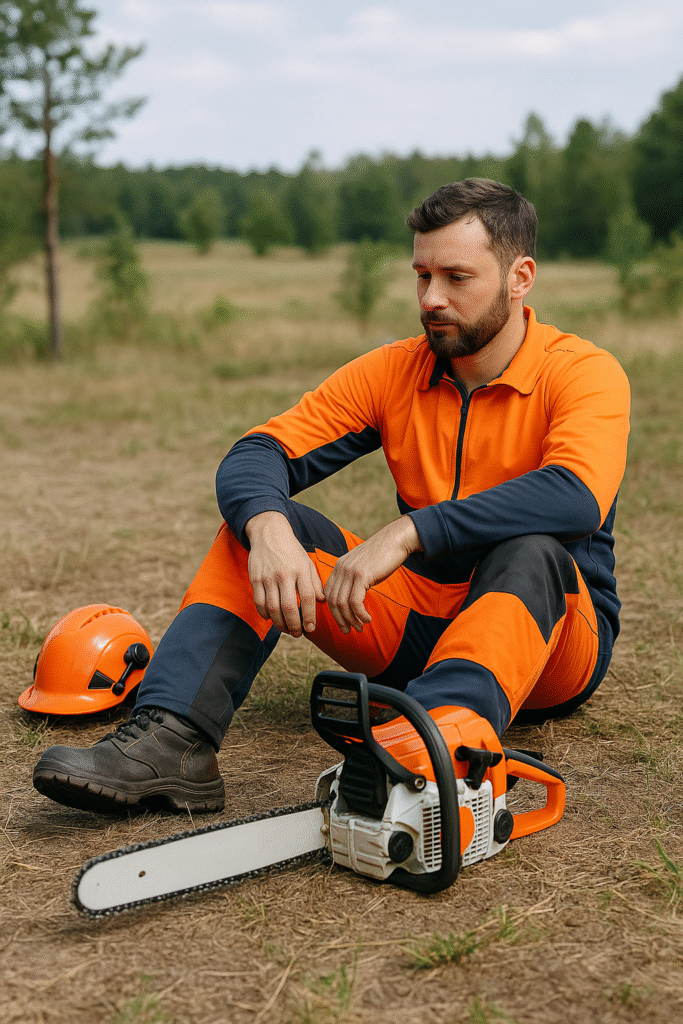
Chainsaw work demands focus. Take breaks, hydrate, and step away when tired. Many accidents happen at the end of the day when concentration fades.
🧾 Wrapping It Up: Building Safer Chainsaw Habits
Good chainsaw safety isn’t about memorizing a checklist — it’s about making these actions second nature.
Remember the five essentials:
- 🧰 Check your saw before every start.
- ⚙️ Always use safe starting methods.
- ⚠️ Understand and prevent kickback.
- 💪 Maintain control with correct stance and grip.
- 🗣️ Keep others safe through communication and spacing.
Even experienced users revisit these steps often. Over time, these habits create a safer, more confident workflow — whether you’re cutting firewood, maintaining a farm, or helping clear storm damage.