
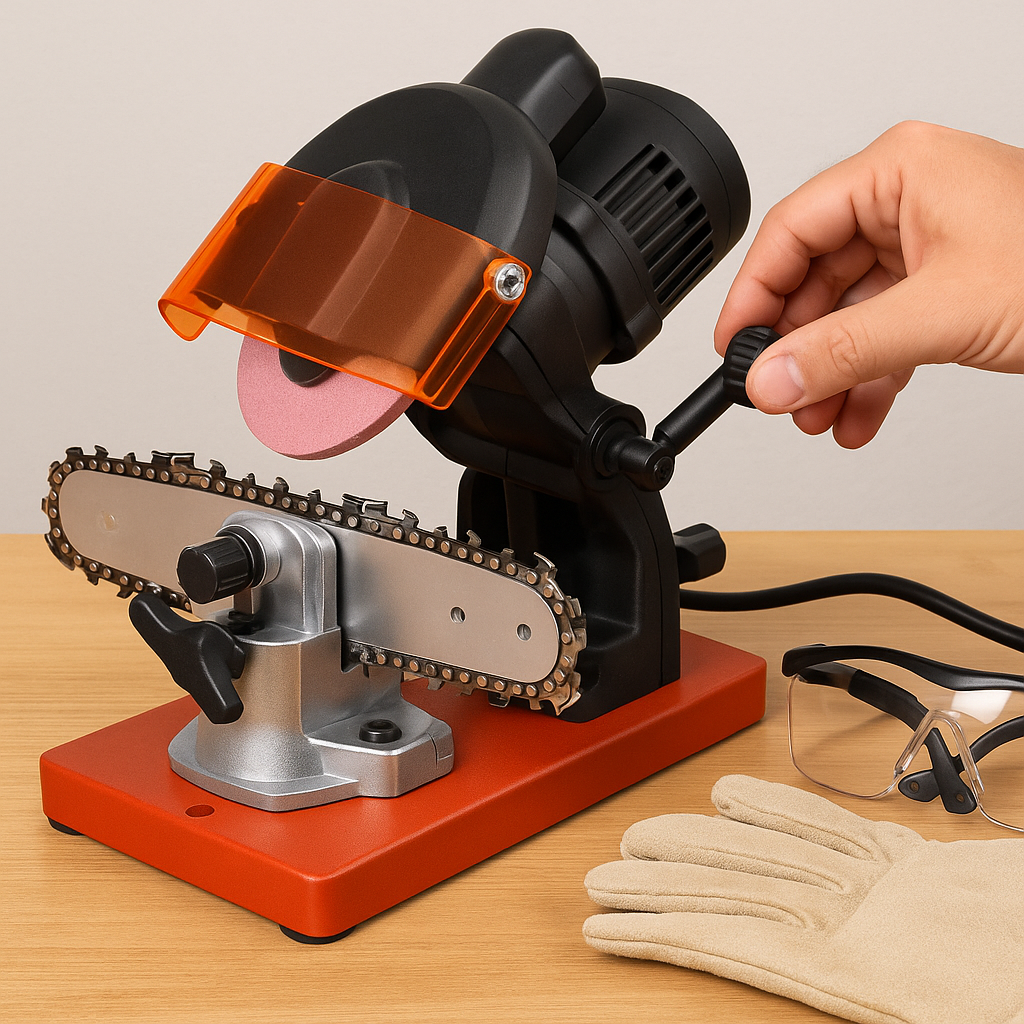
⚡ Electric Chainsaw Sharpeners Explained: A Complete Guide for Beginners
Introduction
Electric chainsaw sharpeners are one of the most useful tools for anyone who regularly cuts wood, trims trees, or maintains property. If you’ve ever used a chainsaw for more than a few hours, you know how quickly the chain dulls — cutting slows down, wood chips turn to dust, and you find yourself forcing the saw instead of letting it slice smoothly. That’s where an electric chainsaw sharpener becomes invaluable: it restores your chain’s sharpness quickly, safely, and with precision.
In this guide, we’ll explore what electric chainsaw sharpeners are, how they work, their benefits and drawbacks, and how to choose the right type for you — whether you’re a casual homeowner, a weekend woodcutter, or a seasoned professional.
🔌 What Is an Electric Chainsaw Sharpener?
An electric chainsaw sharpener is a powered grinding tool designed to restore the sharp cutting edge of each tooth on your chainsaw chain.
Every chain consists of tiny teeth that act like miniature chisels, slicing through wood fibers. Dirt, sap, and contact with hard surfaces quickly dull these teeth, making cutting harder and more dangerous.
An electric sharpener solves that problem by using a rotating grinding wheel that reshapes each tooth at the correct angle. This process removes only a thin layer of metal, returning each cutter to its original sharpness. Electric sharpeners come in various forms — bench-mounted, wall-mounted, or portable — but all share the same goal: fast, consistent sharpening without guesswork.
⚙️ How Does an Electric Chainsaw Sharpener Work?
- The process is simple once you understand the basics:
- Mount the chain securely in the sharpener’s guide slot or vise.
- Adjust the sharpening angle to match your chain’s design (usually between 25° and 35°).
- Set the depth stop so the grinding wheel removes only a minimal amount of metal.
- Lower the spinning wheel gently onto each tooth until sharp.
- Advance the chain tooth by tooth, repeating the process for both sides.
The machine’s adjustable guides ensure each tooth is sharpened evenly — something that’s nearly impossible to achieve by hand with a file.
🧠 Why Sharp Chains Matter
A sharp chain isn’t just about cutting speed; it’s about safety, efficiency, and control. Dull chains can cause the saw to jump or kick back, burn through fuel faster, and wear out the engine prematurely.
Sharp chains:
- Produce clean, even cuts
- Require less downward pressure
- Reduce fatigue on the operator
- Make the saw easier to control
- Extend the lifespan of your chain, bar, and motor
Using an electric sharpener helps maintain these benefits with minimal time and effort.
🔋 Types of Electric Chainsaw Sharpeners
Electric sharpeners come in several styles, each suited to a particular use.
1️⃣ Bench-Mounted Sharpeners
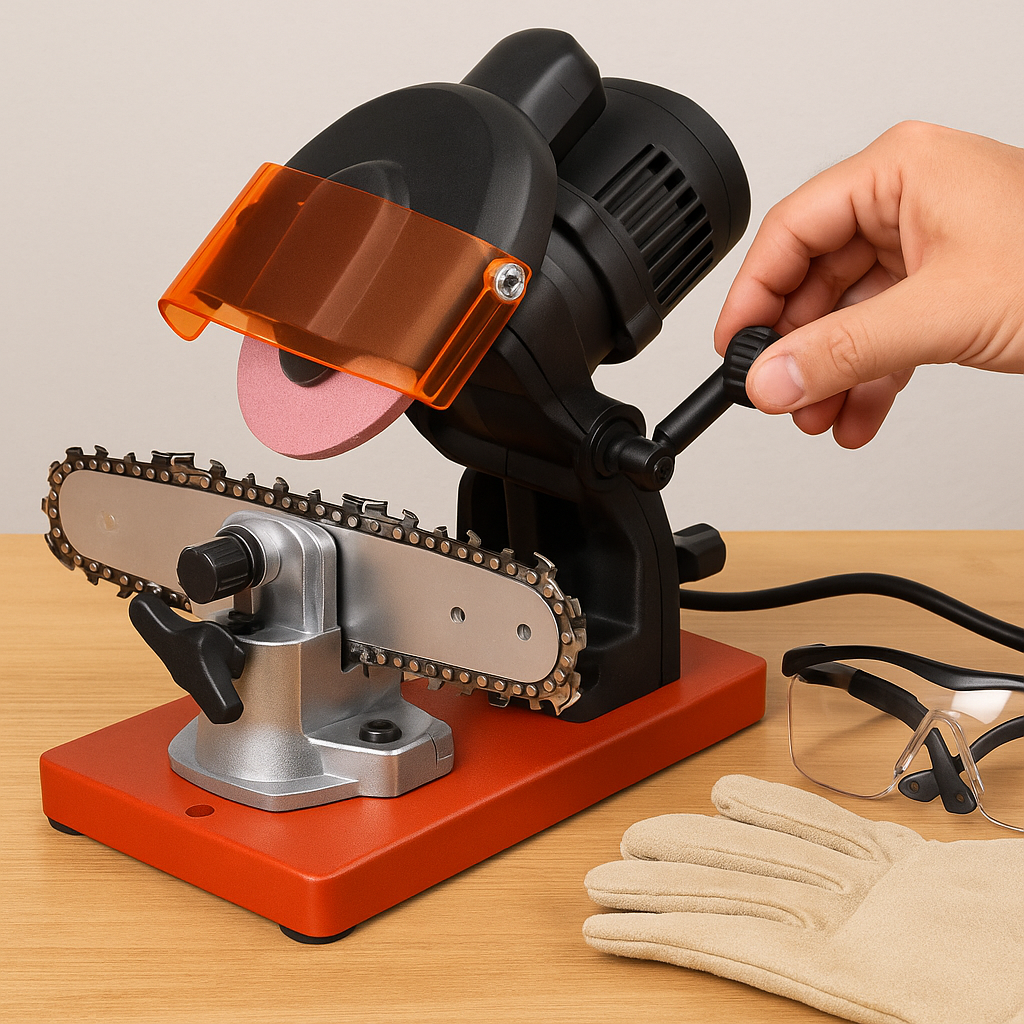
Bench-mounted sharpeners are the most precise and durable type. They attach to a workbench or table and allow for detailed adjustment of angle, depth, and tilt.
Best for: workshops, regular users, or anyone maintaining multiple chains.
Pros: very accurate, adjustable, long-lasting.
Cons: not portable, takes up space.
2️⃣ Wall-Mounted Sharpeners
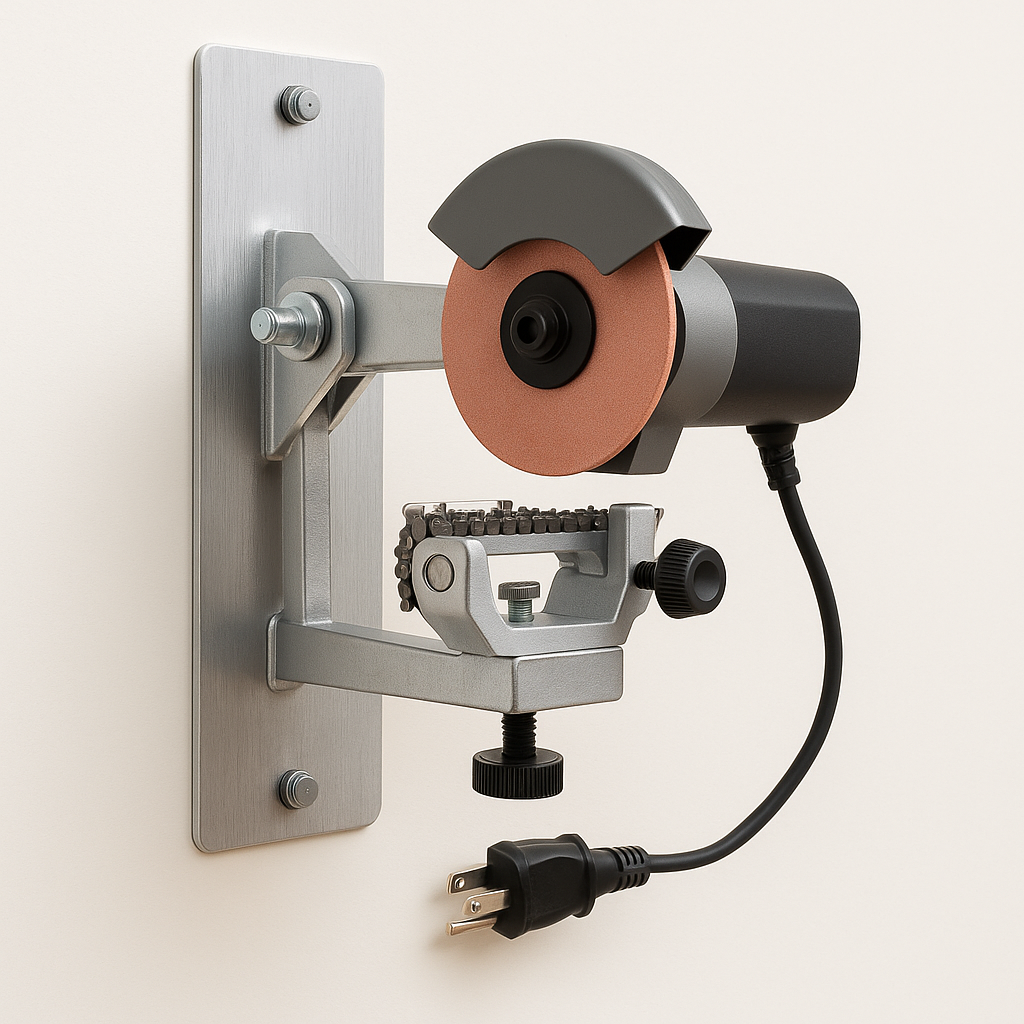
Wall-mounted versions work much like bench models but save space by attaching vertically. They’re perfect for home garages or sheds with limited workspace.
Best for: consistent use in small workshops.
Pros: stable, reliable, adjustable.
Cons: fixed installation, less mobile.
3️⃣ Portable Plug-In Sharpeners
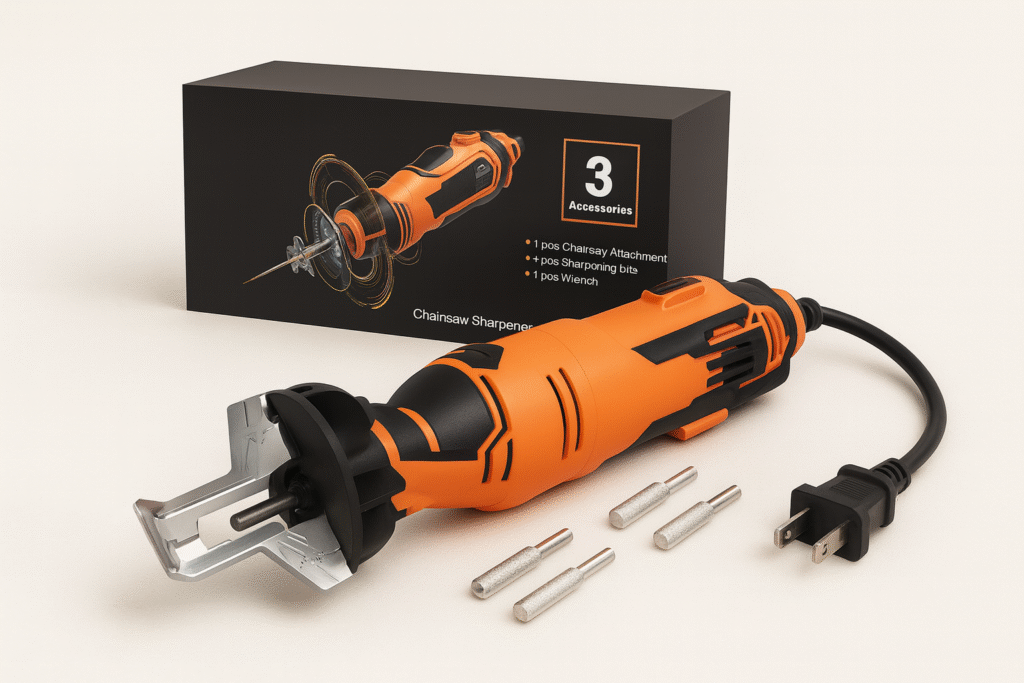
Portable electric sharpeners are smaller, lighter, and often plug directly into standard power outlets or generators. They’re not as precise as bench-mounted systems but excellent for quick touch-ups.
Best for: farmers, landscapers, and homeowners.
Pros: compact, convenient, quick setup.
Cons: lower stability, more manual alignment.
4️⃣ Cordless Battery Sharpeners
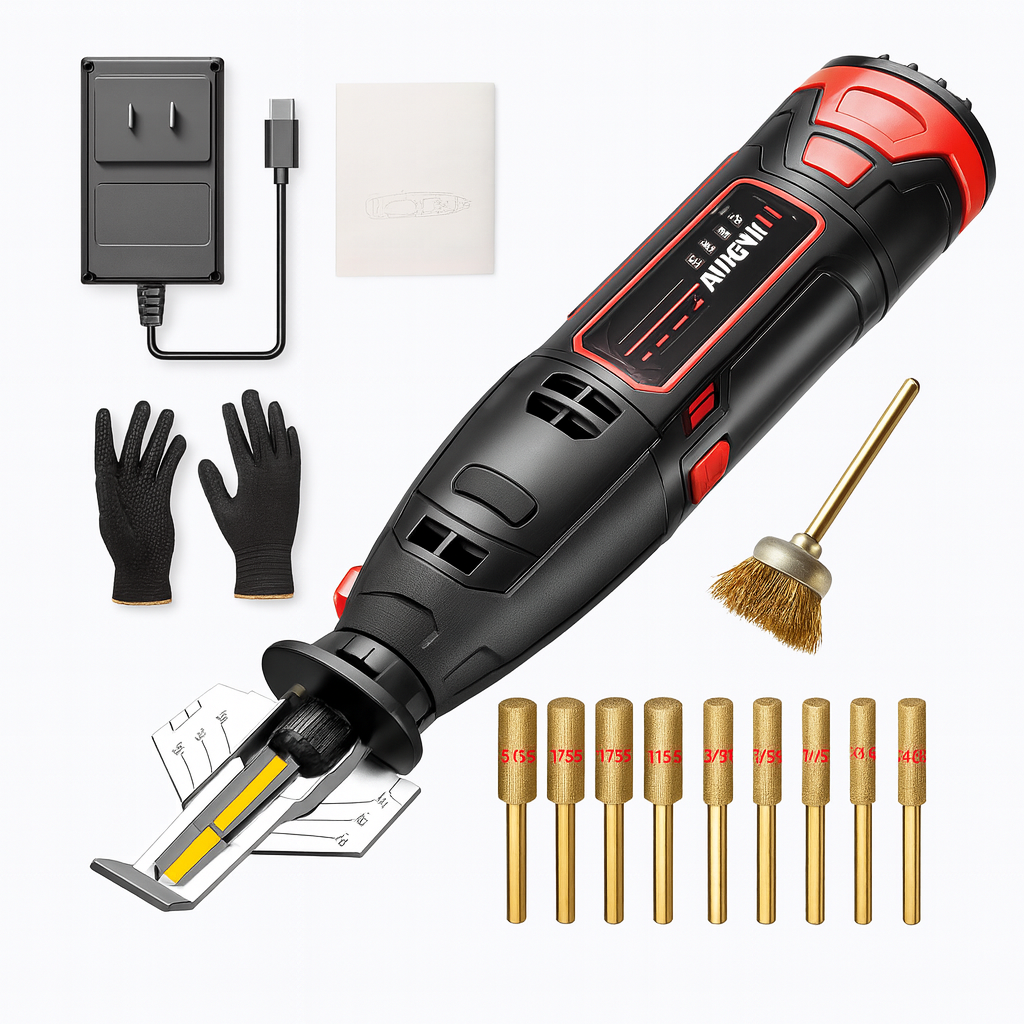
Cordless sharpeners run on rechargeable batteries — great for fieldwork or remote areas without electricity.
Best for: forestry workers or outdoor jobs.
Pros: easy to carry, simple operation.
Cons: shorter runtime, less grinding power.
🔩 Main Parts of an Electric Chainsaw Sharpener
Understanding the components helps you get better results:
| Component | Function |
| Grinding wheel | Rotates at high speed to grind the cutting teeth. |
| Chain vise or clamp | Holds the chain steady while sharpening. |
| Angle guide | Adjusts to match the proper sharpening angle. |
| Depth stop | Controls how much metal is removed from each tooth. |
| Motor | Powers the grinding wheel. |
| Protective guard | Shields you from sparks and debris. |
⚡ Why Electric Sharpeners Are Great
Electric sharpeners are favored for a simple reason: they make chain maintenance faster, easier, and more accurate.
🔧 1. Fast and Consistent Results
A task that might take half an hour with a file can be completed in just minutes with an electric sharpener. Every tooth is sharpened to the same length and angle, ensuring smooth, balanced cutting.
💪 2. Less Effort
The motorized wheel removes the physical strain of hand-filing — perfect for people who use their chainsaw often or have limited hand strength.
⚙️ 3. Precision Control
You can adjust sharpening angles, tilt, and depth with precision. This level of control leads to a cleaner, more efficient cut and less wear on your saw.
💰 4. Cost-Effective Over Time
Though more expensive initially, electric sharpeners quickly pay for themselves by eliminating frequent professional sharpening costs and extending the lifespan of your chains.
🌲 5. Safer Cutting
A properly sharpened chain bites into wood smoothly, reducing kickback and making the saw easier to control — a major safety benefit.
⚠️ Drawbacks to Consider
No tool is perfect. Here are a few realistic downsides:
❌ 1. Initial Learning Curve
Setting up angles and depths can be confusing at first. Once you understand it, though, it becomes quick and intuitive.
❌ 2. Over-Sharpening Risk
Pressing too hard or using the wrong angle can remove too much material and shorten the chain’s life. Gentle passes work best.
❌ 3. Portability Limits
Bench-mounted sharpeners aren’t designed for field use. If you cut wood outdoors, you may prefer a portable or cordless option.
❌ 4. Noise and Power Use
Electric sharpeners are louder than manual files and need access to power — though still much quieter than other workshop tools.
❌ 5. Higher Upfront Cost
They cost more than manual file kits, but they’re a long-term investment for regular users.
🧰 How to Use an Electric Chainsaw Sharpener
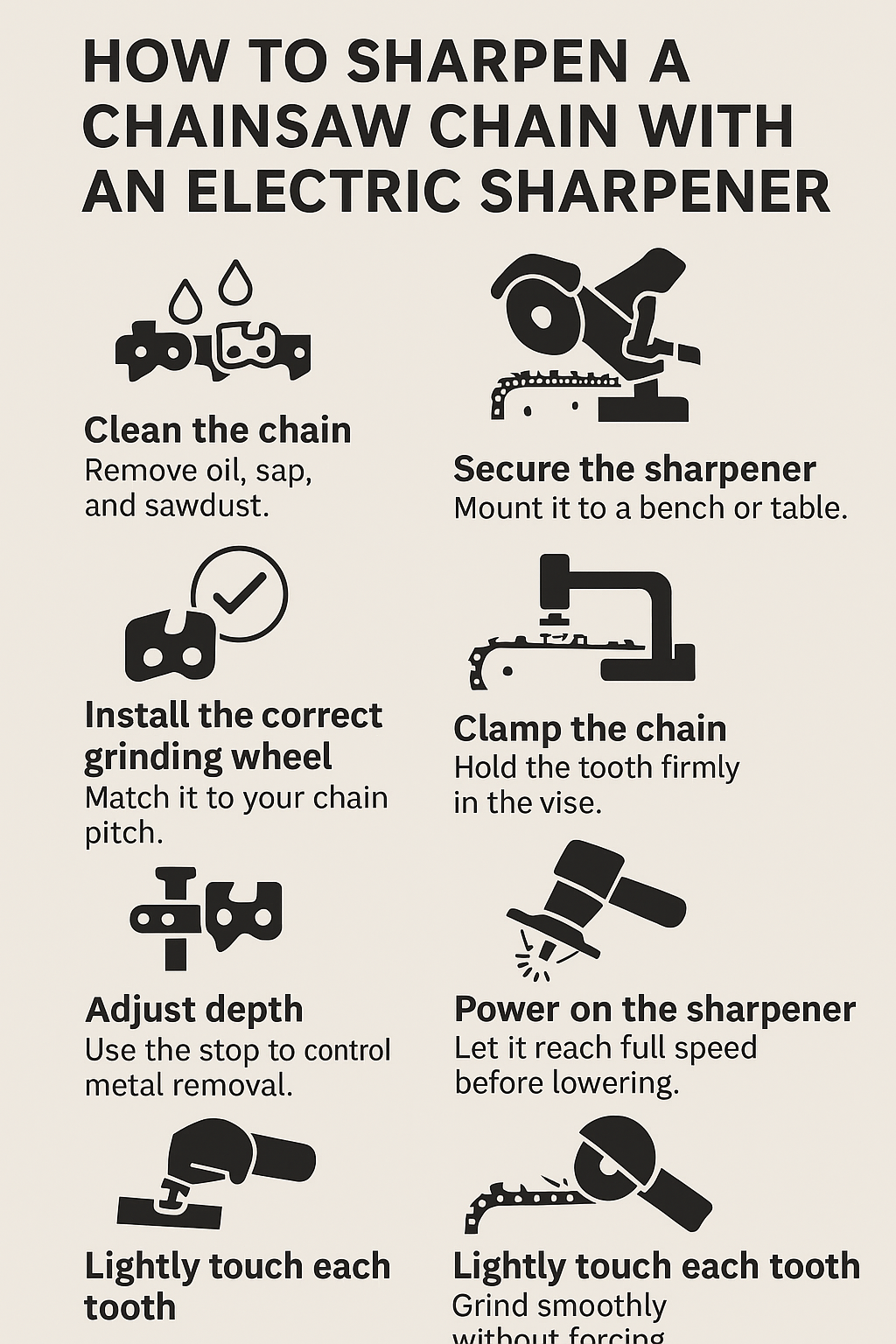
Follow these steps for safe, efficient sharpening:
- Clean the chain. Remove oil, sap, and sawdust.
- Secure the sharpener. Mount it to a bench or table.
- Install the correct grinding wheel. Match it to your chain pitch.
- Set the sharpening angle. Commonly 25°–35°, depending on chain type.
- Clamp the chain. Hold the tooth firmly in the vise.
- Adjust depth. Use the stop to control metal removal.
- Power on the sharpener. Let it reach full speed before lowering.
- Lightly touch each tooth. Grind smoothly without forcing.
- Advance the chain. Move to the next tooth and repeat.
- Flip the chain or reset the angle. Sharpen the opposite side evenly.
🪵 Tip: Mark the starting tooth with a marker to avoid overlap.
🪚 When to Sharpen
A dull chain gives clear warning signs:
- Fine sawdust instead of coarse chips
- Smoke or burning smell
- The saw veers to one side
- You must push harder than usual
- The chain bounces or rattles
For regular users, a light sharpening after every few hours of use keeps the chain efficient and extends its lifespan.
🧤 Safety Tips
- Always wear eye and ear protection.
- Avoid loose sleeves, jewelry, or long hair near moving parts.
- Check the grinding wheel for cracks or wear before use.
- Never exceed recommended motor speeds.
- Unplug the sharpener before making adjustments or changing wheels.
- Keep sparks away from flammable materials.
Safety is simple — just slow down, focus, and stay organized.
🧱 Maintenance Tips
To keep your sharpener in good condition:
- Clean metal filings and dust after each use.
- Replace worn grinding wheels regularly.
- Lubricate moving joints occasionally.
- Store the sharpener in a dry place.
- Inspect electrical cords for damage.
A few minutes of care extends the life and accuracy of your tool.
⚖️ Electric vs Manual Sharpening
| Feature | Electric Sharpener | Manual File |
| Speed | Very fast | Slower |
| Precision | High consistency | Depends on user skill |
| Ease of Use | Beginner-friendly | Requires practice |
| Portability | Bench models fixed | Highly portable |
| Cost | Higher upfront | Low |
| Accuracy | Uniform results | Varies per tooth |
In summary: Electric sharpeners are ideal for those who value efficiency and accuracy. Manual files remain handy for small touch-ups in the field, but electric options deliver professional consistency.
🌿 Environmental and Economic Advantages
Electric sharpeners help the planet — and your wallet:
- Fewer dull chains end up discarded
- Less fuel or electricity wasted during cutting
- Fewer professional sharpenings needed
- Longer lifespan for both saw and chain
A sharp chain uses energy more efficiently, cutting cleaner with less strain on your saw.
🧠 Common Questions
Q: Will an electric sharpener work on any chain?
Most sharpeners are adjustable to fit standard chain pitches, though checking your chain specs is always smart.
Q: Is it difficult to learn?
Not at all. Once you’ve set the right angle and depth a few times, it becomes second nature.
Q: How often should I sharpen?
Every few hours of cutting or when you notice performance decline.
Q: Can I ruin my chain by over-sharpening?
Yes — removing too much metal weakens the teeth. Use gentle, short passes for best results.
🪵 Real-World Example
Imagine you’re halfway through cutting a pile of firewood. Suddenly, your saw starts struggling — the chips turn dusty, and the motor strains. Instead of fighting through it, you stop, secure your chain in an electric sharpener, and five minutes later, you’re cutting cleanly again.
That’s the magic of electric sharpening — quick, accurate, and efficient.
💬 Final Thoughts
Electric chainsaw sharpeners take the frustration out of chain maintenance. They’re fast, consistent, and easy to use — ideal for anyone who values precision and safety.
While they require an upfront investment and a little practice, their benefits far outweigh the drawbacks. Whether you’re managing a property, cutting firewood, or maintaining equipment, a good electric sharpener saves time, money, and effort.
In short: a sharp chain is a safe, efficient chain — and an electric sharpener is the simplest way to keep it that way. ⚙️