
💧 Irrigation in Regenerative Farming: Why It Matters and Which Systems Work Best
🌱 Introduction
Regenerative farming is about more than producing food—it’s about looking after, and healing the land while growing healthy crops. Practices like cover cropping, no-till planting, rotational grazing, and composting all restore soil health. But one factor is often overlooked: irrigation.
Water is the lifeblood of farming. Without the right irrigation system, even the best regenerative practices can fail. Too much water can wash away soil and nutrients, while too little leads to drought stress and reduced yields. Regenerative farming requires irrigation methods that work with nature, conserve water, and support long-term soil health.
In this article, we’ll explore:
- Why irrigation belongs in regenerative farming
- The role of water in soil health and resilience
- The best irrigation systems for both urban gardens and rural farms
- How farmers and gardeners can choose the right system
🌍 Why Irrigation Matters in Regenerative Farming
1. Building Soil Health
Healthy soil is central to regenerative agriculture. Proper irrigation keeps soil moisture levels stable, encouraging microbes, earthworms, and fungi to thrive. Uneven watering stresses plants and soil biology, while consistent irrigation creates conditions for organic matter to accumulate and carbon to be stored.
2. Reducing Erosion and Runoff
Conventional flood irrigation often leads to runoff, stripping soil of nutrients and causing erosion. Regenerative irrigation systems like drip or subsurface irrigation apply water slowly and evenly, keeping soil intact and nutrients in place.
3. Increasing Water Efficiency
Water scarcity is a growing issue worldwide. Regenerative farming prioritizes efficient use of resources, and irrigation systems can cut water use by up to 50% compared to traditional methods.
4. Boosting Crop Resilience
Proper irrigation helps plants survive droughts, resist pests, and produce steady yields. Regenerative systems focus on long-term resilience, not short-term gains.
5. Supporting Diverse Cropping Systems
Regenerative farms often grow polycultures instead of monocultures. Irrigation systems must be adaptable to multiple crops with different water needs.
💧 Types of Irrigation Systems in Regenerative Farming
Not all irrigation systems are created equal. Let’s compare the most common methods, their pros, and cons.
1. Drip Irrigation
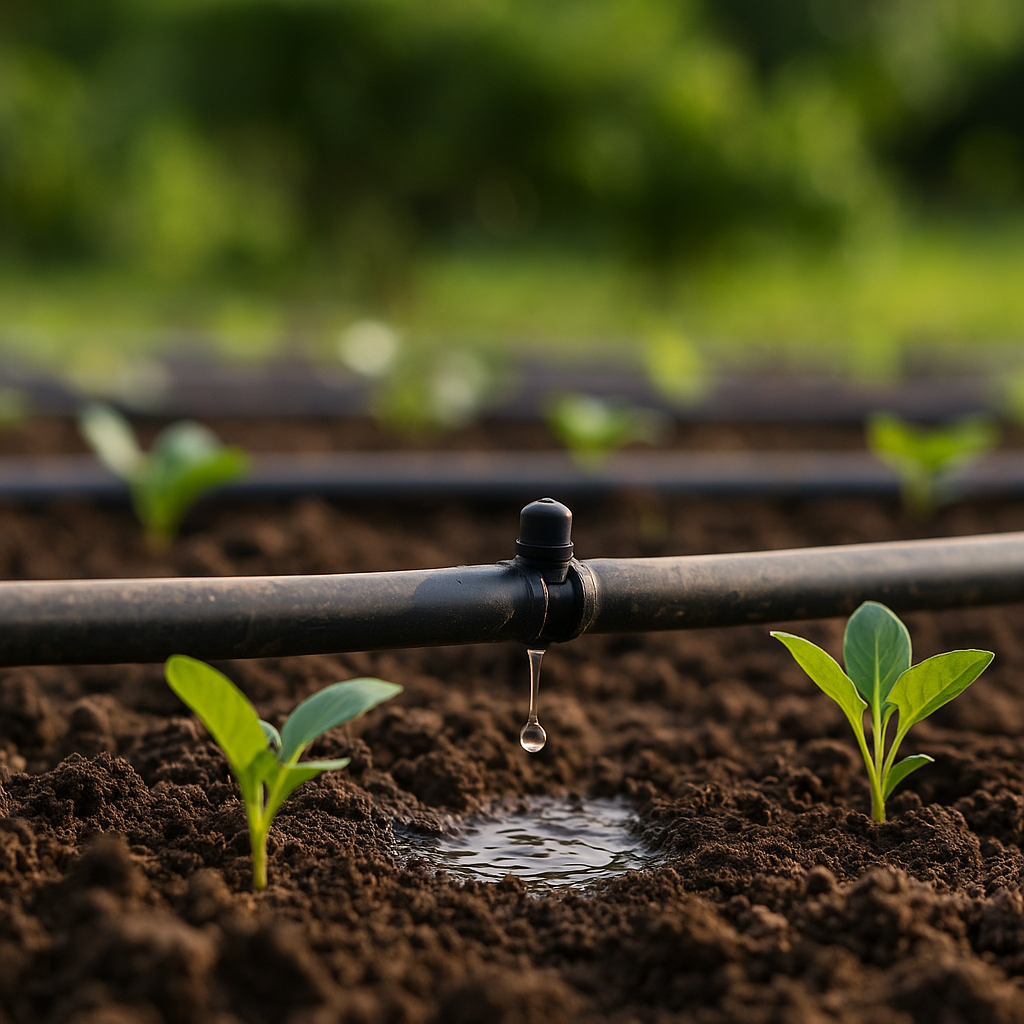
How it works: Plastic tubes or hoses deliver water directly to plant roots through small emitters.
Pros:
- Extremely water-efficient (saves 30–70% water)
- Minimizes evaporation and runoff
- Supports healthy soil microbiology
- Works for row crops, orchards, and gardens
Cons:
- Initial setup cost is high
- Tubes can clog or wear out
- Requires maintenance
Best For: Urban gardens, orchards, vegetable farms, and regenerative fields focused on water conservation.
2. Subsurface Drip Irrigation (SDI)
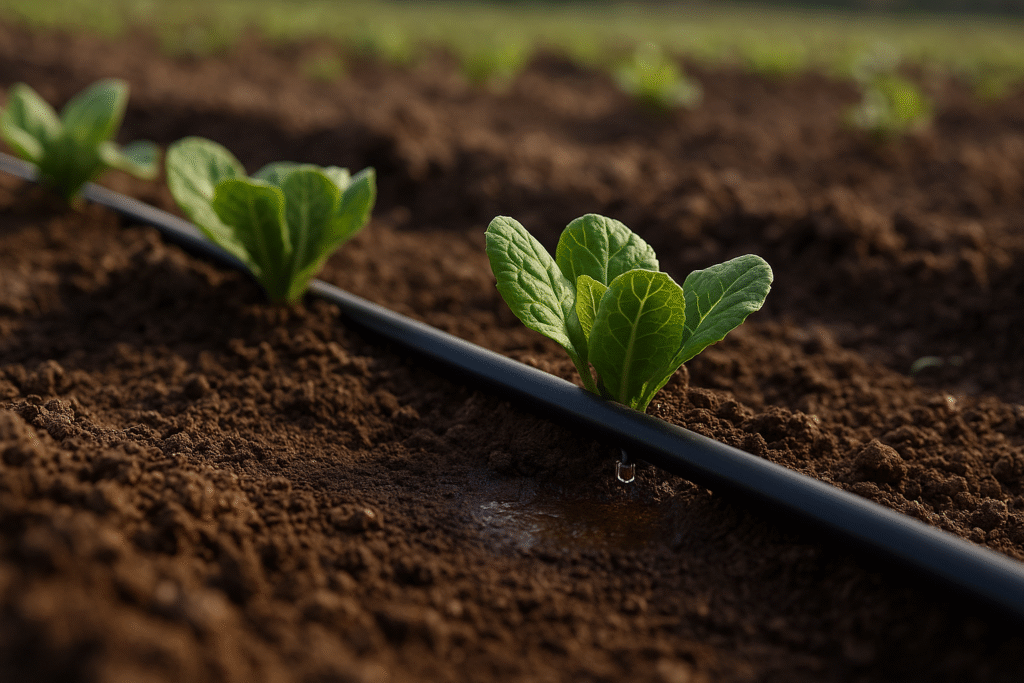
How it works: Similar to drip, but tubes are buried beneath the soil surface.
Pros:
- Even more efficient than surface drip
- Reduces weed growth since the soil surface stays dry
- Perfect for sandy or drought-prone soils
Cons:
- Very high installation cost
- Harder to repair if damaged
Best For: Large-scale regenerative farms committed to long-term soil health and water savings.
3. Sprinkler Irrigation
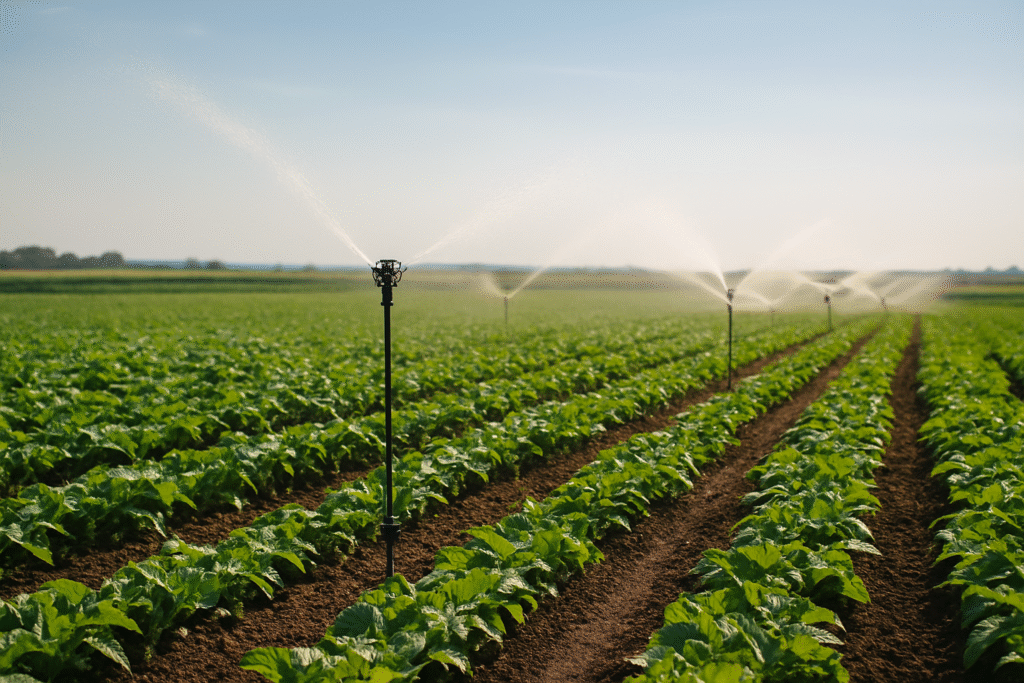
How it works: Water is sprayed over crops using above-ground sprinklers.
Pros:
- Affordable and easy to set up
- Covers large areas quickly
- Works for diverse cropping systems
Cons:
- Loses water to evaporation
- Can cause leaf diseases if crops stay wet too long
- Less efficient than drip systems
Best For: Rural farms that want a versatile, lower-cost system; also useful for rotational grazing pastures.
4. Pivot Irrigation
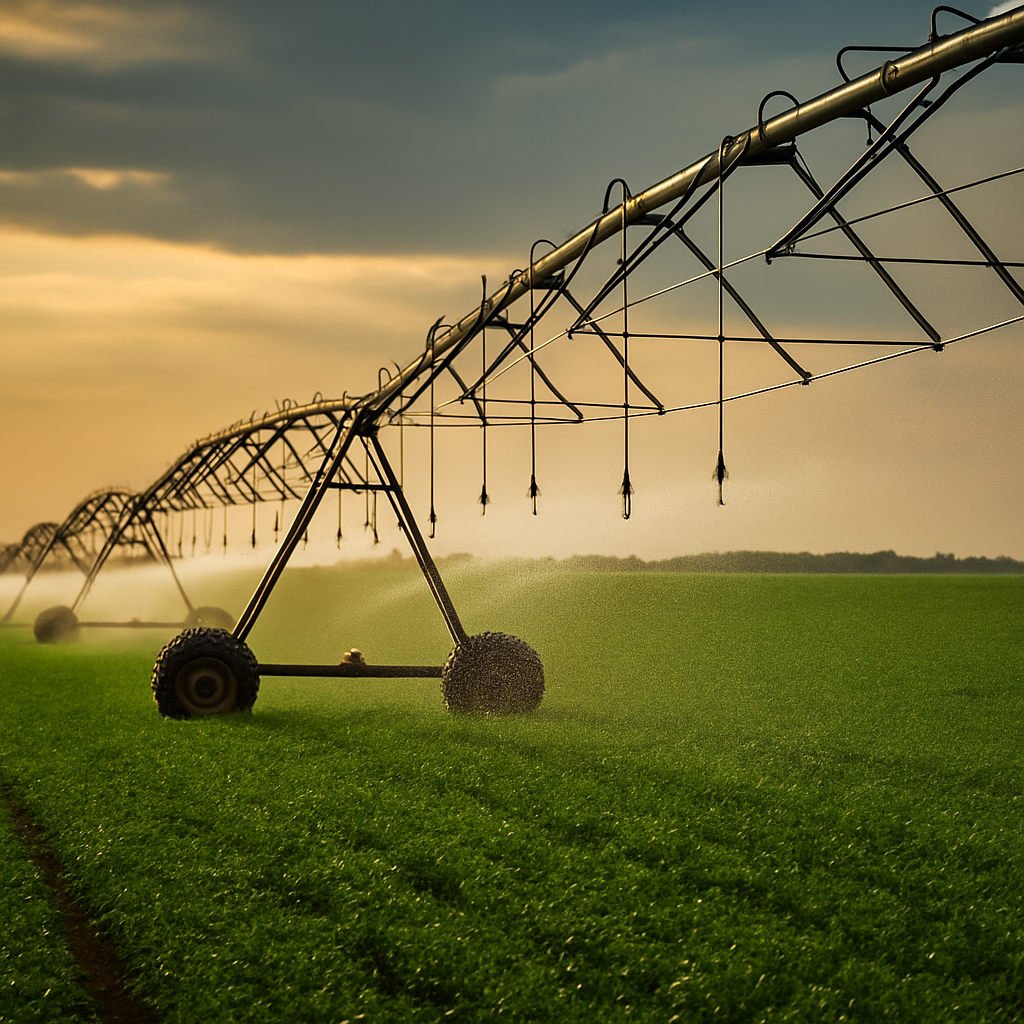
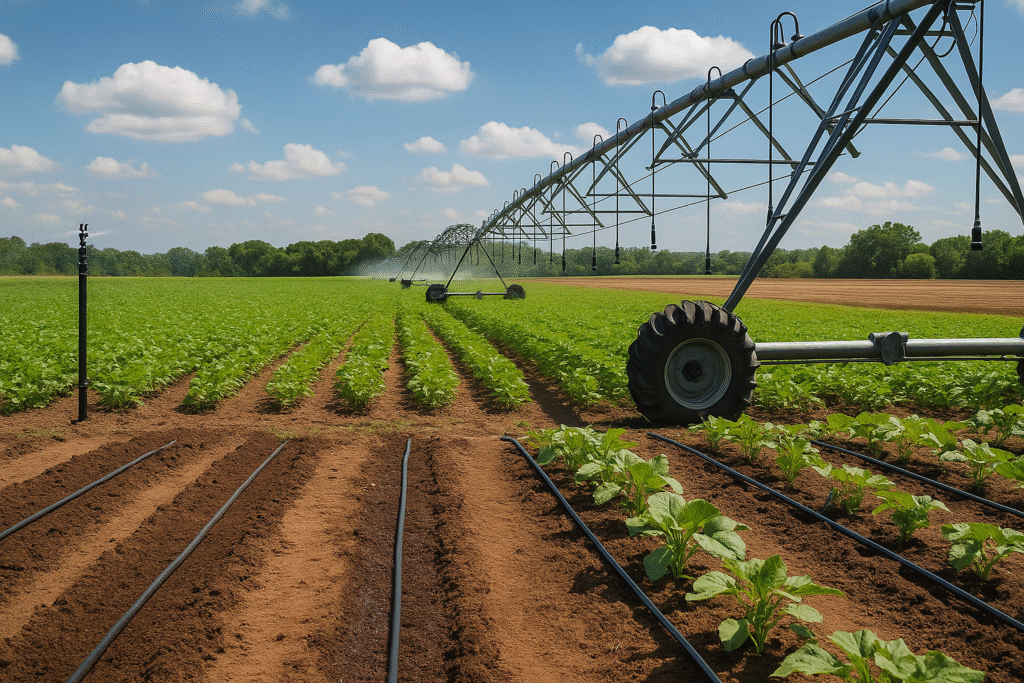
How it works: A long arm rotates around a pivot, watering circular fields. Common in large farms.
Pros:
- Efficient compared to flood irrigation
- Automates irrigation over hundreds of acres
- Can be adapted for regenerative row crops
Cons:
- Expensive to install and maintain
- Suited mainly to large, flat fields
Best For: Rural regenerative farmers with large-scale operations like grains, legumes, or forage crops.
5. Flood or Furrow Irrigation
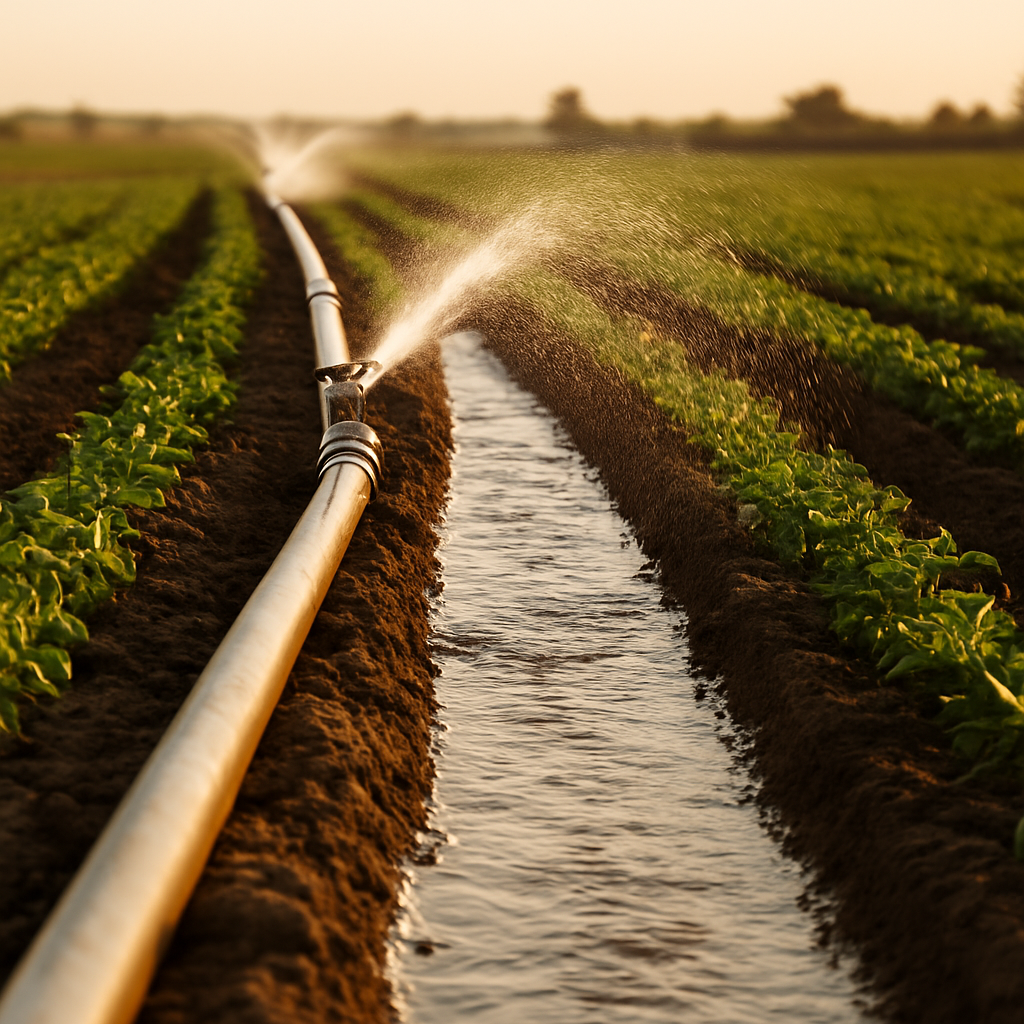
How it works: Fields are flooded, or water flows in furrows between rows.
Pros:
- Low-tech and inexpensive
- Useful in regions with abundant water
Cons:
- Very inefficient—lots of evaporation and runoff
- Causes soil erosion and compaction
- Not aligned with regenerative principles
Best For: Only in small rural areas with traditional practices and reliable water supply.
6. Rainwater Harvesting Systems
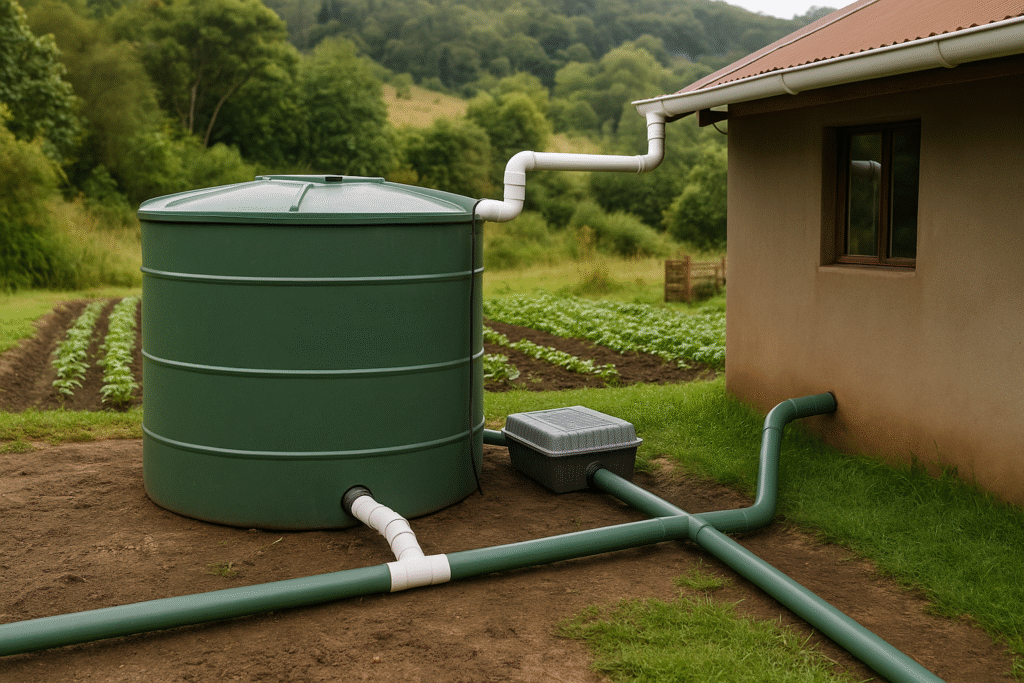
How it works: Collects and stores rainwater in tanks or ponds, later used for irrigation.
Pros:
- Reduces dependence on wells or municipal water
- Supports water self-sufficiency
- Works well in both urban and rural settings
Cons:
- Requires infrastructure for collection and storage
- Effectiveness depends on rainfall
Best For: Urban and rural farms that want a sustainable, supplemental water source.
🌱 Irrigation for Urban Gardeners vs Rural Farmers
Urban Gardeners
- Often limited by space and water access
- Best systems: drip irrigation kits, rain barrels, and compact worm tea irrigation
- Benefits: Less waste, sustainable food production at home
Rural Farmers
- Deal with larger fields, more crops, and varying soil conditions
- Best systems: pivot irrigation for large grains, drip for vegetables/orchards, subsurface systems for high-value crops
- Benefits: Boosts soil health, cuts costs, increases resilience
🧑🌾 Real-Life Case Studies
Examples in city or town: Balcony Drip Irrigation
A city gardener installs a mini drip irrigation kit connected to a rain barrel. They reduce kitchen waste by feeding a worm bin and then dilute worm tea through the drip system. The result: thriving plants with almost no tap water use.
Rural Example: Regenerative Corn and Soybean Farm
A farmer in the U.S. Midwest adopts no-till, cover crops, and pivot irrigation with low-pressure sprinklers. Water use drops by 40%, soil health improves, and crop yields remain stable during a drought.
📈 The Future of Irrigation in Regenerative Farming
- Smart Irrigation Technology – Soil sensors and AI-driven systems deliver water precisely when and where it’s needed.
- Solar-Powered Pumps – Sustainable energy for small farms and urban gardens.
- Blended Systems – Combining rainwater harvesting, drip, and pivot irrigation for maximum efficiency.
- Policy Support – Governments are starting to fund water-efficient irrigation systems for regenerative farms.
❓ FAQs
Q: Does regenerative farming always need irrigation?
A: Not always. In some climates, rainfall may be enough, but irrigation ensures resilience against droughts.
Q: What’s the most water-efficient system?
A: Subsurface drip irrigation (SDI), though it’s costly. For most farmers, surface drip is the best balance.
Q: Can irrigation harm regenerative farming?
A: Yes—if mismanaged, over-irrigation can lead to compaction, erosion, and nutrient leaching.
Q: Can urban gardeners use regenerative irrigation?
A: Absolutely—rain barrels, drip kits, and even clay pot irrigation mimic regenerative principles on a small scale.
🌟 Conclusion
Water is life, and in regenerative farming, irrigation is the tool that balances nature and productivity. The right irrigation system:
- Protects soil health
- Reduces water waste
- Improves resilience
- Supports both urban gardens and rural farms
From a balcony herb garden using a drip kit to a 500-acre farm with pivot irrigation, irrigation belongs at the heart of regenerative farming. By choosing sustainable systems, farmers and gardeners alike ensure that future generations will inherit soil that is rich, fertile, and alive.