
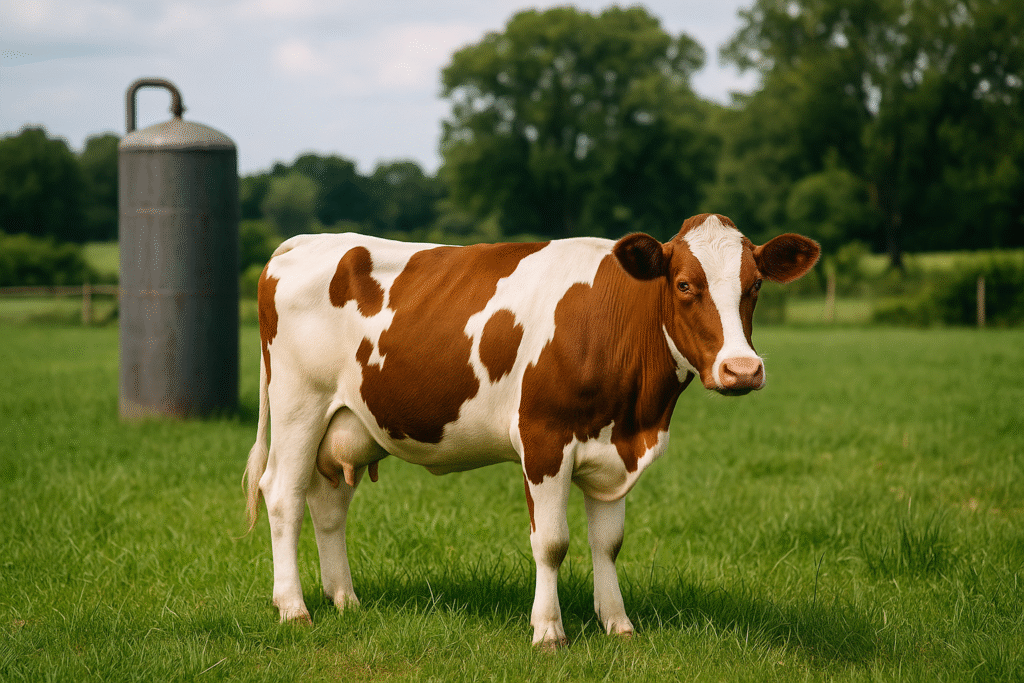
Reducing Methane Emissions in Dairy Cows: What Farmers Are Doing
Introduction: Why Methane Matters in Dairy Farming
You might have heard about emissions in dairy cows and that cows contribute to climate change, you probably heard about methane. This potent greenhouse gas, produced during digestion, has a much stronger warming effect than carbon dioxide. In fact, methane is about 28 times more effective at trapping heat in the atmosphere than CO₂ over a 100‑year period.
For dairy farmers, methane is more than just a climate concern — it’s a call to action. Reducing methane emissions in dairy cows isn’t only good for the environment, but it can also lead to better animal health, improved milk yields, and more efficient farm operations.
In this post, we’ll look at why methane is such a big deal, what’s being done to reduce it, and how farmers around the world are adopting solutions. If you read our recent article on Dairy Farming and the Environment, you’ll know that sustainability is a journey — and methane reduction is one of the biggest steps forward.
1. Understanding Methane in Dairy Cows
Methane in dairy farming mainly comes from a process called enteric fermentation — the natural digestive process in a cow’s stomach. Inside a cow’s rumen (the first stomach chamber), microbes called methanogens break down fibrous plant material. While this allows cows to extract energy from grass, it also produces methane gas, which the cow releases mainly through burping.
Other methane sources on a dairy farm include:
- Effluent storage (especially in effluent ponds or concrete bunkers where waste breaks down).
- Feed waste decomposition
- Poor pasture management that affects cow nutrition
Understanding where methane comes from is key to tackling it. The good news? Farmers have more tools than ever to cut these emissions.
2. Feeding Strategies to Cut Methane
What a cow eats has a direct impact on how much methane it produces. Researchers and farmers are exploring a variety of feed strategies to make digestion more efficient and reduce methane production.
a. High‑Quality Forage
Better quality forage means cows can get more nutrition with less digestion time, which lowers methane output. Farmers are planting high‑energy ryegrass, lucerne (alfalfa), and clover pastures to achieve this.
b. Feed Additives
Some feed supplements can significantly reduce methane production:
- 3‑NOP (3‑Nitrooxypropanol) – A promising methane‑reducing compound currently used in some commercial dairy operations.
- Seaweed (Asparagopsis) – Research shows certain red seaweed varieties can cut methane emissions by up to 80% when added in small amounts to feed.
- Essential oils and fats – Can alter the microbial activity in the rumen, leading to lower methane formation.
c. Balanced Diets
By fine‑tuning the ratio of forage to concentrate feeds, farmers can improve feed efficiency. More energy‑dense rations lead to higher milk production per cow and less methane per litre of milk produced.
3. Breeding for Low‑Methane Cows
Genetics play a role in methane production. Some cows naturally produce less methane because of differences in digestion efficiency.
Selective breeding programs are now identifying and promoting these low‑methane traits:
- Measuring methane output in individual cows through specialised monitoring systems
- Selecting bulls with low‑methane genetics for breeding programs
- Improving feed conversion efficiency in the herd
New Zealand, Australia, and parts of Europe are at the forefront of breeding low‑methane dairy cows, with early results showing promising reductions in emissions without hurting milk yield.
4. Effluent Management and Biogas
Effluent is another major methane source on dairy farms — especially when it decomposes without oxygen. However, with smart management, effluent can actually be turned into a renewable energy source.
a. Anaerobic Digesters
Anaerobic digesters capture methane from effluent and convert it into biogas. This can then be used to:
- Generate electricity for the farm
- Provide heating for barns or water systems
- Be sold back into the local power grid
This not only reduces methane emissions but can also create an extra income stream for farmers.
b. Composting
Solid effluent composting allows organic matter to break down with oxygen present, producing little to no methane. Farmers are using windrow composting systems to manage effluent more sustainably.
5. Pasture Management and Grazing Systems
Pasture management plays a huge role in methane emissions. Healthy pastures produce higher‑quality feed, which reduces methane per litre of milk.
Some strategies include:
- Rotational grazing – Moving cows between paddocks to allow pasture regrowth and prevent overgrazing.
- Planting diverse pastures – Including legumes like clover and lucerne, which naturally boost protein content and digestibility.
- Maintaining soil health – Healthier soil supports stronger pasture growth, which in turn supports better‑fed cows and lower emissions.
Farmers in Ireland and New Zealand are leading in regenerative grazing systems, which also store more carbon in the soil.
6. Technology and Data‑Driven Farming
Technology is helping farmers measure and reduce methane emissions more accurately than ever.
Examples include:
- Methane‑measuring collars – Track individual cow emissions to inform breeding and feeding decisions.
- Feed efficiency sensors – Monitor intake and digestion efficiency.
- Farm management software – Helps optimise feed, herd health, and manure handling.
These tools allow farmers to make targeted changes rather than guesswork, meaning reductions are more effective and long‑lasting.
7. Policy, Incentives, and Farmer Collaboration
Governments and industry groups are recognising that methane reduction is critical. In some regions, farmers can access:
- Grants or subsidies for methane‑reducing technologies
- Carbon credits for verified methane cuts
- Partnership programs to share best practices and research findings
Farmer‑led initiatives are also growing. For example, New Zealand’s He Waka Eke Noa program brings together farmers, Māori groups, and industry to reduce agricultural emissions.
8. The Bigger Picture: Why It Matters
Methane reduction in dairy farming isn’t just about environmental responsibility — it’s about securing the future of farming.
- Public trust: Consumers are more conscious about where their food comes from.
- Market opportunities: Sustainable milk can command premium prices in some markets.
- Resilience: Lower emissions often come with better feed efficiency and healthier herds.
By focusing on reducing methane emissions in dairy cows, farmers are not only helping to slow climate change but also building a stronger, more sustainable dairy industry.
Conclusion: Small Steps, Big Impact
Reducing methane emissions in dairy cows may seem like a huge challenge, but as we’ve seen, farmers have a growing toolbox of solutions — from feed additives to breeding programs, effluent management, and smart technology.
It’s not about one magic fix — it’s about combining strategies that work for each unique farm. Together, these small changes add up to a big difference for the planet and for the future of dairy farming.
If you found this article useful, you might also enjoy our post on Dairy Farming and the Environment, where we look at the wider picture of how dairy farmers are working toward sustainability.