
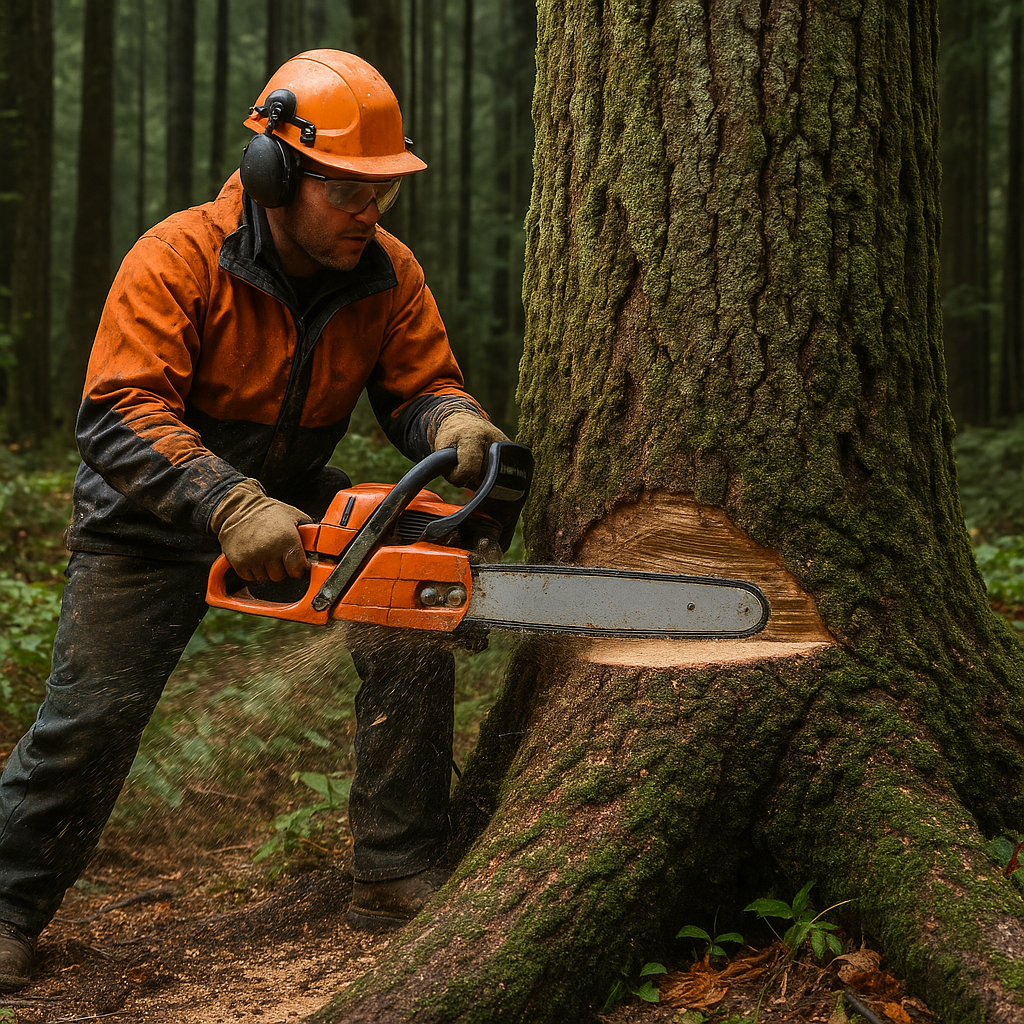
🌲 Understanding Chainsaw Chains: Choosing the Right One for Hardwoods and Softwoods
Introduction
Understanding your chainsaw is what every user should know, and why the chain does the real work. The power of the engine means little if the chain isn’t suited to the wood you’re cutting.
Using the wrong chain can slow your progress, make you frustrated and the saw struggle, and even increase safety risks.
This guide will help you understand the different types of chains, how each performs on hardwood vs softwood, and how to keep your chain cutting efficiently.
⚙️ 1. How a Chainsaw Chain Works
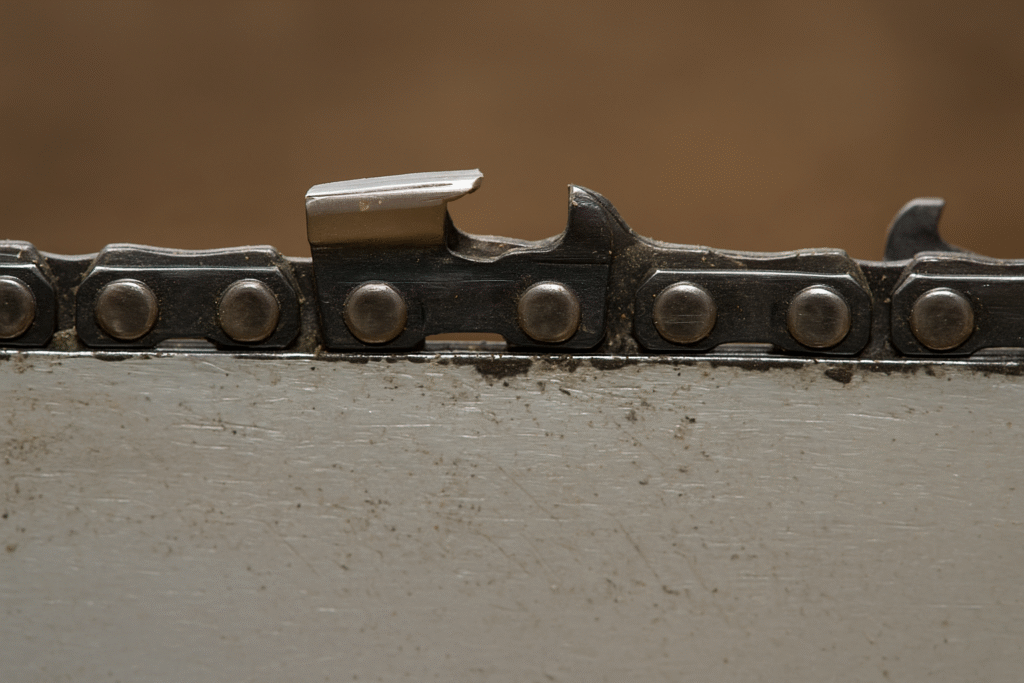
Before exploring the types, it helps to understand how a chain functions.
A chainsaw chain is a loop of cutting teeth, drive links, and tie straps that move rapidly around the guide bar. Each tooth acts like a tiny chisel, slicing through wood fibers.
🔩 Key Parts of a Chain
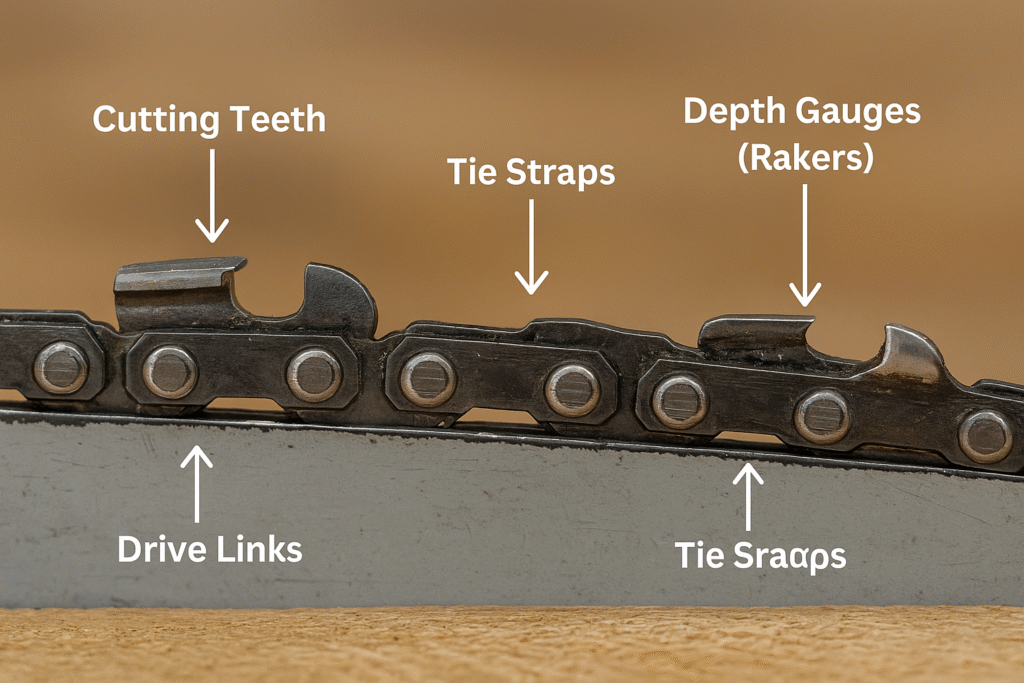
- 🪚 Cutting Teeth – The sharp links that slice into wood.
- ⚙️ Drive Links – Fit into the bar groove and engage with the sprocket.
- 🔗 Tie Straps – Hold the links together.
- 🧩 Depth Gauges (Rakers) – Control how deep each tooth cuts.
Each part works together to create a balance of speed, durability, and safety.
🔪 2. The Main Types of Chainsaw Chains
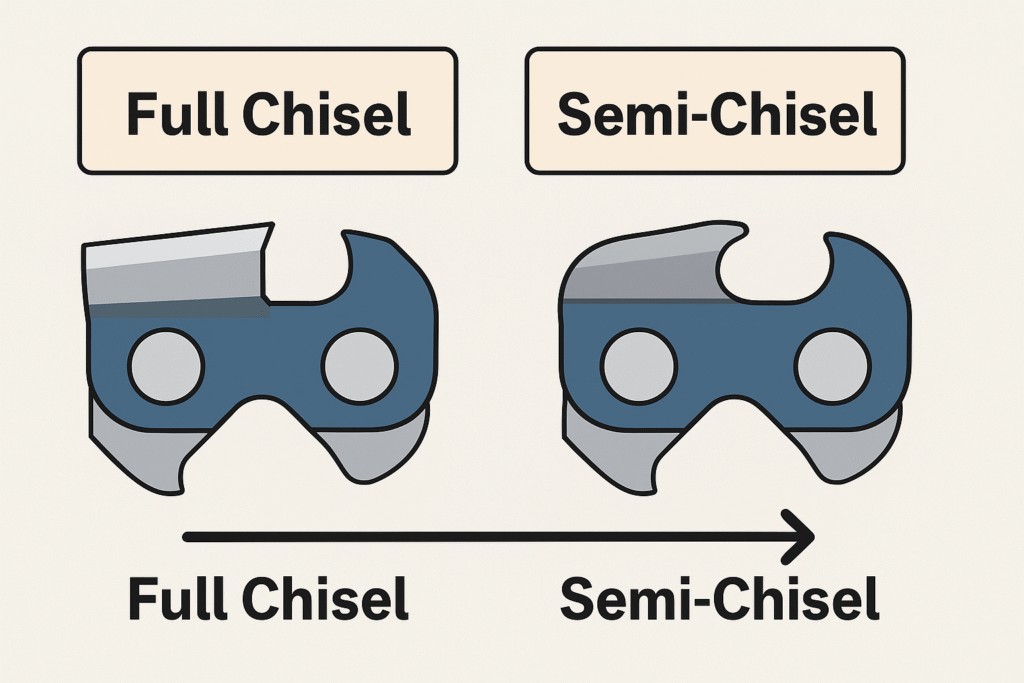
There are several chain designs, each built for a specific purpose. The two most common are full chisel and semi-chisel, but there are others worth knowing.
⚡ 2.1 Full Chisel Chains
Full chisel chains have square-cornered teeth that bite aggressively into wood.
Best for: Clean, dense hardwoods like oak, gum, or maple.
✅ Advantages:
- 🚀 Very fast cutting
- ✂️ Clean, smooth results
- 💪 Efficient in tough hardwoods
⚠️ Disadvantages:
- Dulls quickly in dirty wood
- Needs frequent sharpening
- Higher kickback potential
🪵 2.2 Semi-Chisel Chains
Semi-chisel chains have rounded tooth corners, making them less aggressive but more durable.
Best for: Softwoods or mixed conditions where dirt and bark are common.
✅ Advantages:
- ⏳ Holds sharpness longer
- 🧼 Handles dust and bark well
- 🤲 Easier for beginners
⚠️ Disadvantages:
- Slower cutting
- Slightly rougher finish
🪚 2.3 Low-Profile (Safety) Chains
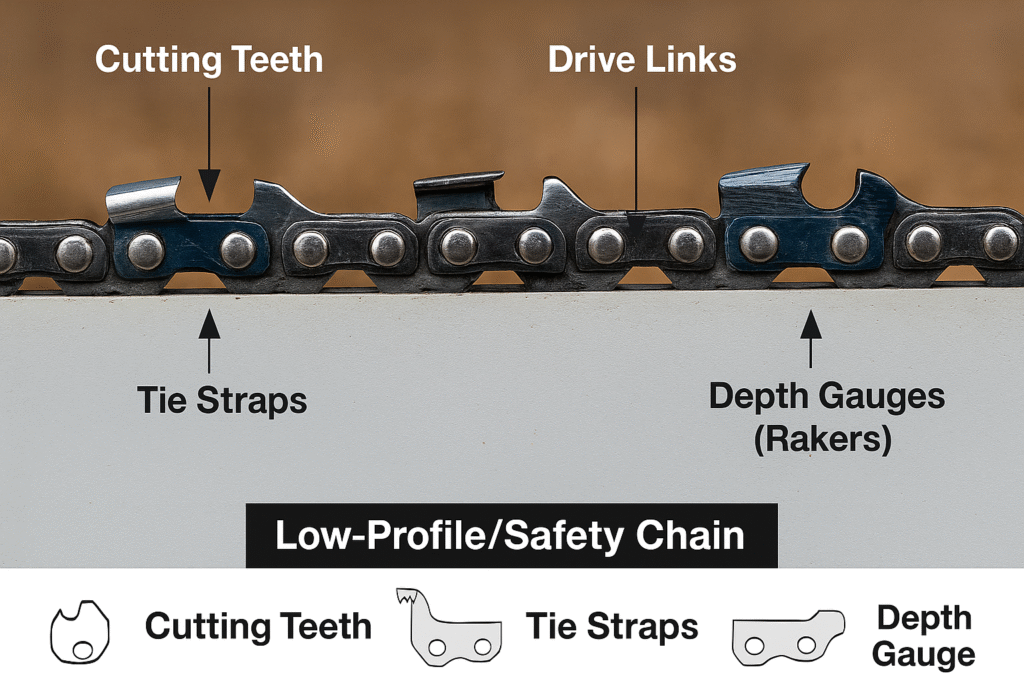
These are common on smaller saws and have guard links to minimize kickback.
Best for: Homeowners, pruning, and softwood cutting.
✅ Advantages:
- 🦺 Safer for less experienced users
- 🧘♂️ Smoother operation
- 🌲 Ideal for light trimming
⚠️ Disadvantages:
- Reduced speed
- Not for large hardwood logs
🌲 2.4 Skip-Tooth and Full-Skip Chains
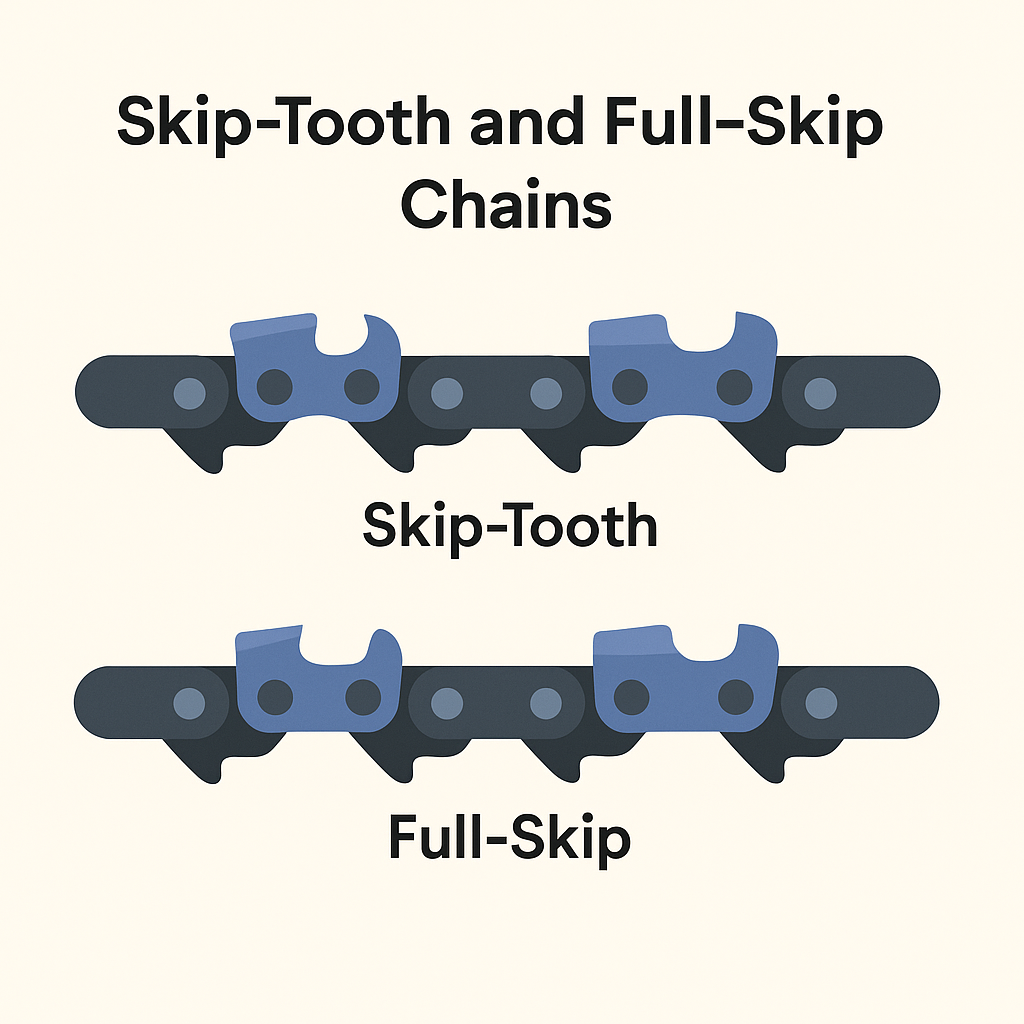
Skip-tooth chains have fewer cutting teeth, spaced farther apart.
Best for: Long guide bars and professional forestry.
✅ Advantages:
- 🍃 Clears sawdust easily
- ⚙️ Less drag on the engine
- 🪓 Great for big logs
⚠️ Disadvantages:
- Rougher cuts
- More vibration and kickback risk
🌳 3. Hardwoods vs Softwoods
Understanding your material is half the job.
🌰 Hardwoods (Dense Woods)
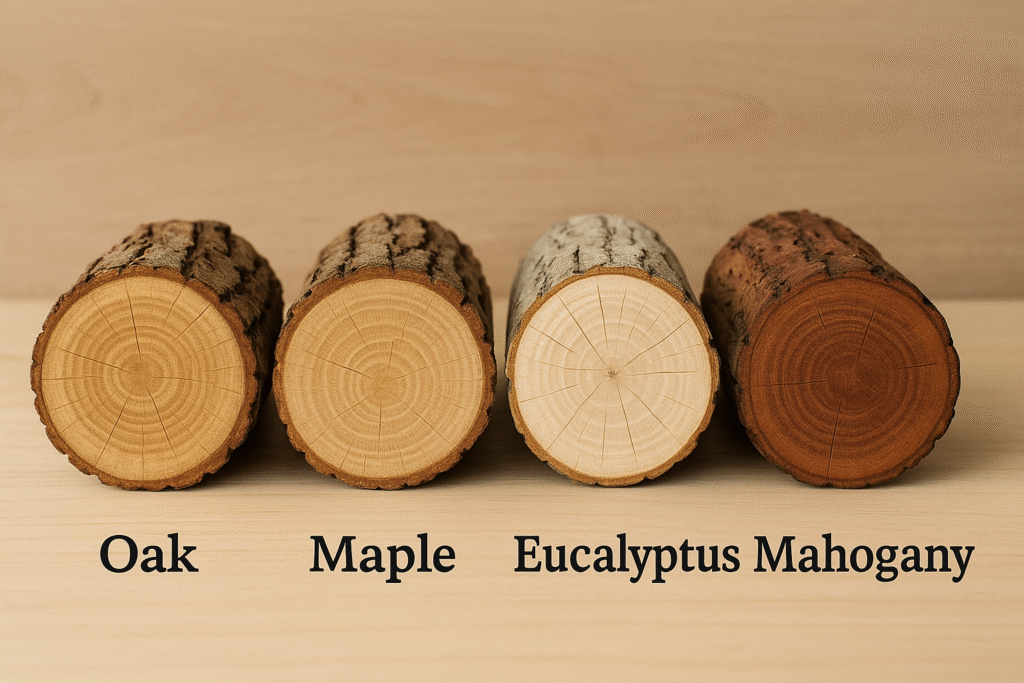
Examples: oak, maple, eucalyptus, mahogany
- 🧱 Dense and fibrous
- ⚙️ Require sharper, faster-cutting chains
- ⏱️ Dull chains quickly
🌲 Softwoods (Resinous Woods)
Examples: pine, cedar, spruce
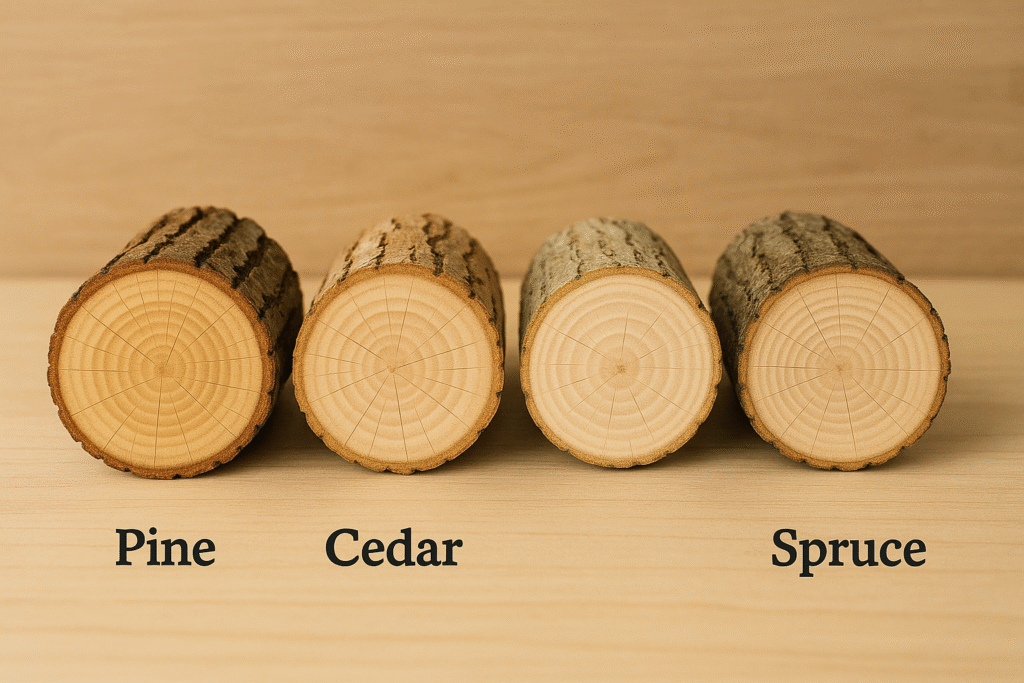
- 🌿 Lighter, more flexible fibers
- 💧 Contain sap and resin
- 🧼 Easier to cut but can gum up chains
Think of hardwoods as a resistance workout for your saw — you need strength and precision.
Softwoods are lighter work but can be messy if your chain isn’t suited to sticky sap.
🪓 4. Matching Chains to Wood Types
💪 4.1 Chains for Hardwoods
Use full chisel chains for dense wood.
They cut aggressively, giving clean, straight cuts with minimal effort.
Tips:
- 🪛 Keep your chain extremely sharp.
- 🚫 Avoid cutting dirty bark or soil-covered logs.
- 🧴 Lubricate your chain often to reduce friction.
If your wood supply varies between clean and dirty hardwoods, consider a semi-chisel chain as a balance between speed and durability.
🌲 4.2 Chains for Softwoods
Use semi-chisel or low-profile chains for softwoods like pine and cedar.
The rounded edges handle sticky sap better and resist clogging.
Tips:
- 🧼 Clean resin off regularly.
- 🧘♀️ Keep a light touch — let the saw glide.
- 🔄 Alternate between two chains to reduce downtime.
⚖️ 4.3 For Mixed Cutting
If you handle both types of wood, a semi-chisel chain is the best all-rounder.
It cuts a bit slower than a full chisel but maintains performance across different materials.
🪓 Pro tip: Keep one chain for hardwoods and another for softwoods — it saves sharpening time and extends lifespan.
🔩 5. Chain Pitch, Gauge, and Bar Length
Even the best chain won’t perform if it doesn’t fit properly.
⚙️ 5.1 Chain Pitch
This measures the spacing between drive links.
Common sizes: 1/4”, .325”, 3/8”, .404”.
- 🔹 Smaller pitch = smoother cut, safer.
- 🔸 Larger pitch = faster, more aggressive.
📏 5.2 Chain Gauge
Refers to the thickness of drive links.
Common gauges: .043”, .050”, .058”, .063”.
If the gauge doesn’t match your bar, the chain will slip or jam.
🔗 5.3 Drive Links
Always use the correct number of links for your bar length.
Check your saw’s manual before replacing a chain.
⚠️ 6. Signs You’re Using the Wrong Chain
Look for these telltale signs:
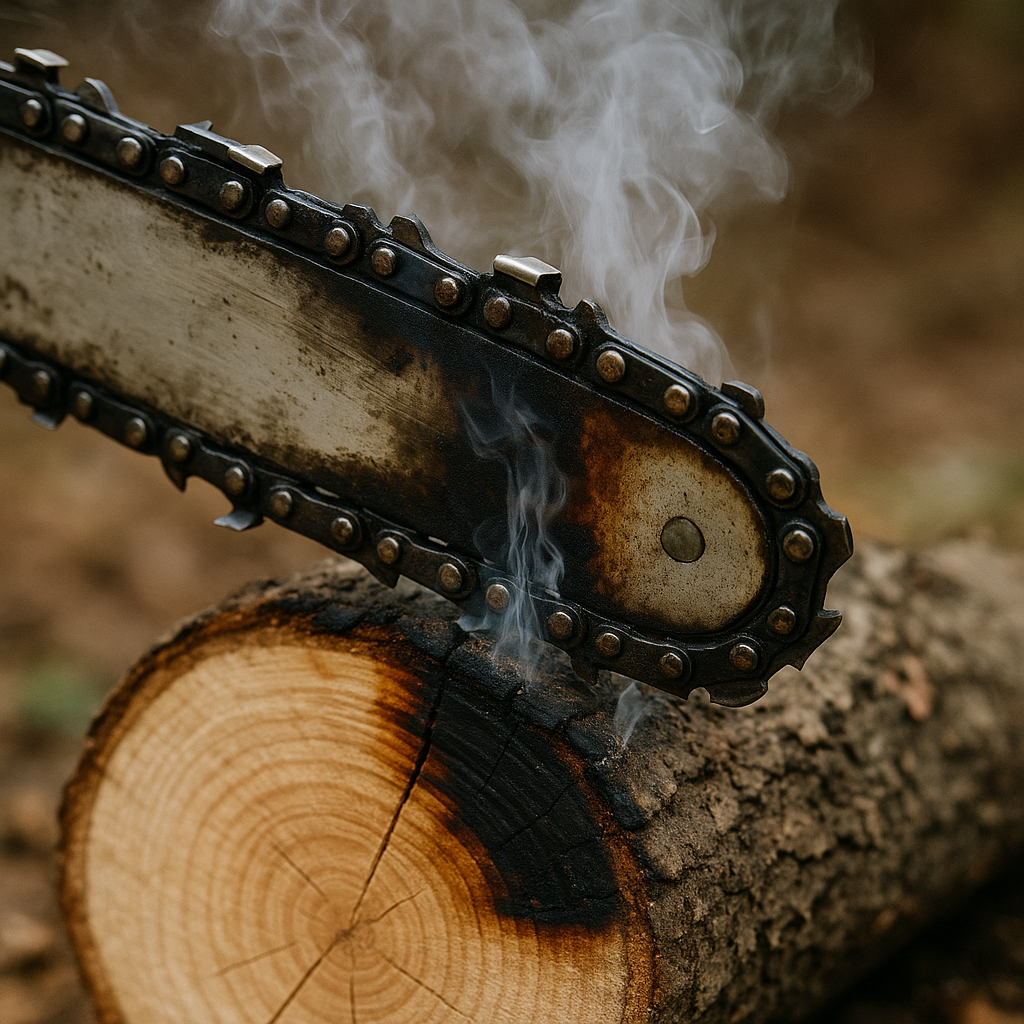
- 🔥 Burn marks or smoke → chain too aggressive or dull
- 🌊 Wavy cuts → poor tension or tooth mismatch
- 🪵 Splintered finish → wrong chain type
- 🪫 Chain dulling too fast → using softwood chain on hardwood
- 🔥 Overheating → clogged or gummed-up chain
Switching to the right type can instantly improve both cut quality and safety.
🧰 7. Chainsaw Chain Safety

⏱️ Before Cutting
- 🧼 Check tension
- 🔍 Inspect for damage
- 🧴 Oil the bar and chain
- 🦺 Wear gloves, chaps, and safety glasses
🪚 During Cutting
- 🧍 Keep steady footing
- ⚠️ Avoid the tip of the bar
- 🪵 Let the saw work — don’t push
- 👀 Stay alert for rocks and nails
🧹 After Use
- 🧽 Clean with a brush and solvent
- 🧰 Store in a dry area
- 🪛 Sharpen regularly
A well-maintained chain isn’t just efficient — it’s safe and reliable.
✏️ 8. Sharpening and Maintenance
A dull chain causes frustration, burns wood, and increases wear.
🪛 When to Sharpen
- Sawdust looks like dust instead of chips
- Cuts pull to one side
- You’re pressing harder than usual
🪚 How to Sharpen

- Secure bar in a vice
- Use a round file at 25–35° angle
- File all teeth on one side, then switch
- Level the rakers evenly
🧴 Cleaning Sap and Resin
Softwoods can coat chains with sticky residue.
Use kerosene or degreaser to clean and prevent rust.
🌍 9. Efficiency and Sustainability
Choosing the right chain doesn’t just save effort — it helps the environment.
✅ Uses less fuel or battery power
✅ Makes cleaner cuts (reduces waste)
✅ Extends saw life
✅ Improves operator safety
Efficient cutting reduces emissions and energy use — small changes that matter for sustainability.
📊 10. Quick Reference Table
| 🌳 Wood Type | 🔗 Recommended Chain | 🦷 Tooth Shape | ⚙️ Key Benefits |
| Oak, Maple, Gum | Full Chisel | Square | Fast, clean cuts |
| Mixed or Dirty Hardwood | Semi-Chisel | Rounded | Long-lasting edge |
| Pine, Cedar, Spruce | Semi/Low-Profile | Rounded | Smooth, less clogging |
| Large Logs | Skip-Tooth | Square/Round | Better chip clearance |
| Beginners | Low-Profile | Rounded | Safer, lower kickback |
🌞 11. Conclusion
The right chainsaw chain transforms your cutting experience — smoother, faster, and safer.
- 🌳 Use full chisel for hardwoods.
- 🌲 Use semi-chisel for softwoods.
- 🧰 Keep chains sharp, clean, and tensioned.
Matching your chain to your wood type saves time, fuel, and frustration — and keeps your saw running like new.