
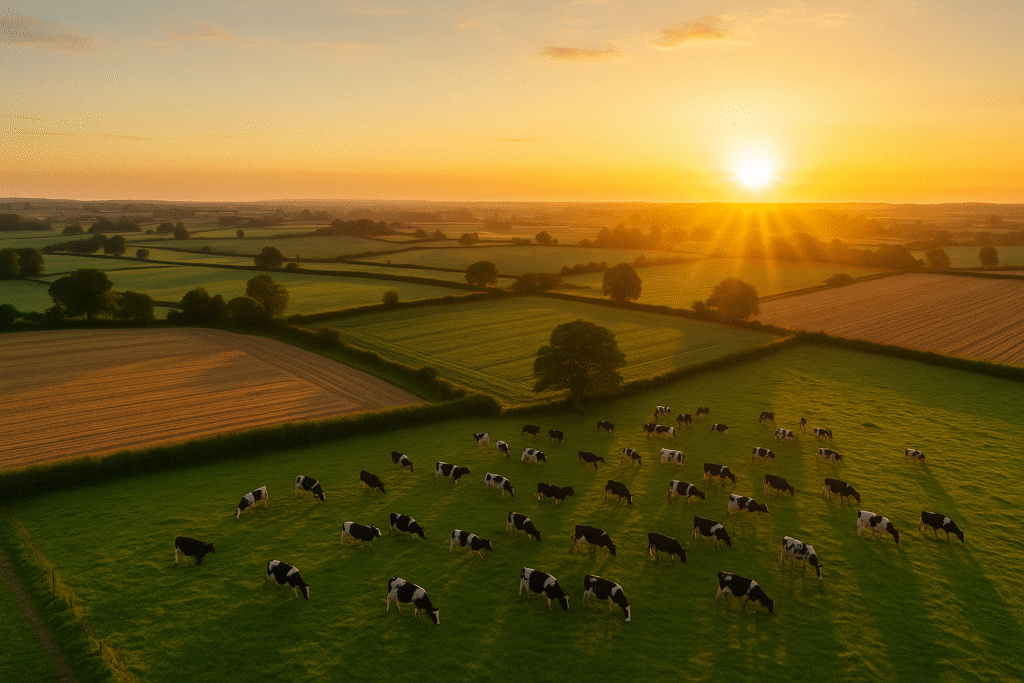
Why Food Prices Have Skyrocketed — While Farmers Aren’t Earning More
Introduction
If you’ve walked through a supermarket lately and felt your stomach drop at the prices, you’re not alone. Families all across the Western world are watching their grocery bills climb higher and higher — sometimes doubling on basic items like cheese, vegetables, and meat.
Yet at the very same time, farmers — the people who grow the food — are speaking out, protesting, or quietly admitting that they’re struggling more than ever.
It sounds impossible.
If food prices are up, shouldn’t farmers be earning more?
But they aren’t. In fact, many farmers say they’re earning less than they used to — or barely breaking even.
And this is where the story gets interesting.
This isn’t a story about greedy farmers.
It’s a story about a system that’s drifting further away from what makes sense — a system that leaves farmers and shoppers both worse off.
Let’s take a calm, honest look at why this is happening.
The Price You Pay at the Supermarket Isn’t What the Farmer Receives

When most people see milk or broccoli or mince meat go up in price, they imagine the farmer must be celebrating. After all, the numbers on the supermarket shelf are higher — surely the money flows back to the farm?
But that’s not how our food system works anymore.
Farmers are paid what’s called a farmgate price — the price at the farm gate, before transport, storage, packing, marketing, wholesaling, and retailing.
The farmgate price is often:
- barely changed in 10–15 years, or
- sometimes even lower
- often unrelated to the final retail price consumers see
That means:
🛒 If you pay $8 for a block of cheese, the farmer might only get $1.20 of that.
🥕 If you pay $3.99 for carrots, the farmer might get 40–80 cents.
This gap between what farmers earn and what consumers pay is at the heart of the crisis.
It is not that farmers don’t produce enough.
also, that consumers don’t pay enough.
It’s that the system between them takes most of the money.
Why Are Food Prices Rising So Much?
Let’s walk through the real reasons — in plain language.
Transport, Fuel & Cold Storage Have Become Shockingly Expensive
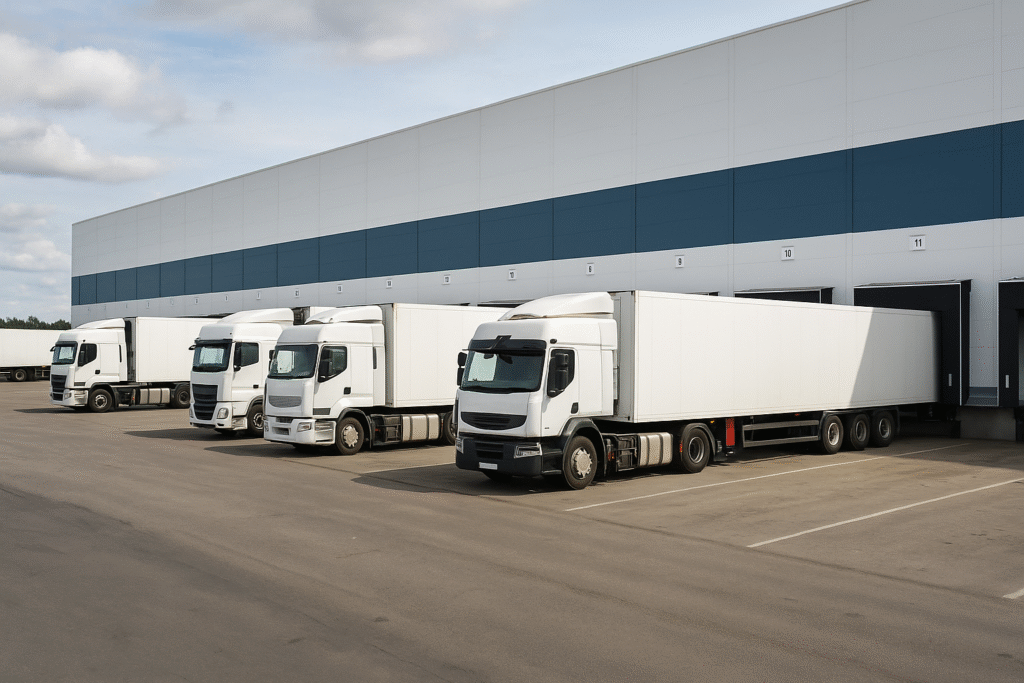
Everything you buy — from grapes to yoghurt — has been touched by trucks, refrigeration, storage, and transport long before it reaches your home.
Fuel price rises alone can push food prices up across entire supermarket chains.
Think about refrigeration:
Fruit, vegetables, dairy, meat — almost everything needs constant cooling. The energy cost for this has exploded in recent years.
And who covers these higher costs?
- Supermarkets pass them to consumers.
- Farmers are told their price “cannot increase.”
So the bill goes up for families,
but the income does not go up for farmers.
Supermarket Power — The Elephant in the Room
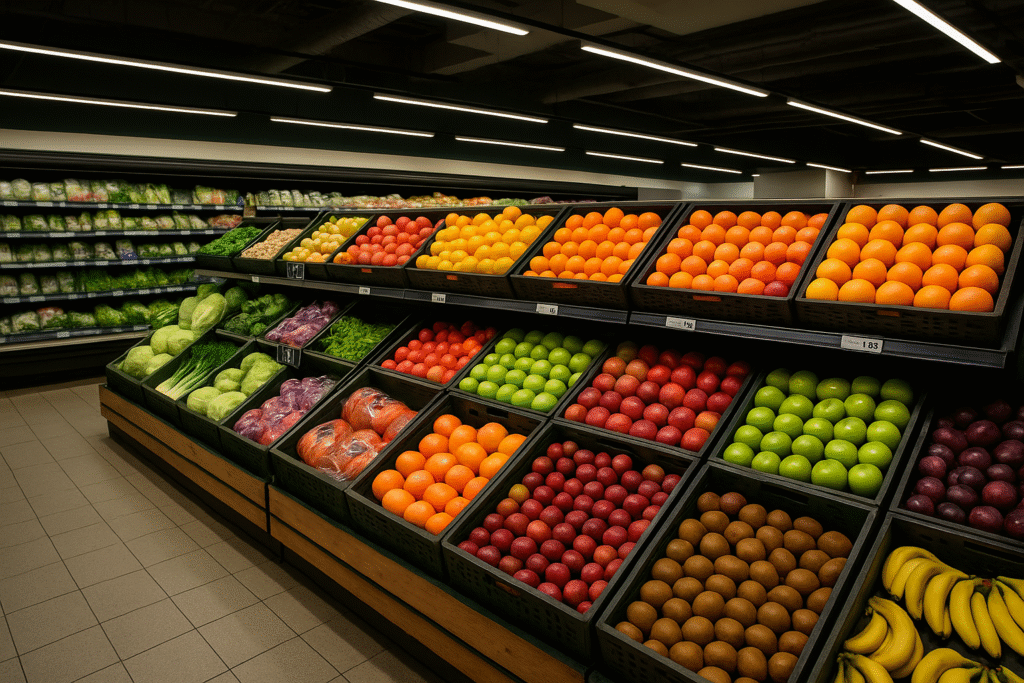
In many Western countries, just a handful of supermarket chains control most of the market.
This gives them enormous power to:
- dictate farmgate prices
- reject produce for even tiny imperfections
- demand year-round supply
- set contracts that aren’t negotiable
- raise retail prices whenever they want
If farmers don’t like the terms? The supermarket simply buys from someone else — often overseas.
This creates a strange and unfair situation:
🟢 Supermarkets can raise their prices instantly
🔴 Farmers cannot raise theirs at all
Farmers have little control. Consumers have none.
Farming Costs Have Exploded — But Farmer Income Hasn’t
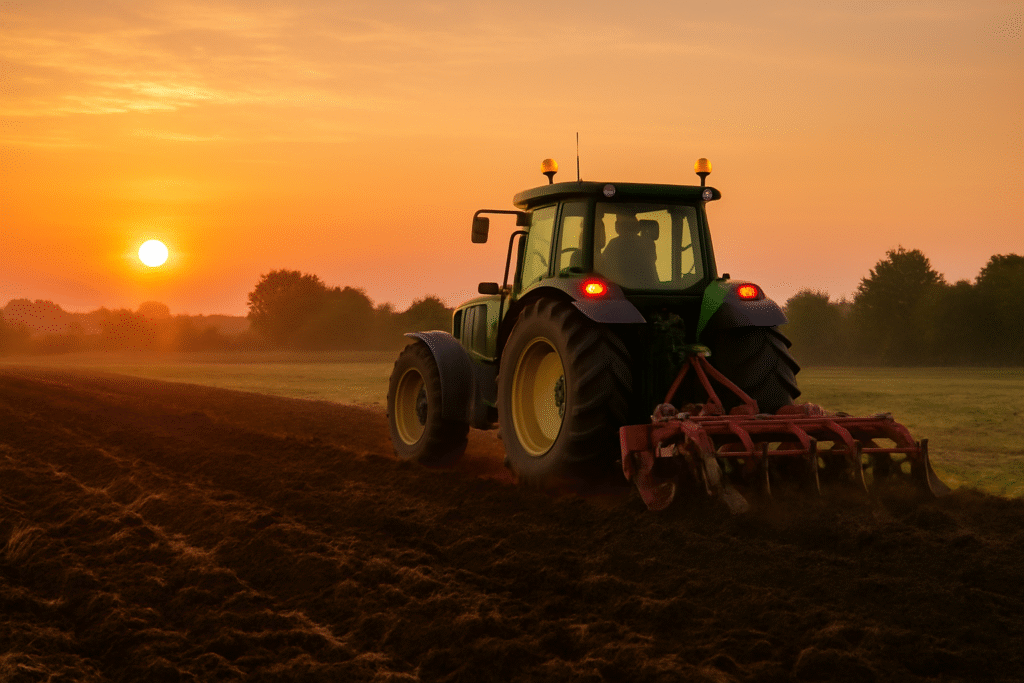
Farming has always been expensive, but in the last few years the cost increases have been brutal:
- Fertiliser prices doubled
- Diesel hit record highs
- Machinery parts skyrocketed
- Feed costs surged
- Labour shortages pushed wages up
- Compliance and regulation costs grew
- Water, testing, auditing, monitoring fees rose
These aren’t optional costs. Farmers can’t cut them without cutting production.
And yet… the farmgate price almost never increases to match the rising cost of farming.
It’s like running on a treadmill that speeds up every month — but your income stays the same.
Global Events Broke the Supply Chain — and It Never Recovered
The last few years have been full of shocks:
- pandemic lockdowns
- border issues
- shipping delays
- wars and geopolitical tensions
- energy crises
- labour shortages
- fertiliser shortages
These events created a domino effect.
The supply chain got fragile — and every fragile part added extra cost.
Again:
✔ Consumers paid more
❌ Farmers did not earn more
The extra cost filled the gaps in the middle of the chain — not the pockets of the people growing the food.
Greedflation” — Companies Raising Prices Because They Can
As inflation hit the news, many companies did something bold:
They raised prices more than they needed to.
Why?
Because consumers expected prices to go up anyway.
Many food processors, wholesalers, and supermarket chains reported record profits during the same time households were struggling.
Meanwhile, farmers’ incomes stayed flat or fell.
This is not a farmer problem.
This is a corporate pricing problem.
Weather Extremes Raise Prices — but Lower Farmer Income
It feels unfair, but it’s true:
🔥 Droughts
🌧 Floods
🌪 Storms
⛈ Unseasonal weather
These things damage crops — and smaller harvests mean higher supermarket prices.
But here’s what most people don’t realise:
When a farmer loses half their crop,
they don’t earn more for the remaining half.
They usually earn less — because volume matters more than price in most contracts.
So weather shocks often mean:
- supermarkets charge more
- farmers earn less
Another lose-lose situation.
How Much Do Farmers Actually Earn? (NZ, Australia, UK)
📊 A clear look at real numbers — made easy to understand
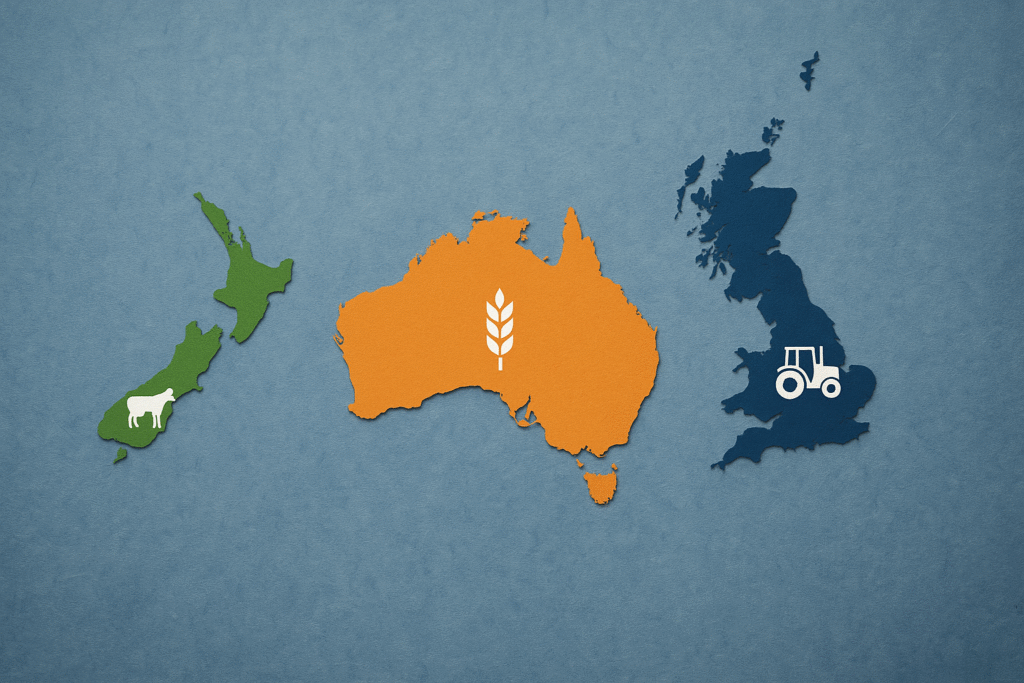
Let’s bring this down to real dollars so readers can see the truth.
These figures show a pattern: high turnover but low profit.
🇳🇿 New Zealand
Dairy (largest sector)
- Payout: NZ$10.16/kgMS (2024/25)
Sounds good — but…
Costs have risen massively, and payouts fluctuate wildly year to year.
DairyNZ reports that recent payout drops are creating “major strain” on farmers.
Sheep & Beef (2024–25)
- Average revenue: NZ$698,600 per farm
- Average expenses: NZ$565,600 per farm
- Profit before tax: NZ$106,700
After tax, debt, repairs, compliance, and living costs, many farmers are left with very modest household incomes.
🇦🇺 Australia
- Average farm incomes vary between A$370,000–A$665,000
- But costs are extremely high:
machinery, labour, fuel, drought impacts, and freight all take enormous chunks.
Many Australian growers reinvest 70–85% of their revenue — leaving low net income.
🇬🇧 United Kingdom
- Dairy farms earned about £176,000 in the latest period
- But UK farmers face some of the highest fertiliser and energy costs in Europe
- Rental costs and environmental compliance are also extremely high
Once again: good revenue, low leftover income.
What This Shows
Across NZ, Australia, and the UK:
✔ Farmers turn over a lot of money
✔ But expenses take nearly all of it
✔ Profit margins are thin
✔ Many farmers earn less than the national average wage after costs
This proves the central point:
Food is expensive — but farms are not getting rich.
The Real Human Impact
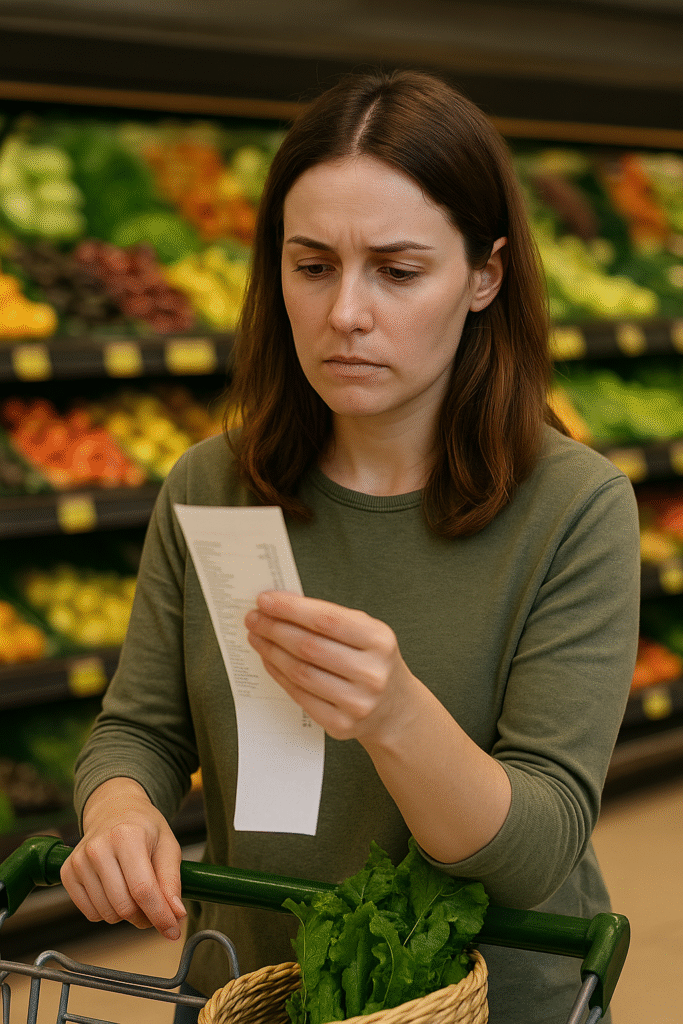
For families:
- grocery bills are overwhelming
- people are buying less
- many are switching to cheaper, lower-quality food
- stress around grocery shopping is increasing
For farmers:
- high debt
- volatile income
- declining mental health
- endless pressure from supermarkets
- unpredictable weather
- rising interest rates
Both sides are struggling for the same reason:
the system between them is broken.
So If Farmers Aren’t to Blame… Who Is?
🧩 The system itself.
The modern Western food chain has three powerful bottlenecks:
- Supermarkets
- Processors and wholesalers
- Transport and logistics companies
These parts of the chain hold the most power, take the largest margins, and pass the most cost onto consumers — while forcing the lowest prices on farmers.
It is not a fair or balanced system.
What Would Fix the System?
🌱 1. Fair farmgate pricing laws
Some countries are exploring rules preventing supermarkets from paying below cost.
🛒 2. More transparency
Consumers should know what percentage of food prices goes to farmers.
🥕 3. Support local food networks
Farm shops, farmers markets, direct-to-consumer pathways.
🧾 4. Simplify compliance
Protect the environment positively — without bankrupting farms.
🏬 5. Break supermarket monopolies
More competition means fairer pricing.
Final Thoughts — Farmers Aren’t the Enemy
📸 IMAGE PLACEMENT: Farmer walking through field at sunset

When people see high prices, it’s natural to look for someone to blame. Farmers are the visible part of the food system, so they often get blamed unfairly.
But the truth is stark:
🌾 Farmers aren’t raising prices.
🛒 Supermarkets and supply chains are.
💸 Consumers pay more.
😞 Farmers earn the same — or less.
This isn’t a problem caused by greed at the farm gate.
It’s a problem created by a food system that takes too much in the middle.
If consumers and farmers realised they’re on the same side, the push for change would be unstoppable.