
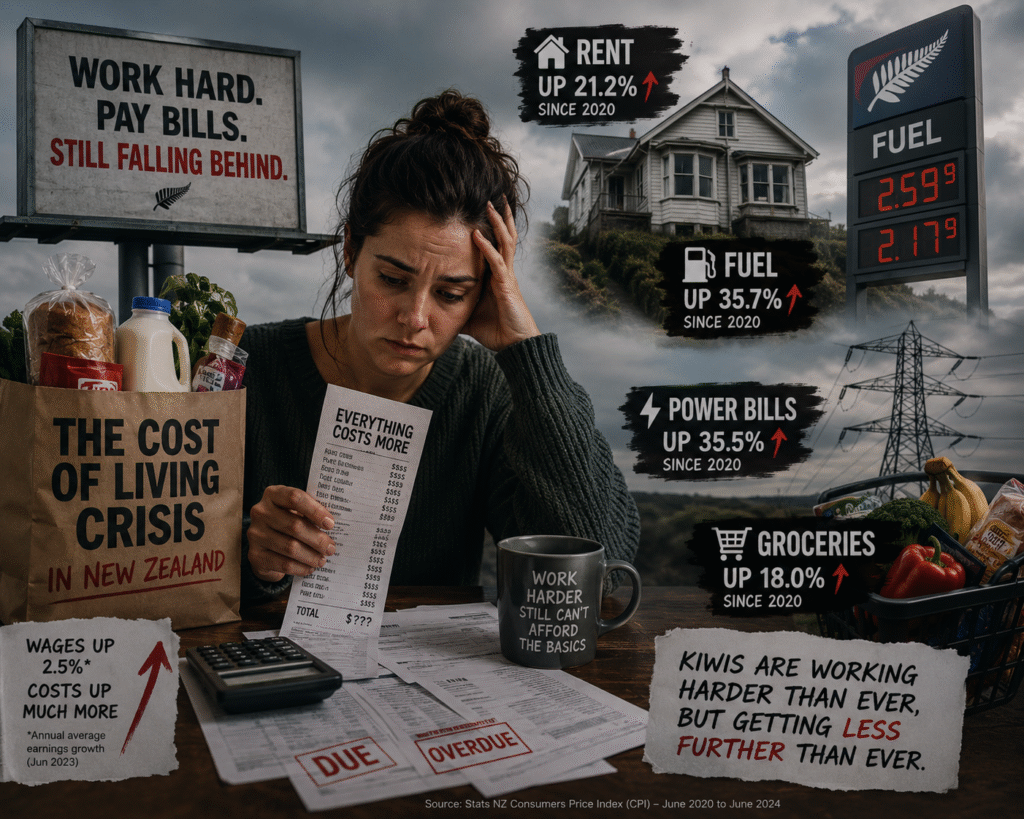
New Zealand Cost Off Living Crisis
New Zealand’s cost-of-living crisis is no longer just about groceries and fuel. Another growing pressure on households is council rates, which many people say seem to increase every single year with little visible improvement in return.
For homeowners, farmers, retirees, and small businesses, rates have become one more bill that keeps climbing while incomes struggle to keep pace.
Across the country, councils have proposed or confirmed significant increases. Some districts are discussing rises of 7%, 10%, or even higher, often blaming infrastructure costs, water upgrades, insurance, debt, and inflation.
To councils, the explanation is straightforward: ageing pipes, roads, water systems, and public infrastructure need billions of dollars in maintenance and upgrades. Many councils argue previous generations underfunded essential services for decades, leaving today’s ratepayers with the bill.
But for ordinary New Zealanders it feels like it is a bottomless pit.
The frustration is not only about the money itself. It is about perception.
Many people feel they are paying more every year while roads remain rough, water systems continue failing, and public services appear unchanged. In some communities, there is growing anger over what ratepayers see as wasteful spending on large projects, consultants, administration, or developments they do not view as essential during hard economic times.
That frustration is especially strong in rural New Zealand.
Farmers and regional ratepayers often cover huge geographic areas with smaller populations, meaning infrastructure costs are spread across fewer households. Councils argue this makes rural services more expensive to maintain. Rural residents, however, often feel they are paying more while receiving fewer services than major cities.
At the same time, city homeowners are also feeling squeezed. In cities like Auckland and Wellington, rates increases are adding hundreds of dollars a year onto already stretched household budgets.
The result is a growing sense that whatever direction people turn — fuel, food, insurance, electricity, and now rates — another cost is waiting.
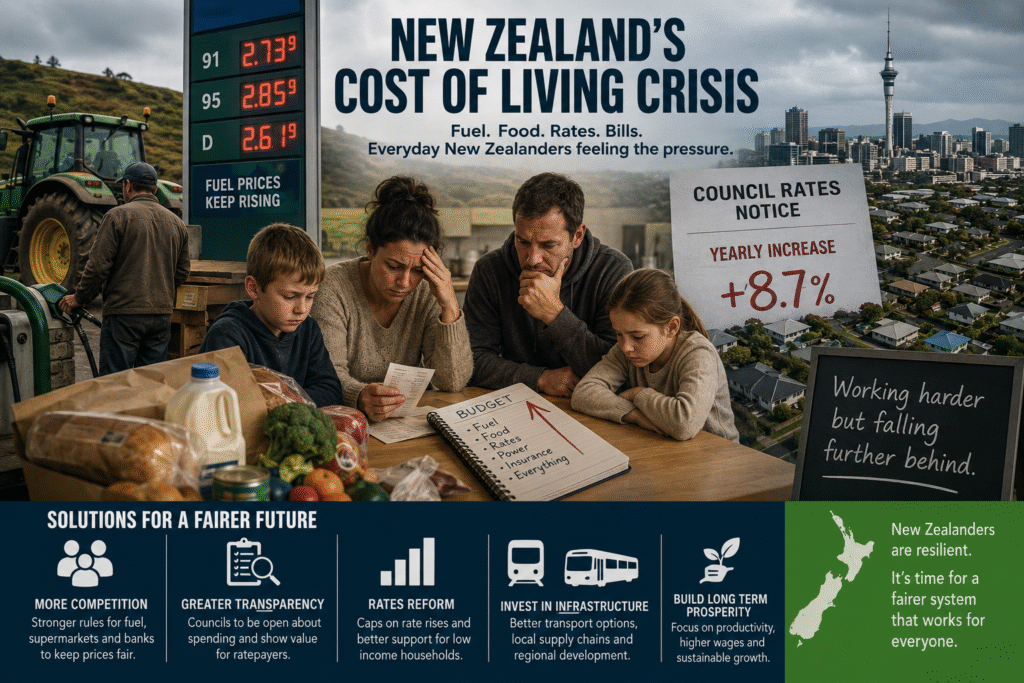
Some councils have acknowledged the pressure and begun discussing ways to reduce or cap future increases. The Government has also proposed expanding rate rebate schemes for lower-income households and older New Zealanders to soften the blow a bit.
Most people get it, that change is needed.
One possible solution is stricter financial transparency from councils. Many ratepayers want clearer explanations showing exactly where money is being spent, what projects are essential, and where savings are being made internally before rates are increased again.
Another idea gaining support is rates caps, limiting how much councils can raise rates annually unless approved directly by communities. Supporters argue this would force councils to prioritise essential spending and operate more efficiently. Critics warn it could delay important infrastructure upgrades and create larger costs later.
There is also increasing pressure for central government to contribute more funding toward infrastructure, particularly water systems and transport projects. And not leaving councils and local ratepayers to carry most of the burden alone.
For rural communities, targeted support could make a major difference. Reduced road user costs, regional fuel relief, and better support for farming districts. That might actually ease pressure on areas heavily dependent on transport and machinery.
At the same time, many economists argue New Zealand needs to focus on long-term productivity and wage growth. But it looks like it is simply managing rising costs year after year. And wages do continue lagging behind living expenses. A lot of households will remain under financial pressure. no matter how many temporary rebates or discounts are introduced.
Ultimately, the issue comes back to fairness.
Most New Zealanders know that infrastructure costs money, and also understand roads, pipes, rubbish collection, and public services must be funded somehow. But many also believe households have reached a point where constant increases are becoming unsustainable. People are not necessarily asking for luxury or massive tax cuts. Many simply want stability — fuel prices that are manageable, rates increases that feel reasonable, and confidence that hard work still